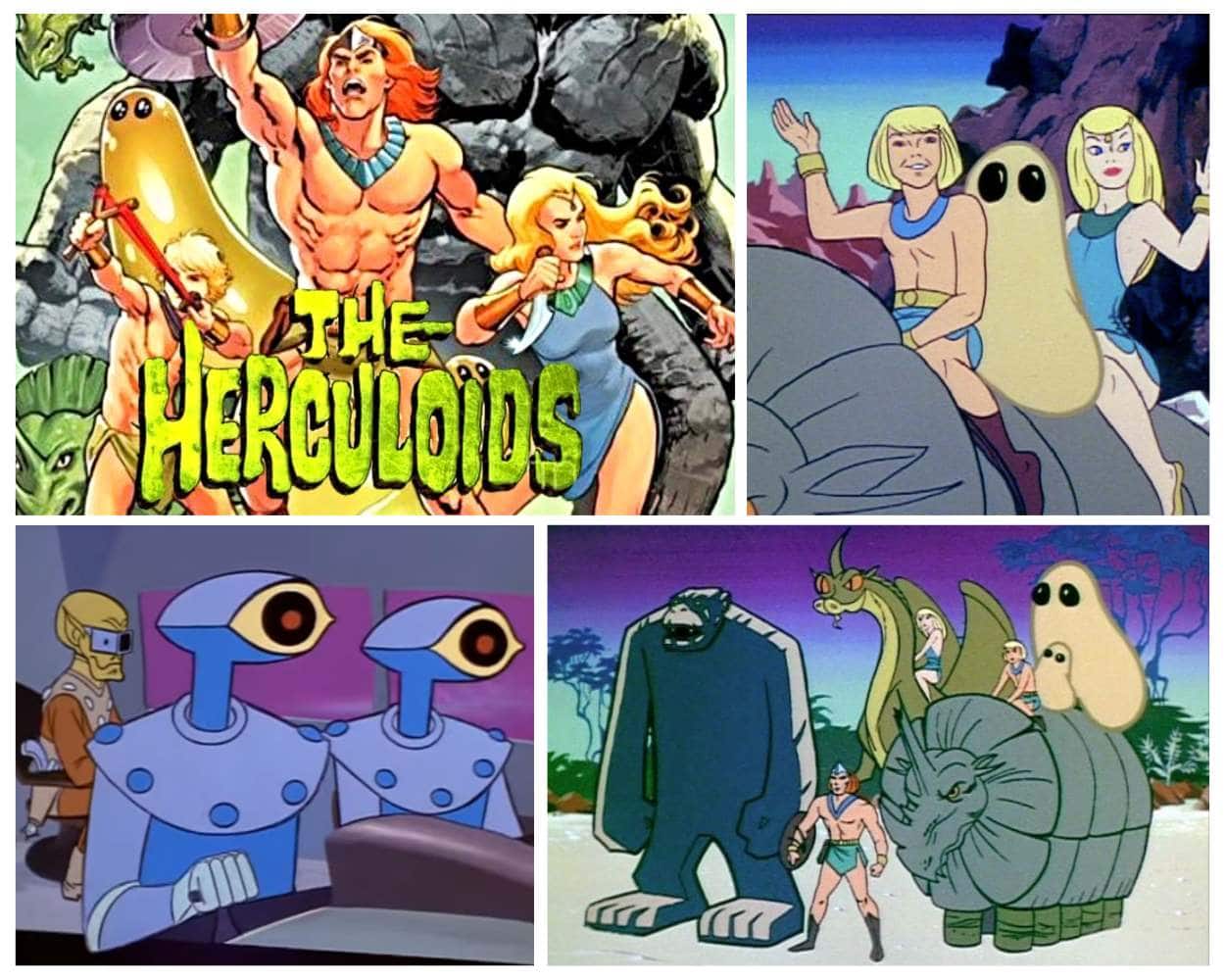
Let’s talk about The Herculoids, the 1967 Hanna-Barbera sci-fi fantasy animated series that gave us Zandor, Tara, Dorno, and one of the most memorable casts of alien creature companions in 60s animation.
If you grew up watching Saturday morning Hanna-Barbera cartoons in the late 60s, or caught reruns during Cartoon Network’s classic revival programming in the 90s, the Herculoids probably stuck in your memory. The character designs alone are iconic. A laser-beam-shooting flying dragon. A super-strong rock ape. A ten-legged rhino-triceratops that fires explosive rocks. Two shape-shifting protoplasm blobs. And one warrior family defending their planet against a never-ending parade of alien invaders.
In this post, I’m breaking down everything about The Herculoids: who they are, the legendary Alex Toth design legacy, the show’s distinctive minimalist storytelling, the voice cast, and the revivals that have kept the team in pop culture for nearly 60 years.
What Is The Herculoids?
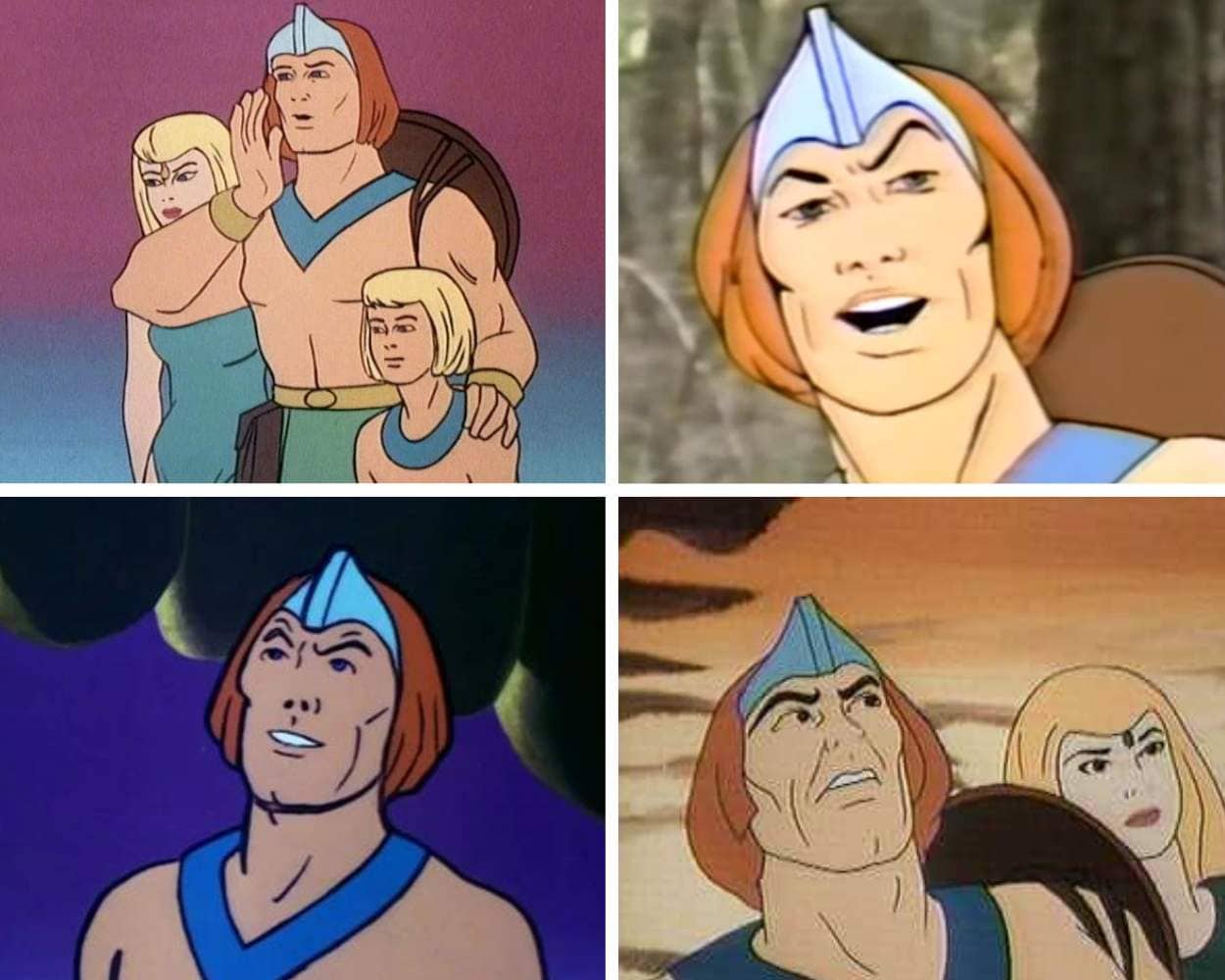
The Herculoids is a 1967-1969 American animated television series produced by Hanna-Barbera Productions. The show originally aired on CBS from September 9, 1967 to September 6, 1969, running for one season of 18 episodes (36 individual seven-minute segments).
The show is set on the distant planet Amzot (renamed Quasar in the 1980s revival), a primitive jungle world filled with strange alien wildlife and recurring threats from interstellar invaders. The Herculoids themselves are a family of human warriors and their five super-powered creature companions who defend their planet through a combination of physical combat, creativity, and creature-specific superpowers.
The series was revived in 1981-1982 as part of the Hanna-Barbera anthology series Space Stars, which added 11 new Herculoids episodes alongside revivals of Space Ghost, the Galaxy Trio, and others.
🐉 The Herculoids Quick Facts
- Show: The Herculoids (CBS, 1967-1969; revived in Space Stars, 1981-1982)
- Created by: Alex Toth
- Studio: Hanna-Barbera Productions
- Composer: Ted Nichols
- Genre: Science fiction / fantasy
- Setting: Planet Amzot (renamed Quasar in the 1981 revival)
- Original episodes: 18 (36 segments, 1967-1969)
- Revival episodes: 11 (1981-1982, in Space Stars)
- Total cast: 3 humans (Zandor, Tara, Dorno) and 5 creatures (Zok, Igoo, Tundro, Gloop, Gleep)
The Alex Toth Design Legacy
The Herculoids was designed by Alex Toth, one of the most influential animation and comics artists of the 20th century. Toth’s work for Hanna-Barbera in the mid-to-late 60s helped define what TV animation could look like. Beyond The Herculoids, his Hanna-Barbera credits include:
- ✅ Space Ghost (1966-1968) — the foundational Hanna-Barbera superhero design
- 💡 Birdman and the Galaxy Trio (1967-1968)
- 🔥 The Fantastic Four (1967 animated series)
- ✅ Sealab 2020 (1972)
- 💡 Super Friends (early character designs, 1973)
- 🔥 Jonny Quest (background and supplementary designs)
Toth’s design philosophy emphasized bold lines, dramatic angles, and silhouette-first character design. The Herculoids characters are perfect examples. Each creature is instantly recognizable by silhouette alone, which is the gold standard for character design. Zok’s wingspan, Igoo’s hulking shape, Tundro’s ten-legged build, and Gloop and Gleep’s amorphous blob forms all read clearly even at a glance.
The Human Heroes: Zandor, Tara, and Dorno
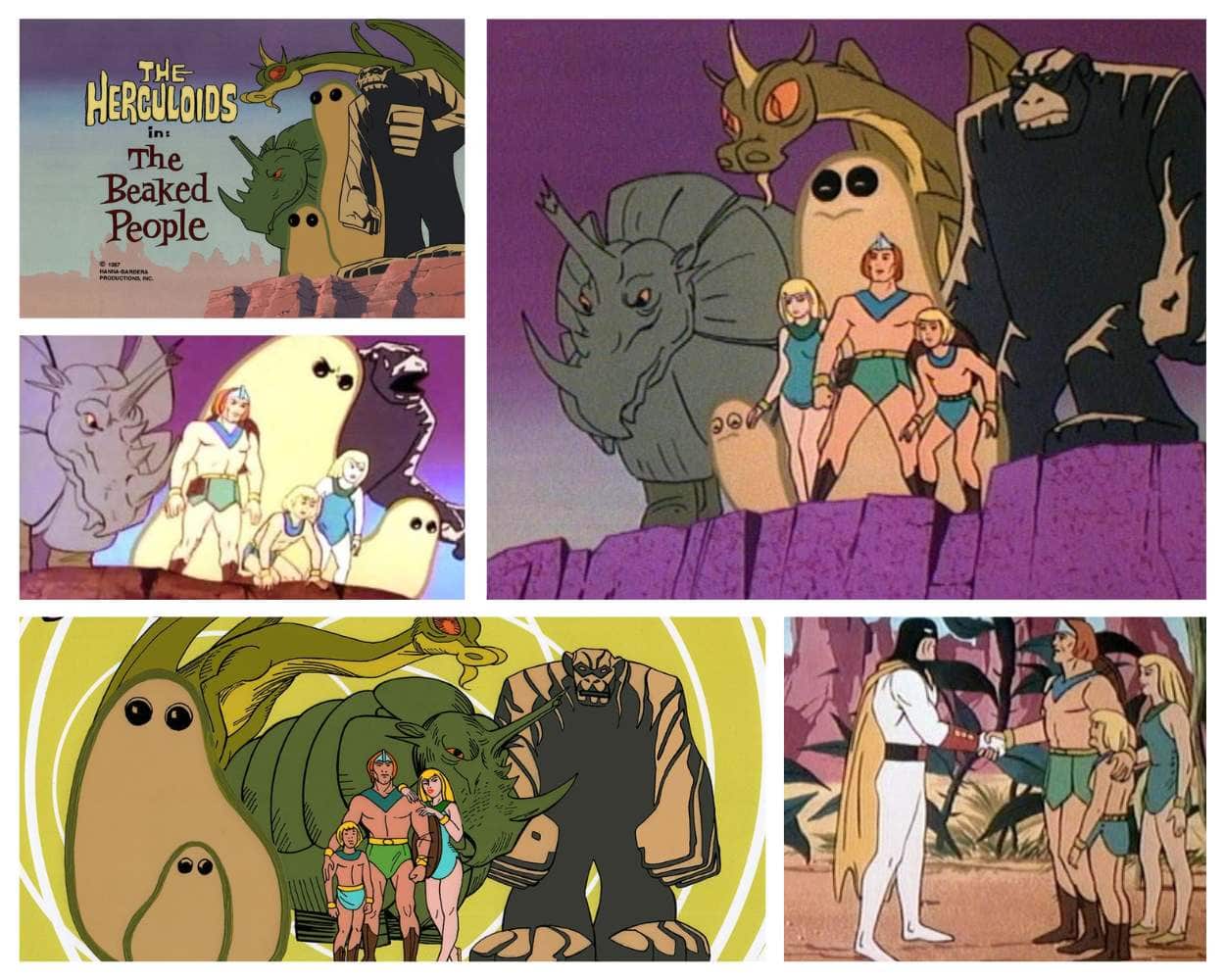
The Herculoids’ human family forms the emotional and tactical core of the team:
Zandor (the leader)
Zandor is the human leader of the Herculoids and Tara’s husband. He’s depicted as a noble warrior in the tradition of pulp sci-fi heroes like John Carter of Mars or Flash Gordon. His weapons of choice are a massive shield and an energy slingshot that fires explosive bolts. Voiced by Mike Road, who is also famous for voicing Race Bannon on Jonny Quest.
Tara (the warrior wife)
Tara is Zandor’s wife and Dorno’s mother. Unusually for 60s animation, Tara wasn’t a damsel in distress. She’s a capable warrior who fights alongside Zandor and the team, equipped with her own weapons. Voiced by Virginia Gregg, a prolific voice actress whose other major credit was voicing Norman Bates’s mother in Hitchcock’s Psycho (1960).
Dorno (the son)
Dorno is the family’s young son and the audience-surrogate character. He’s resourceful, brave, and has particularly close bonds with the protoplasmic creatures Gloop and Gleep. Voiced by Teddy Eccles in the original 1967 run and Sparky Marcus in the 1981 Space Stars revival.
The Five Herculoid Creatures
The five non-human Herculoids are the show’s most iconic creations. Each has a distinctive look and a clearly-defined superpower:
Zok (the flying dragon)
A purple-and-pink flying space dragon who can fire laser beams from his eyes and tail. Zok also has the ability to become invisible. He’s the team’s air superiority asset and primary scout. Voiced by Mike Road (who voiced multiple characters on the show).
Igoo (the rock ape)
A massive gorilla-like creature made entirely of stone. Igoo has nearly invulnerable skin and immense physical strength. He serves as the team’s heavy hitter and shield. Igoo’s design is iconic and has been frequently referenced in later animation and comics. Also voiced by Mike Road.
Tundro (the ten-legged rhinoceros)
A four-horned, ten-legged hybrid creature that resembles a rhinoceros crossed with a triceratops. Tundro’s signature ability is shooting explosive energy rocks from his horn. He’s the team’s heavy artillery. Also voiced by Mike Road.
Gloop and Gleep (the protoplasmic blobs)
The team’s most distinctive creatures, Gloop and Gleep are amorphous protoplasmic beings who can reshape themselves into any form. They function as comic relief but are also tactically valuable, often turning into ladders, bridges, parachutes, ropes, or shields as needed. They share a particularly close bond with Dorno. Both voiced by the legendary Don Messick (the voice of Scooby-Doo, Boo-Boo Bear, Astro the Dog, Papa Smurf, and hundreds of other characters).
The Show’s Minimalist Storytelling Style
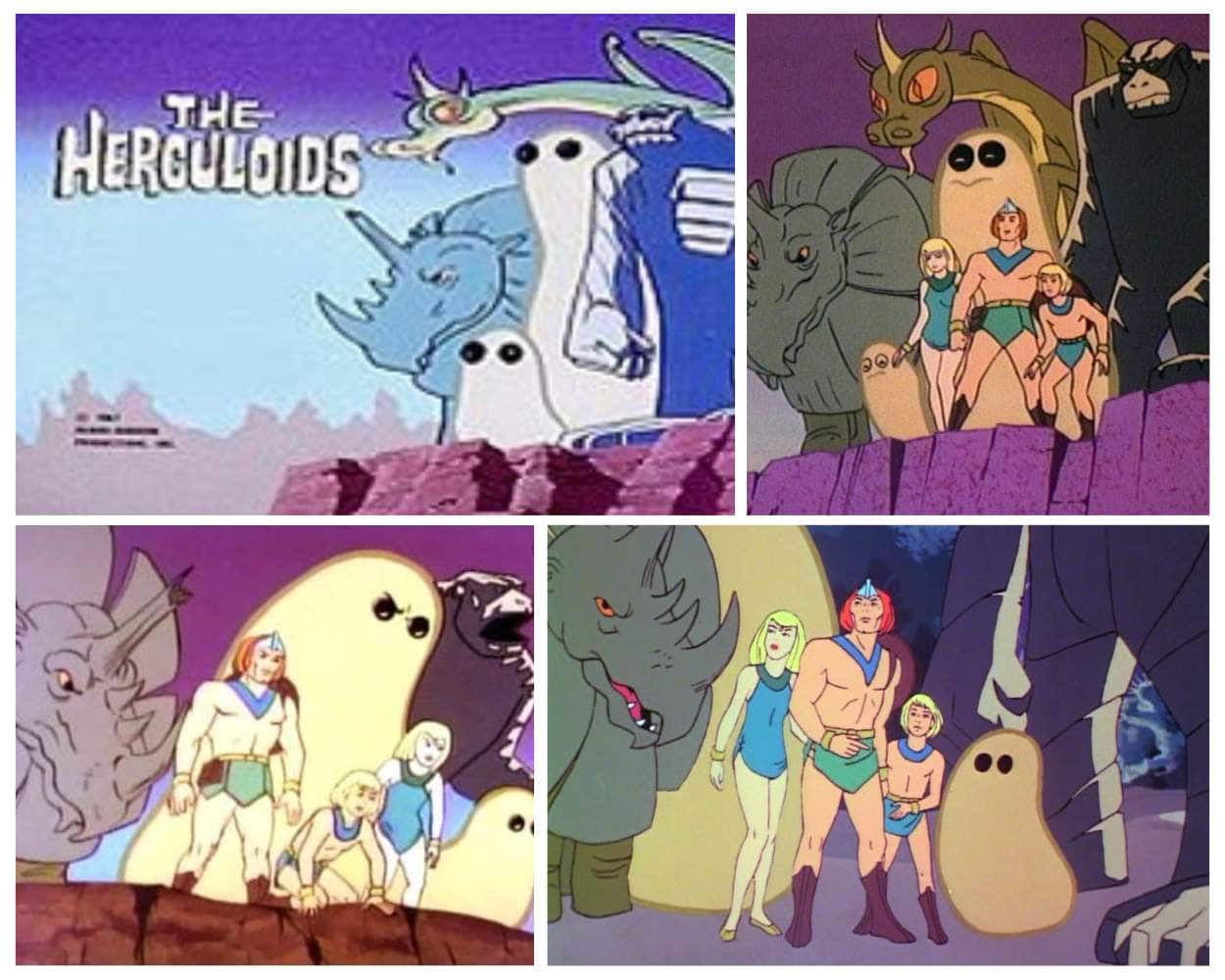
One of The Herculoids’ most distinctive qualities is its sparse, action-forward storytelling. The show used minimal dialogue and let the visuals carry the narrative. This is partly because Hanna-Barbera was working with very tight budgets and limited animation, so emphasizing dynamic poses, sound effects, and visual action helped mask the technical limitations.
Each episode followed a similar structure: a new threat invades Amzot, the Herculoids spring into action, and the combination of human ingenuity plus creature superpowers defeats the threat. The villain-of-the-week format was perfect for Saturday morning animation and let writers pack the show with imaginative invaders.
The Show’s Villains
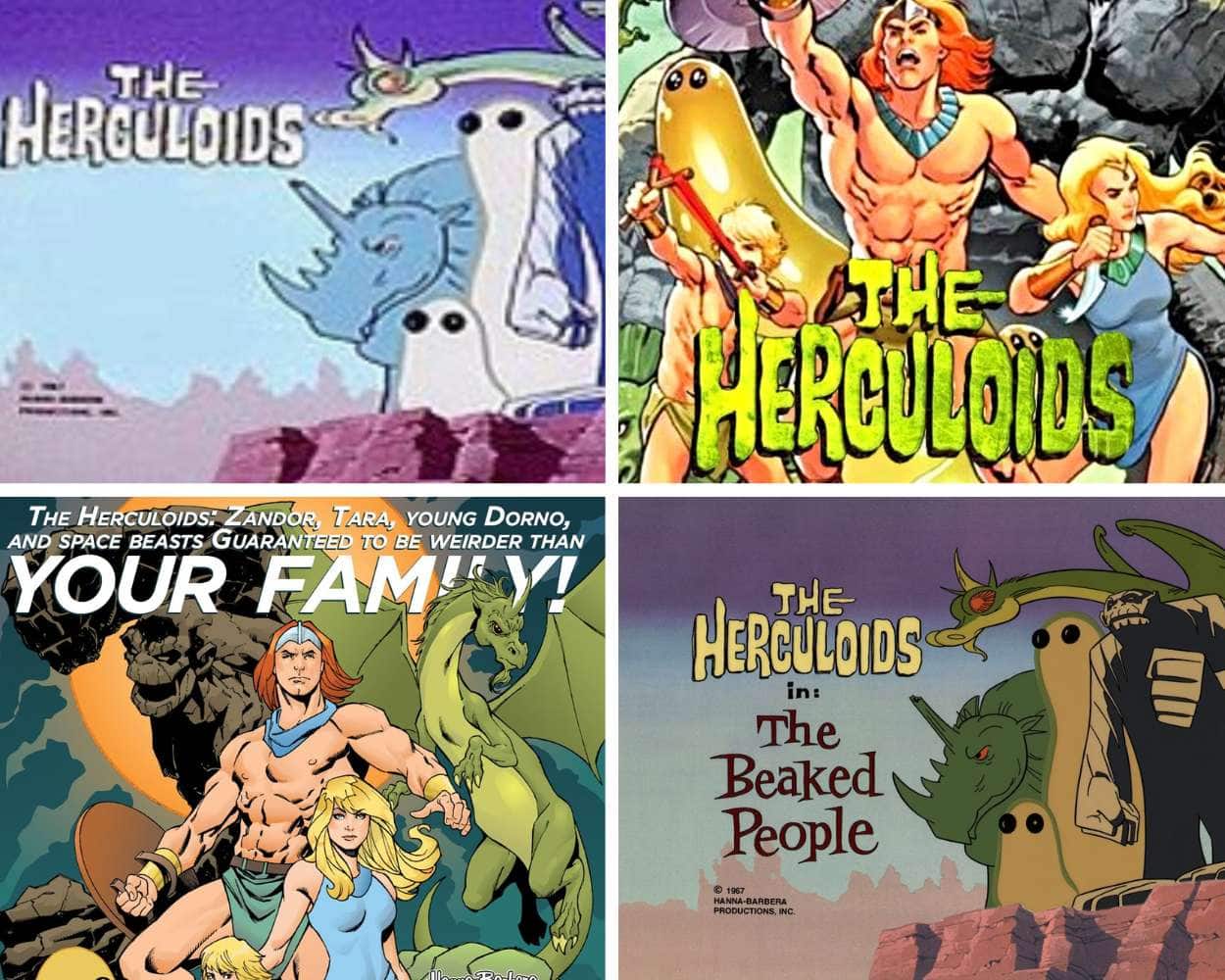
The Herculoids faced a different alien threat in nearly every episode. Notable recurring villains include:
- ✅ Sarko the Arkman: a recurring interstellar conqueror. Voiced by the legendary Paul Frees (Boris Badenov from Rocky and Bullwinkle, the Ghost Host from Disney’s Haunted Mansion).
- 💡 Mekkor: a sinister mechanical villain. Voiced by Vic Perrin (best known as the Control Voice from The Outer Limits).
- 🔥 Queen Skorra: a recurring female antagonist with her own forces
- ✅ The Ogrons: a hostile alien species
- 💡 The Faceless People: an alien race with horror-tinged designs
- 🔥 Mekkano, the Machine Master: robot-themed antagonist
The villain names alone capture the show’s tone. Pulp, fast-paced, and gleefully imaginative.
The Legacy: Revivals and Cameos Across the Decades
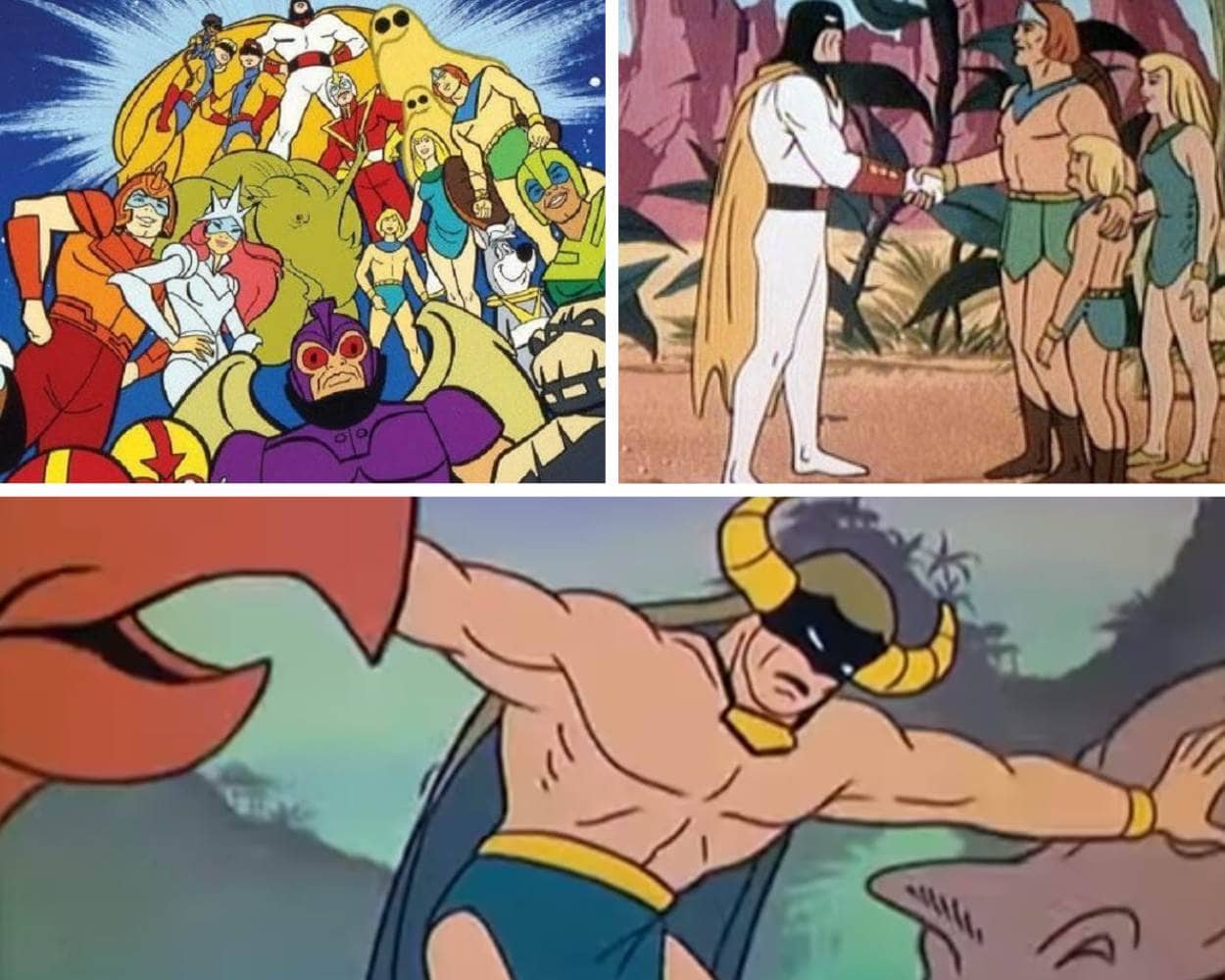
Despite its short original run, The Herculoids has shown up in multiple revivals:
Space Stars (1981-1982)
The Hanna-Barbera anthology series that brought back classic 60s superheroes and adventurers. The Herculoids segment added 11 new stories with the original characters. The planet was renamed from Amzot to Quasar during this run, and the animation was slightly updated for the new era.
Hanna-Barbera Super TV Heroes Comics (1968-1969)
Gold Key Comics published a tie-in comic series featuring various Hanna-Barbera superheroes, including the Herculoids alongside Birdman, Space Ghost, and others.
DC Comics Cartoon Network Presents (1997-1999)
The Herculoids appeared in DC Comics’ Cartoon Network Presents comic series, which brought together various classic animated characters in new stories.
Future Quest (2016-2017)
DC Comics’ acclaimed Future Quest series united classic Hanna-Barbera adventure heroes (the Herculoids, Birdman, the Galaxy Trio, Space Ghost, Jonny Quest, Frankenstein Jr., Mighty Mightor) in a single connected superhero universe. Written by Jeff Parker with art by Evan “Doc” Shaner and others, the series ran for 12 issues and was critically praised for its loving but modernized take on these classic characters.
Why The Herculoids Still Matter
The Herculoids endures because the core concept is timelessly compelling: a small family team with diverse abilities defending a primitive home against advanced invaders. It’s The Magnificent Seven meets pulp sci-fi meets monster team-up storytelling. A few specific reasons the show holds up:
- ✅ Iconic character designs. Each creature is instantly recognizable. Alex Toth’s silhouette-first design philosophy means you remember these characters forever.
- 💡 Diverse abilities create varied storytelling. Five different superpowers (flight/lasers, strength, ranged firepower, shape-shifting) give writers flexibility for many different scenarios.
- 🔥 Family team dynamic. The human family + animal companions structure is endearing and easy to invest in.
- ✅ Pulp sci-fi aesthetic. The series’ visual influences (jungle worlds, primitive weapons, alien tech) tap into a richly evocative tradition.
- 💡 Hanna-Barbera kept them in rotation. The studio repeatedly brought the Herculoids back, keeping them in cultural memory for new generations.
Frequently Asked Questions
Who created The Herculoids?
The Herculoids was created by Alex Toth, one of the most influential animation designers of the 20th century. Toth also created or designed Space Ghost, Birdman, the Galaxy Trio, Sealab 2020, and worked on Super Friends, Jonny Quest, and many other Hanna-Barbera productions.
Where does The Herculoids take place?
The series is set on the distant planet Amzot, a jungle world with primitive surface terrain but advanced threats. In the 1981 Space Stars revival, the planet was renamed Quasar, though the setting and characters remained the same.
How many episodes are there?
The original 1967-1969 CBS series produced 18 half-hour episodes containing 36 individual seven-minute segments. The 1981-1982 Space Stars revival added 11 more episodes, for a total of 29 episodes across both runs.
Who voices the characters?
The original 1967 voice cast included Mike Road as Zandor, Zok, Igoo, and Tundro; Virginia Gregg as Tara; Don Messick as Gloop and Gleep; Teddy Eccles as Dorno; Paul Frees as Sarko; and Vic Perrin as Mekkor. In the 1981 revival, Sparky Marcus voiced Dorno.
Did The Herculoids appear in Future Quest?
Yes. The Herculoids were prominently featured in DC Comics’ Future Quest (2016-2017), a 12-issue series by writer Jeff Parker that united classic Hanna-Barbera adventure heroes in a single connected universe. The Herculoids’ role was significant throughout the series.
Who are Gloop and Gleep?
Gloop and Gleep are the team’s two protoplasmic creature companions. They’re amorphous blobs who can reshape themselves into any form, including ladders, bridges, ropes, parachutes, or shields. They serve as both comic relief and tactical support, with a particularly close bond with the young Dorno. Both were voiced by Don Messick.
What are Zok’s powers?
Zok is the team’s flying space dragon. His powers include flight, firing laser beams from his eyes and tail, and the ability to become invisible. He’s the team’s primary aerial combatant and scout.
Where can I watch The Herculoids today?
The original Herculoids series is available on Boomerang (the classic-animation streaming service from Warner Bros. Discovery) and rotates on Max in the classic cartoons section. Availability can vary by region and platform updates, so check current listings.
What’s the connection between The Herculoids and Birdman?
Both shows are 1967 Hanna-Barbera productions created by Alex Toth. They aired on competing networks (Herculoids on CBS, Birdman on NBC) as part of the late-60s Saturday morning superhero animation wave. Both have appeared together in Future Quest (2016-2017) and various Hanna-Barbera crossovers, sharing the same broader animated universe.