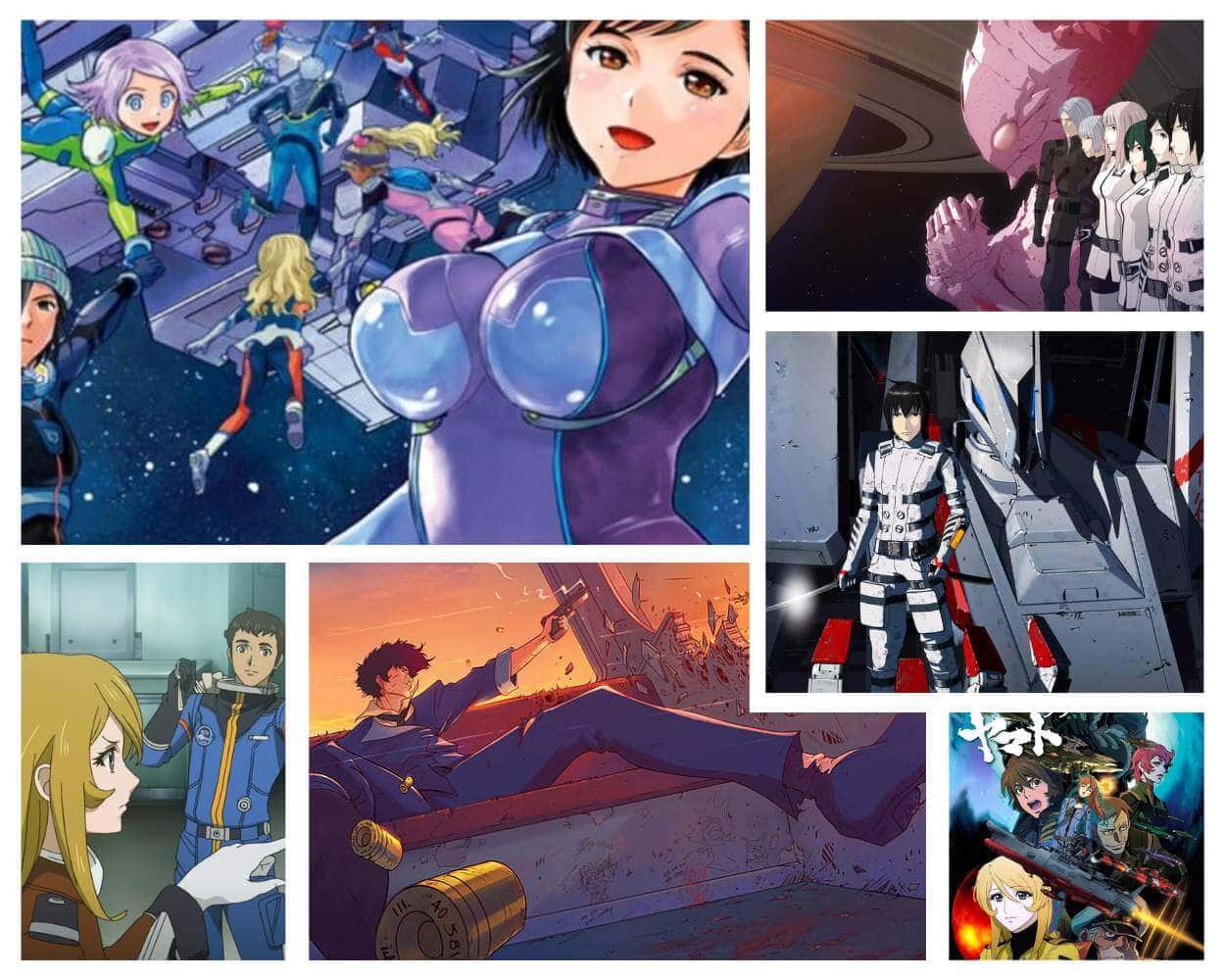
Space anime is one of the medium’s foundational genres. The first Mobile Suit Gundam series aired in 1979. The original Space Battleship Yamato hit Japanese TVs in 1974. Cowboy Bebop landed in 1998. The genre has been producing classics for almost five decades, and it keeps generating new entries every year.
What I love about space anime is its range. The same medium that produced the cosmic philosophical scope of Legend of the Galactic Heroes also produced the laid-back episodic comedy of Cowboy Bebop, the giant-robot mecha action of Gundam, and the realistic near-future hard science fiction of Planetes. There’s no single “space anime” template. The setting is just outer space. Everything else is up for grabs.
Below are 22 of the best space anime ever made, organized by what kind of space anime they actually are. From 1970s mecha pioneers to 2020s streaming-era releases, this list spans the genre.
The Essential Space Anime Classics
These are the genre-defining shows that every space anime fan should watch.
21Cowboy Bebop (1998-1999)

- Source: Original anime directed by Shinichiro Watanabe at Sunrise. 26 episodes plus the 2001 film Knockin’ on Heaven’s Door.
- Premise: 2071. A ragtag crew of bounty hunters (Spike Spiegel, Jet Black, Faye Valentine, Ed, and the dog Ein) travel the solar system aboard the Bebop, taking jobs to fund their next meal.
- Why it’s essential: The Yoko Kanno soundtrack alone makes it canon. The episodic structure mixed with strong character backstories. The Western, noir, and jazz influences. Cowboy Bebop is consistently named one of the greatest anime ever made.
- Note: The 2021 Netflix live-action adaptation was cancelled after one season. Stick with the original anime.
20Space Battleship Yamato / Star Blazers 2199 (1974-1975, 2012-2013 reboot)
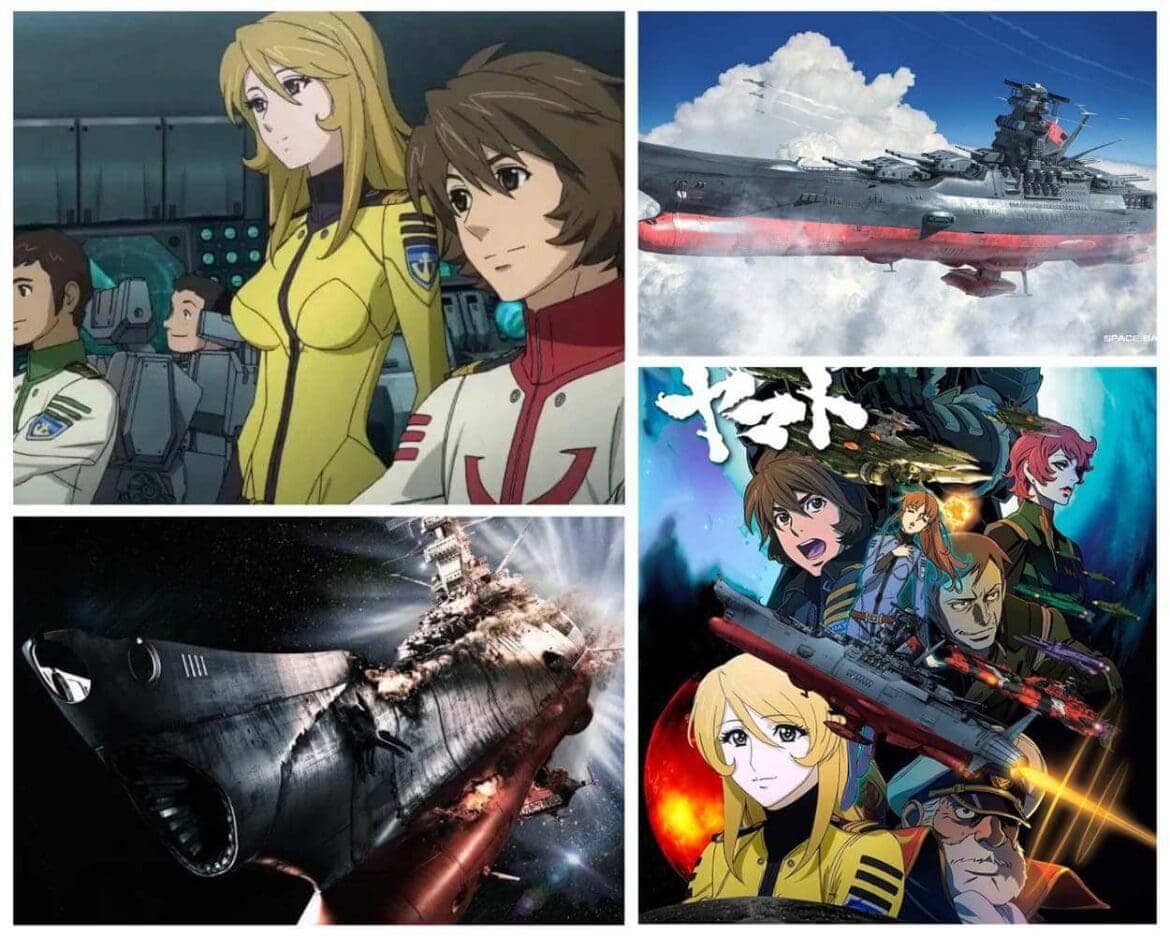
- Source: Created by Yoshinobu Nishizaki with Leiji Matsumoto as character designer. The 2012-2013 Yamato 2199 reboot by Xebec is the most accessible modern entry point.
- Premise: Earth is dying from radioactive bombardment. Humanity’s last hope is rebuilding the sunken WWII battleship Yamato as a faster-than-light starship to travel 148,000 light-years to Iscandar for radiation-removing technology.
- Why it’s essential: The franchise that established space opera as a legitimate anime genre. The Wave Motion Gun. The deep crew dynamics. The 2199 reboot is gorgeous and accessible to modern viewers.
- Where to start: Watch Yamato 2199 (the 2012-2013 reboot). Skip the 70s original unless you want the historical context.
19Mobile Suit Gundam franchise (1979-present)
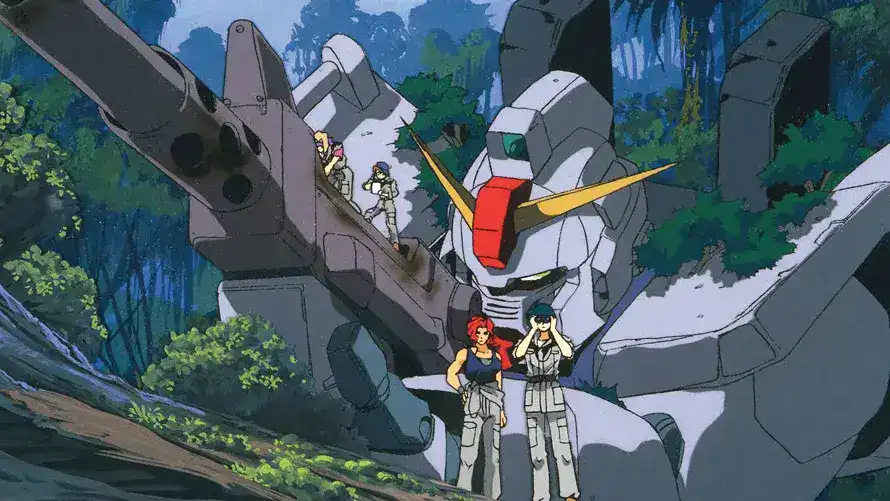
- Source: Created by Yoshiyuki Tomino at Sunrise (now Bandai Namco Filmworks). The franchise has run continuously since 1979 across multiple timelines.
- Premise: Various conflicts in space between Earth and orbital colonies, with humans piloting giant humanoid mechs called Gundams to fight in epic space battles.
- Where to start: Mobile Suit Gundam: The Witch from Mercury (2022-2023) is the most modern entry point. Mobile Suit Gundam: Iron-Blooded Orphans (2015-2017) is the best for newer viewers. The original 1979 series remains canonical for serious fans.
- Scope warning: The Gundam franchise is enormous. Hundreds of episodes across dozens of series. Pick an entry point and don’t try to watch chronologically.
18Legend of the Galactic Heroes (1988-1997, 2018-2022 reboot)
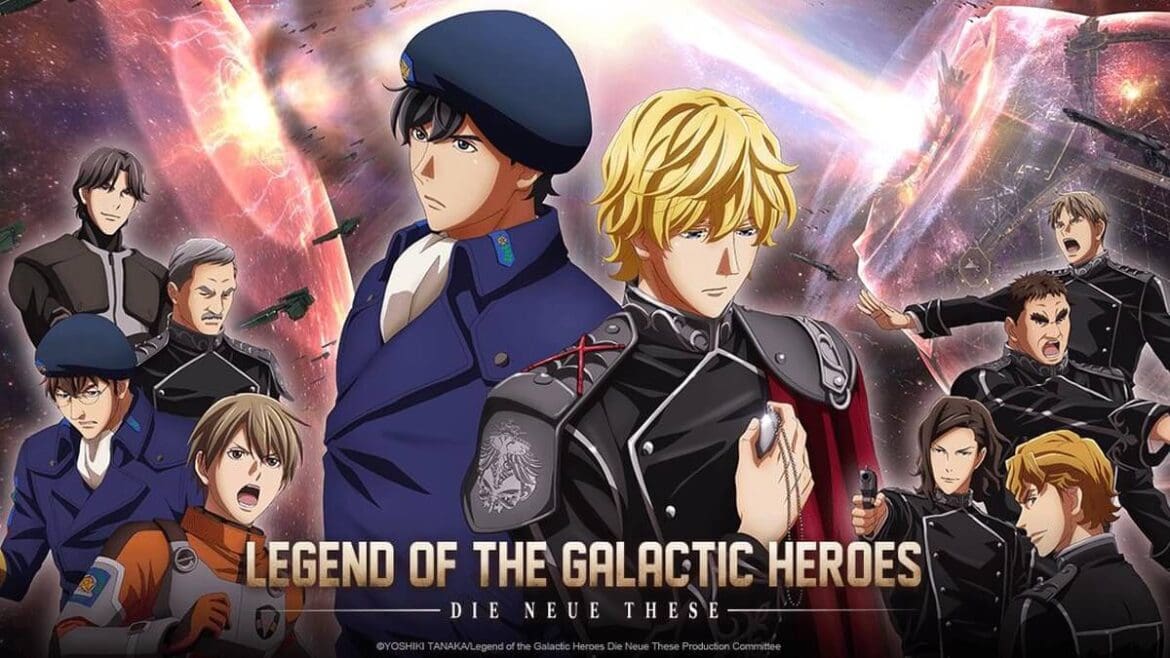
- Source: Based on Yoshiki Tanaka‘s novels (1982-1987). Original anime by Artland (110 episodes, 1988-1997). The 2018-2022 reboot Die Neue These by Production I.G is the more accessible modern version.
- Premise: Centuries-long war between the autocratic Galactic Empire and the democratic Free Planets Alliance. The series follows two brilliant strategists (Reinhard von Lohengramm and Yang Wen-li) on opposing sides.
- Why it’s essential: The greatest space opera in anime history. Serious philosophical and political content. Hundreds of named characters with developed arcs. Not for the impatient.
- Where to start: Die Neue These (2018-2022 reboot) is more accessible. The 1988-1997 original is the canonical experience but requires significant commitment.
17Captain Harlock (1978-1979 and many continuations)
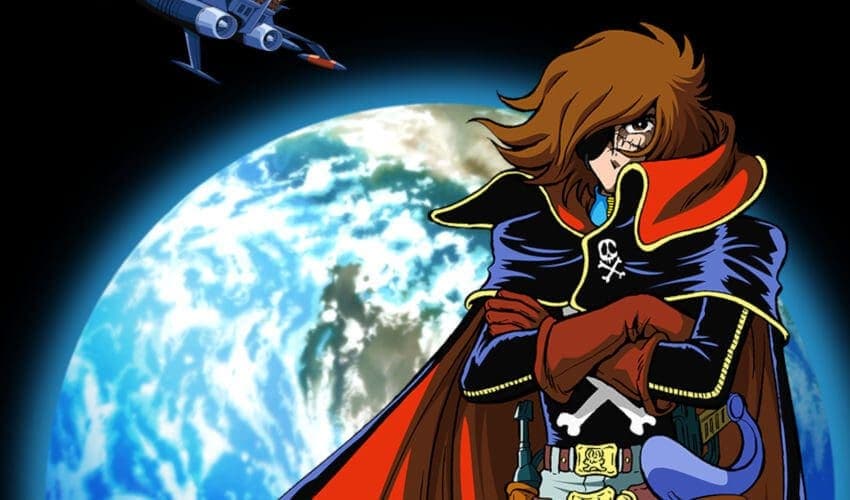
- Source: Leiji Matsumoto‘s manga adapted by Toei Animation. The 1978-1979 original series remains the canonical version. The 2013 film Space Pirate Captain Harlock is a major modern adaptation.
- Premise: In a dystopian 2977, Earth’s government has surrendered to alien threats and become decadent. Captain Harlock rebels with his crew aboard the warship Arcadia, fighting for freedom against both Earth’s government and the alien Mazone.
- Why it’s essential: Matsumoto’s space romanticism in its purest form. Harlock is one of anime’s most iconic antiheroes. Influenced everything from Cowboy Bebop to Trigun.
- Note: Matsumoto passed away in 2023, leaving an enormous space-anime legacy.
Modern Space Anime
These are the strongest entries from 2010 onward.
16Knights of Sidonia (2014-2015, 2021 film)
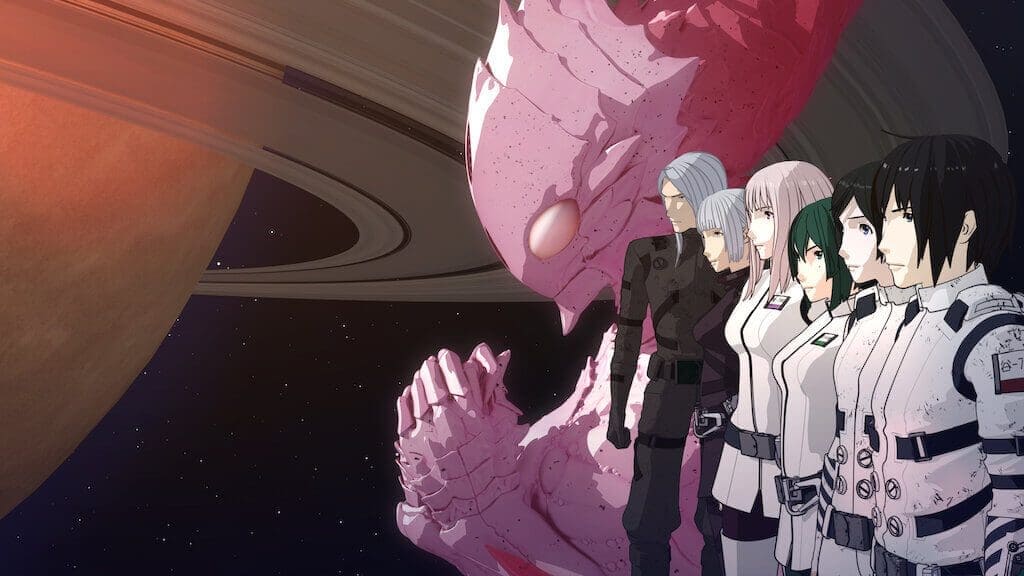
- Source: Tsutomu Nihei‘s manga (the BLAME! and Biomega creator) adapted by Polygon Pictures across two seasons and the 2021 film Knights of Sidonia: Love Woven in the Stars.
- Premise: A thousand years after Earth was destroyed by alien Gauna, the last humans live aboard the colossal seed ship Sidonia. Protagonist Nagate Tanikaze trains as a Garde mecha pilot to defend humanity’s last fragment.
- Visual style: One of the best examples of CG anime ever made. Polygon Pictures uses 3D CGI for both the mecha and the characters, creating a uniquely-textured visual aesthetic.
- Why watch: Hard science fiction with serious worldbuilding. Genuine emotional weight. Nihei’s distinctive cosmic horror aesthetic.
15Space Dandy (2014)
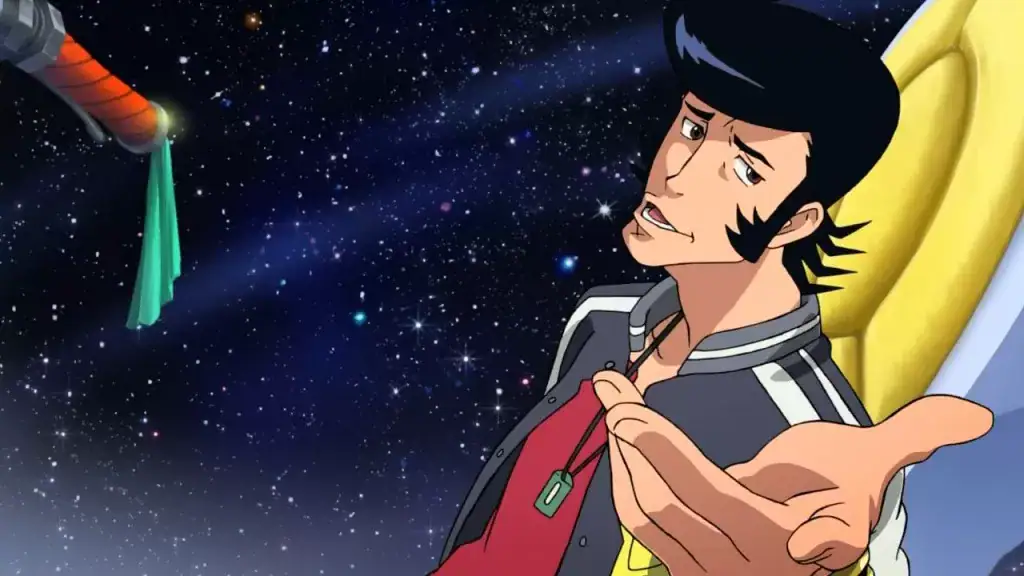
- Source: Original anime directed by Shinichiro Watanabe (also Cowboy Bebop and Samurai Champloo) at Bones in 2014.
- Premise: Dandy is an alien hunter who travels the galaxy in his ship the Aloha Oe alongside his obsolete robot QT and the Betelgeuse alien Meow. Each episode is a self-contained absurdist comedy.
- Why it works: Watanabe brought together a lineup of guest directors and writers, giving each episode a distinct visual style and tone. The show is constantly experimenting with what episodic space comedy can do.
- Where it stands: 26 episodes across two seasons. The Yoko Kanno soundtrack is excellent. Recommended for fans of Watanabe’s other work.
14Astra Lost in Space (2019)
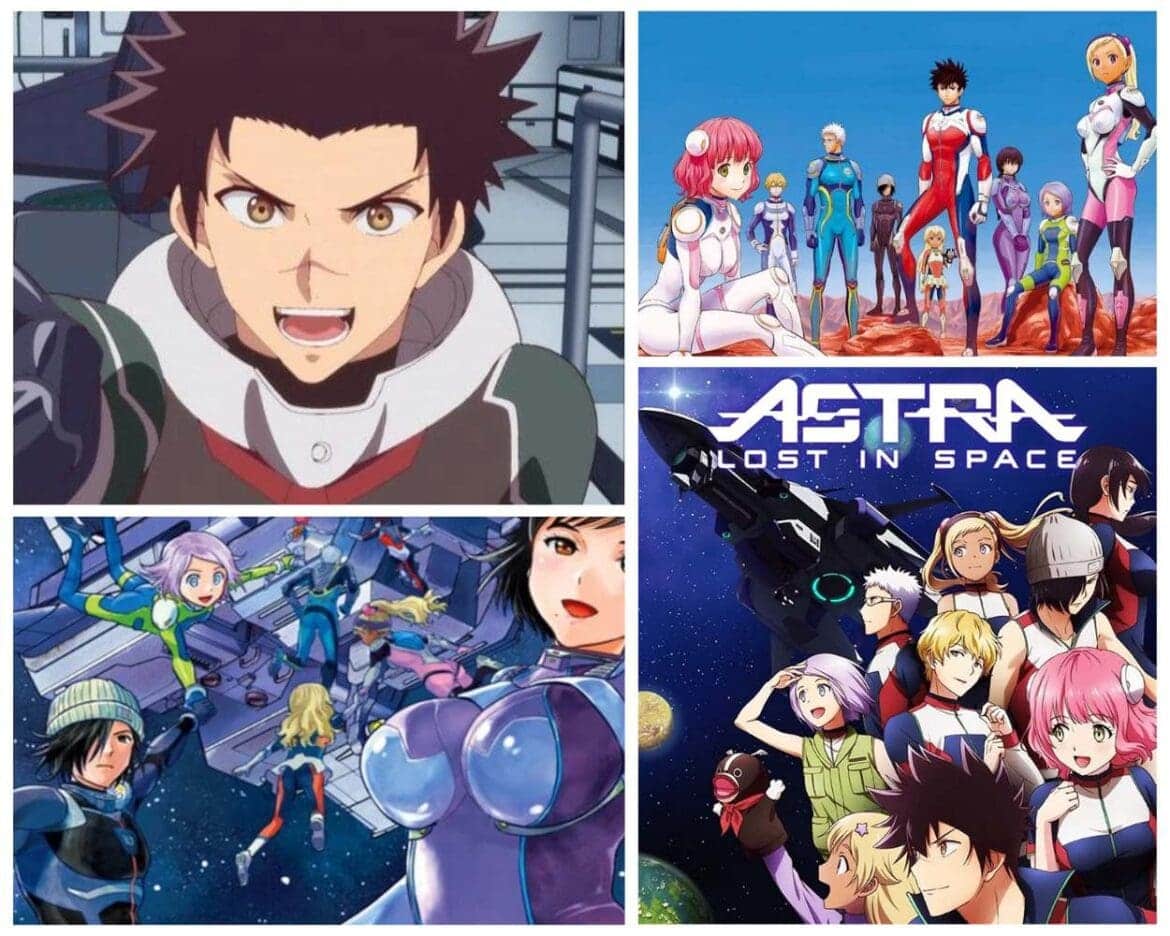
- Source: Kenta Shinohara‘s manga (the SKET Dance creator) adapted by Lerche in 2019.
- Premise: Nine students attend a “space camp” but are mysteriously transported 5,000 light-years from home. They board the abandoned ship Astra and attempt to navigate back to Earth, planet-hopping along the way.
- Why watch: One of the most tightly-plotted space anime ever made. The 12-episode runtime tells a complete story with real mystery elements. Every plot beat lands.
- Where it stands: One of the best modern space anime, period. Highly recommended as an accessible entry point to the genre.
13Macross Frontier (2008)

- Source: Part of the long-running Macross franchise (originally Super Dimension Fortress Macross 1982). Macross Frontier was produced by Satelight in 2008.
- Premise: The 25th colony fleet (Macross Frontier) is attacked by alien Vajra. Pop idol Sheryl Nome’s concert tour gets caught in the conflict, while local girl Ranka Lee develops her own musical talents and Alto Saotome pilots a variable fighter in the resulting war.
- Signature element: The Macross franchise is famous for its blend of mecha combat, alien war, and J-pop concerts as actual plot devices. Music genuinely matters in these shows.
- Where it stands: 25-episode TV series plus two films. The best entry point to the Macross franchise for modern viewers.
12Space Brothers (2012-2014)
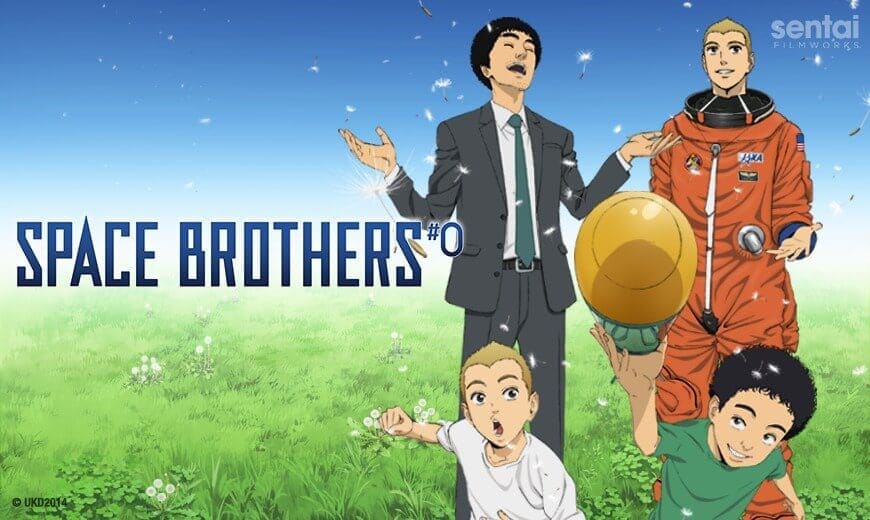
- Source: Chuya Koyama‘s manga adapted by A-1 Pictures across 99 episodes from 2012-2014.
- Premise: Brothers Mutta and Hibito Nanba dreamed of being astronauts as children. Hibito achieves the dream first, becoming part of NASA’s lunar mission. Older brother Mutta, after losing his automotive engineering job, decides to pursue the same dream and applies to JAXA’s astronaut program.
- Why watch: One of the most grounded, realistic space anime ever made. The astronaut training and selection process feel authentic. The brother relationship is the emotional core.
- Where it stands: 99 episodes is a serious commitment, but the show maintains quality throughout. The 2014 film Space Brothers #0 is also worth watching.
The Cult and Genre Picks
11Outlaw Star (1998)
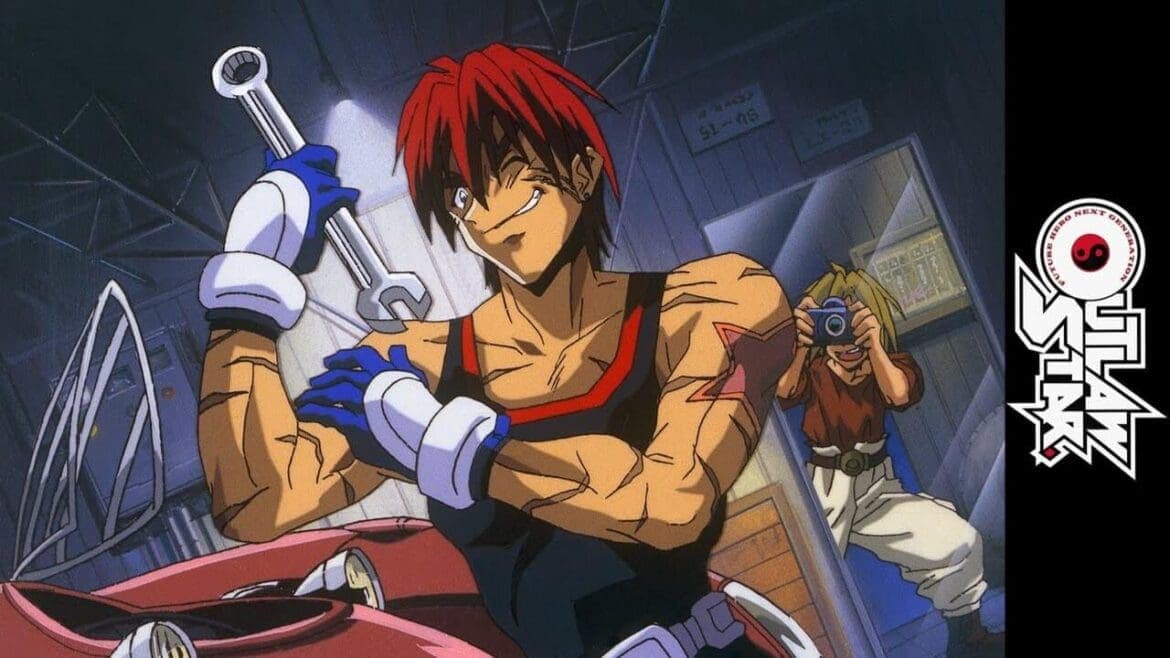
- Source: Takehiko Itō‘s manga adapted by Sunrise in 1998 (the same year as Cowboy Bebop, which it’s often compared to).
- Premise: Gene Starwind is a small-time outlaw who inherits an experimental ship (the XGP-15A-II “Outlaw Star”) with grappling arms and a biological navigator named Melfina. He goes searching for the legendary “Galactic Leyline” along with his crew.
- Where it stands: Often called the “other 1998 space cowboy anime” alongside Cowboy Bebop. Outlaw Star has more action and adventure focus while Bebop has more character drama. Both are worth watching.
- Note: The series ended unresolved after 26 episodes. The planned sequel never happened.
10Gurren Lagann (2007)
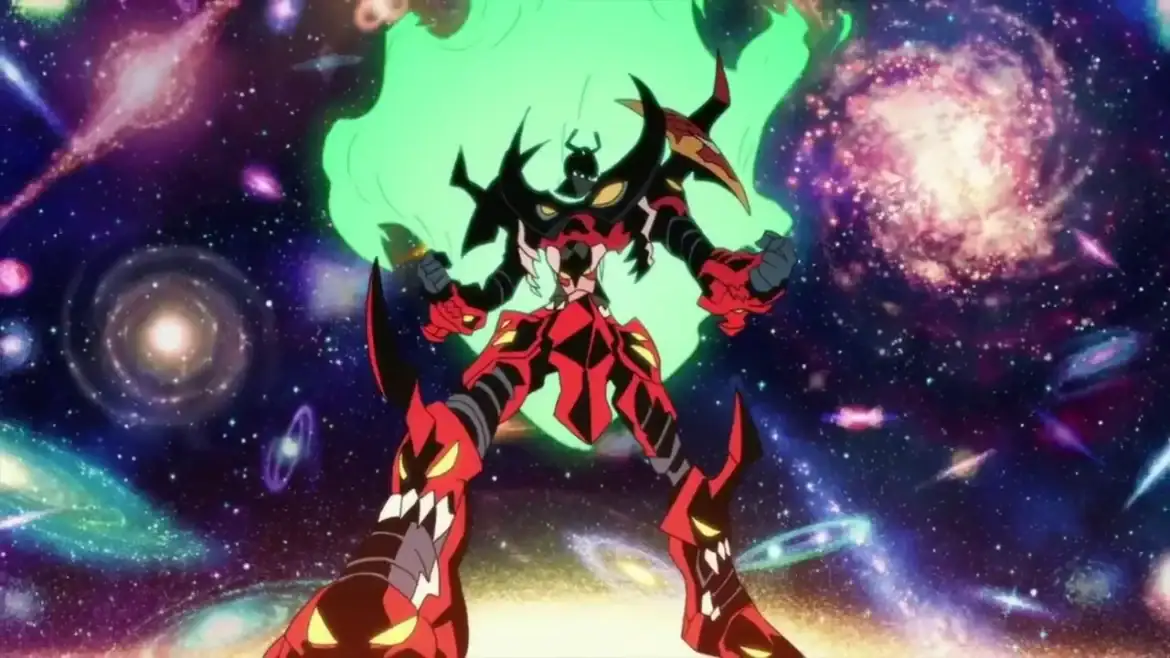
- Source: Original anime directed by Hiroyuki Imaishi at Gainax in 2007. Imaishi later founded Trigger and made Kill la Kill and Promare.
- Premise: Humanity lives underground in cramped villages. Young Simon and his charismatic brother-figure Kamina discover a mecha, leading to a story that begins underground and eventually spans galaxies. Each act of the show escalates dramatically in scope.
- Why watch: Pure shonen energy elevated to galactic scale. The “Who the hell do you think I am” speech alone is iconic. The mecha eventually grow larger than entire galaxies.
- Where it stands: 27 episodes plus two compilation films. One of the most influential space anime of the 2000s.
9Planetes (2003-2004)
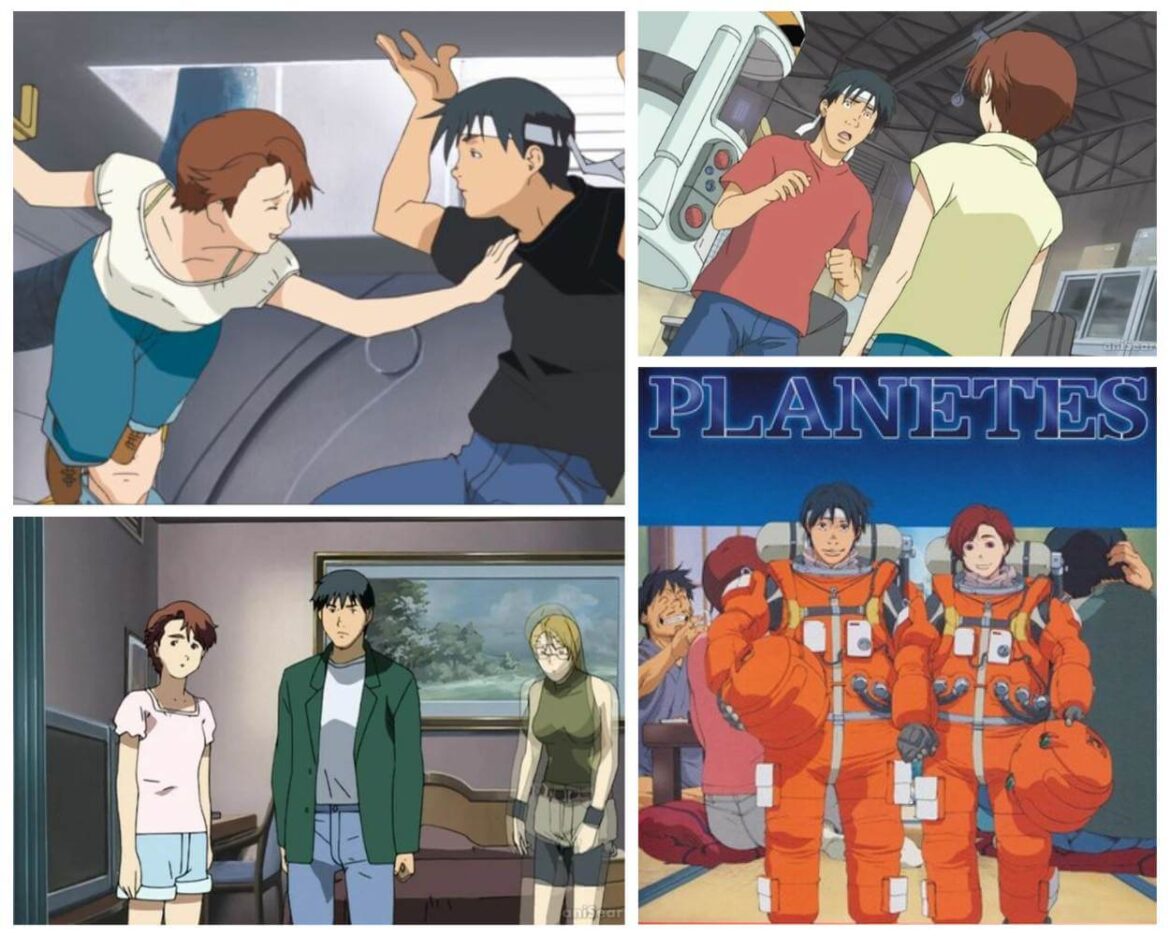
- Source: Makoto Yukimura‘s manga (the same author as Vinland Saga) adapted by Sunrise in 2003-2004.
- Premise: Near-future 2075. Hachirota “Hachimaki” Hoshino works on a space debris collection crew, clearing dangerous orbital junk from spacecraft routes. The show explores the unglamorous, blue-collar reality of working in space.
- Why watch: One of the most realistic space anime ever made. Hard science fiction with serious technical accuracy. Treats orbital debris as a real engineering problem (which it is).
- Where it stands: 26 episodes of grounded, character-focused space drama. Genuinely educational about the actual problems facing real space exploration.
8Bodacious Space Pirates (2012)
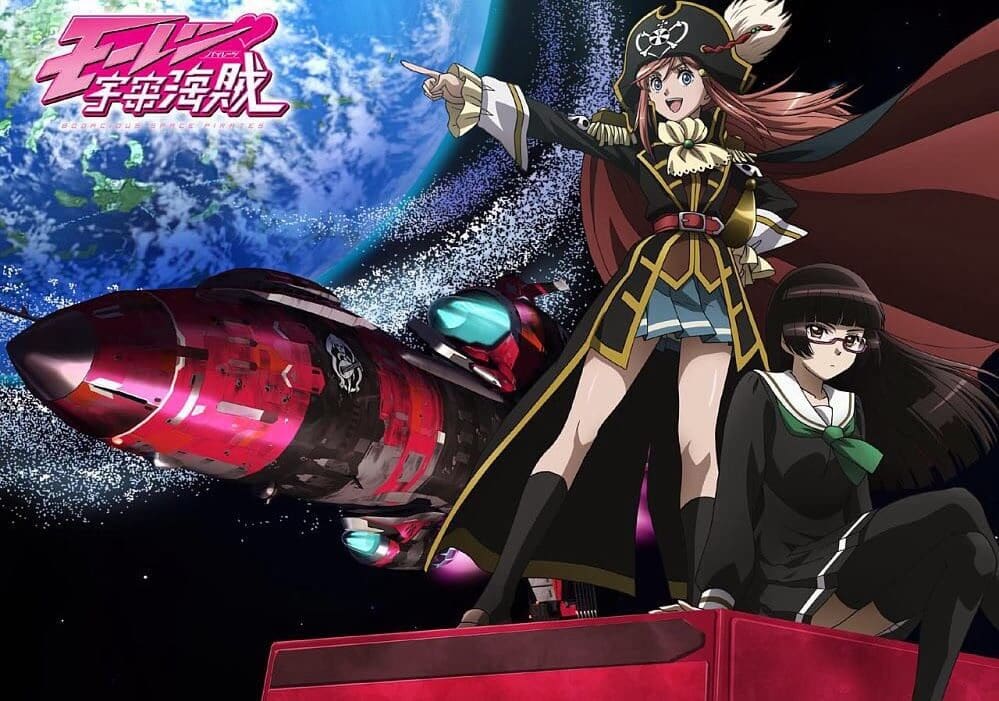
- Source: Yuichi Sasamoto‘s light novels adapted by Satelight in 2012. The unfortunate English title aside, this is genuinely a strong show.
- Premise: High school girl Marika Kato inherits her late father’s “Letter of Marque” (legal permission to operate as a privateer in interstellar wars), making her the captain of the pirate ship Bentenmaru. She juggles her school life with running a pirate crew.
- Why watch: Surprisingly grounded space politics underneath the silly premise. The crew dynamics are well-developed. The space pirate ship operates more like a charter business than violent piracy.
- Where it stands: 26-episode series plus the 2014 film Bodacious Space Pirates: Abyss of Hyperspace.
7Crest of the Stars / Banner of the Stars (1999, 2000-2001)
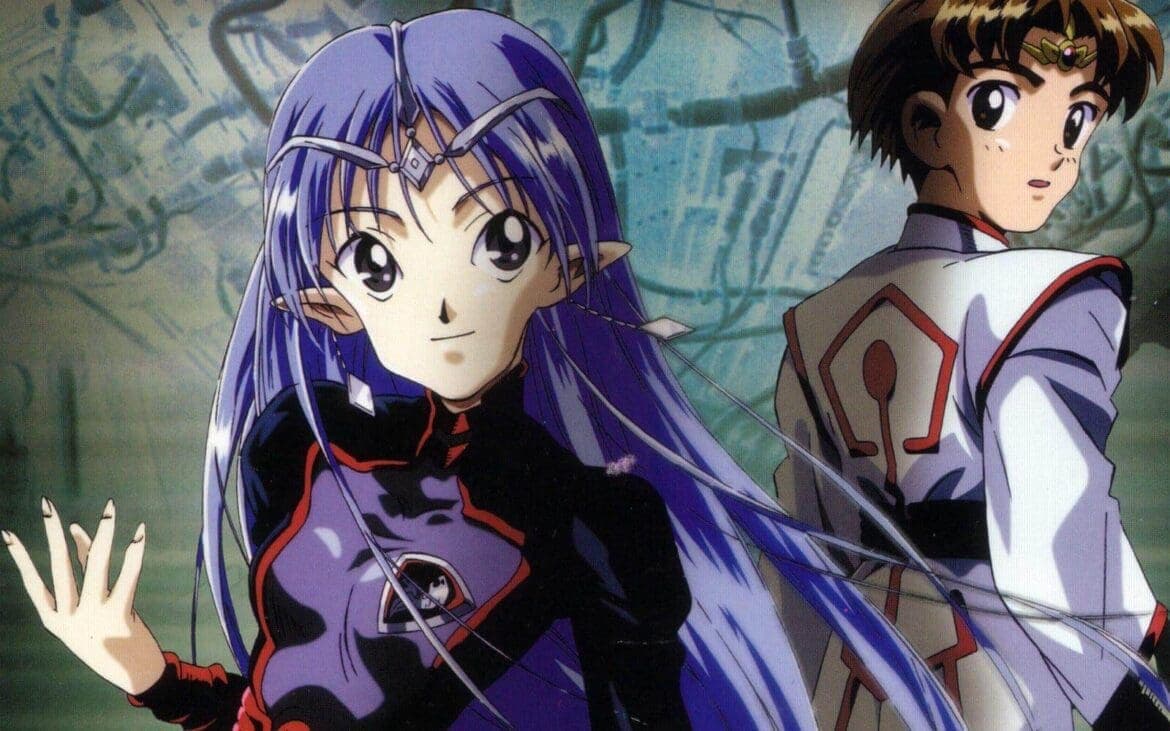
- Source: Hiroyuki Morioka‘s light novels adapted by Sunrise. Crest of the Stars (1999), Banner of the Stars (2000-2001), Banner of the Stars II (2001).
- Premise: The galaxy is dominated by the Abh Empire, a society of genetically engineered humans with elaborate political and military traditions. Jinto Linn, a young Earth-descended noble, accompanies Princess Lafiel of the Abh Empire as galactic war erupts.
- Why watch: Slow-burn space opera with serious worldbuilding and a developing romance. The Abh language, customs, and political structure are detailed throughout.
- Where it stands: Three connected series. Watch them in order.
6Heroic Age (2007)
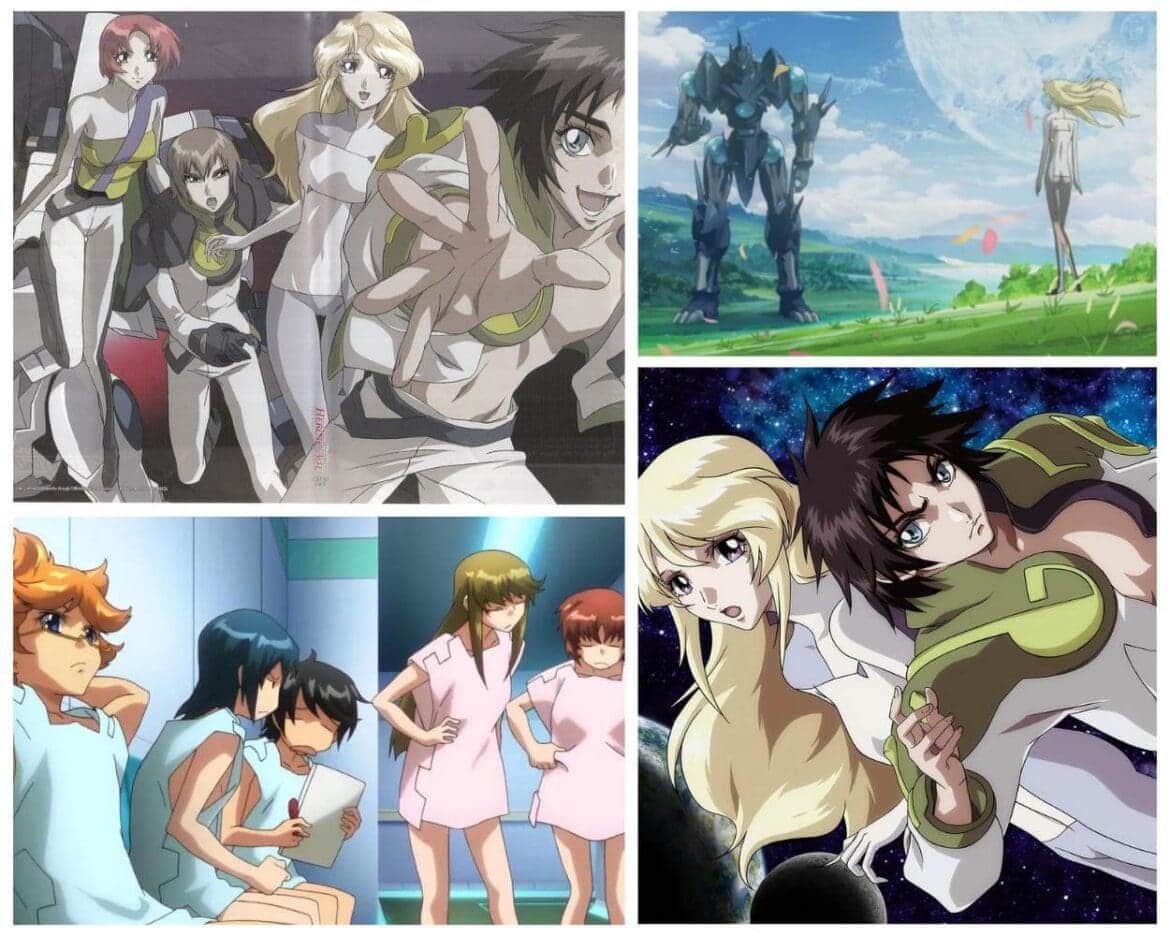
- Source: Tow Ubukata‘s original anime produced by Xebec in 2007.
- Premise: Inspired by Hesiod’s Five Ages of Man framework. Five tribes (Golden, Silver, Bronze, Heroic, Iron) shape galactic history. Humanity is the Iron Tribe and is being hunted by older races. Age is a young Heroic Tribe member who can transform into a powerful Nodos beast to protect humanity.
- Where it stands: 26 episodes. Engaging mecha space opera with mythological framework.
5Stellvia of the Universe (2003)
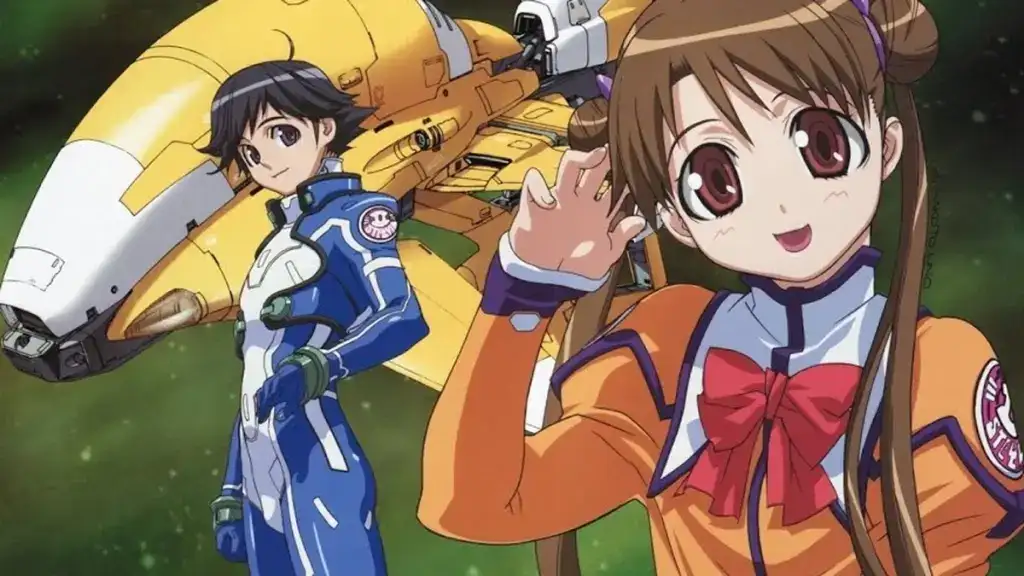
- Source: Original anime directed by Tatsuo Sato (also Nadesico) at Xebec in 2003.
- Premise: 189 years after Earth’s biosphere was nearly destroyed by a supernova shockwave, a second shockwave is expected. Shima Katase enrolls at the Foundation II space academy aboard the orbital base Stellvia to train as a pilot defending Earth from the upcoming wave.
- Why watch: Coming-of-age space anime with serious science fiction backbone. Good ensemble cast development.
4Terra Formars (2014)
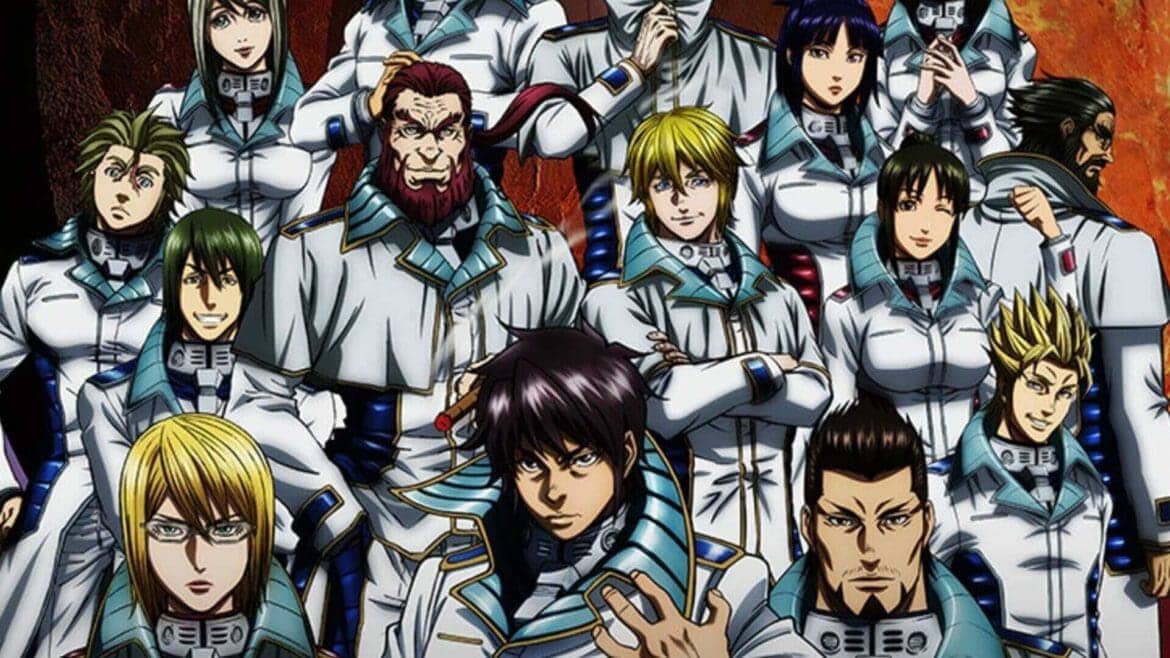
- Source: Yu Sasuga‘s manga (illustrated by Kenichi Tachibana) adapted by LIDENFILMS in 2014.
- Premise: Earth’s overpopulation forces humanity to terraform Mars. Centuries of terraforming culminate in the discovery that the cockroaches and mosses sent to Mars have evolved into intelligent humanoid creatures who now resist humanity’s attempted colonization.
- Tone warning: Heavy graphic violence. Not appropriate for younger viewers.
- Where it stands: Two seasons. The premise alone makes it worth checking out for fans of dark sci-fi.
3Tenchi Muyo! War on Geminar (2009-2010)
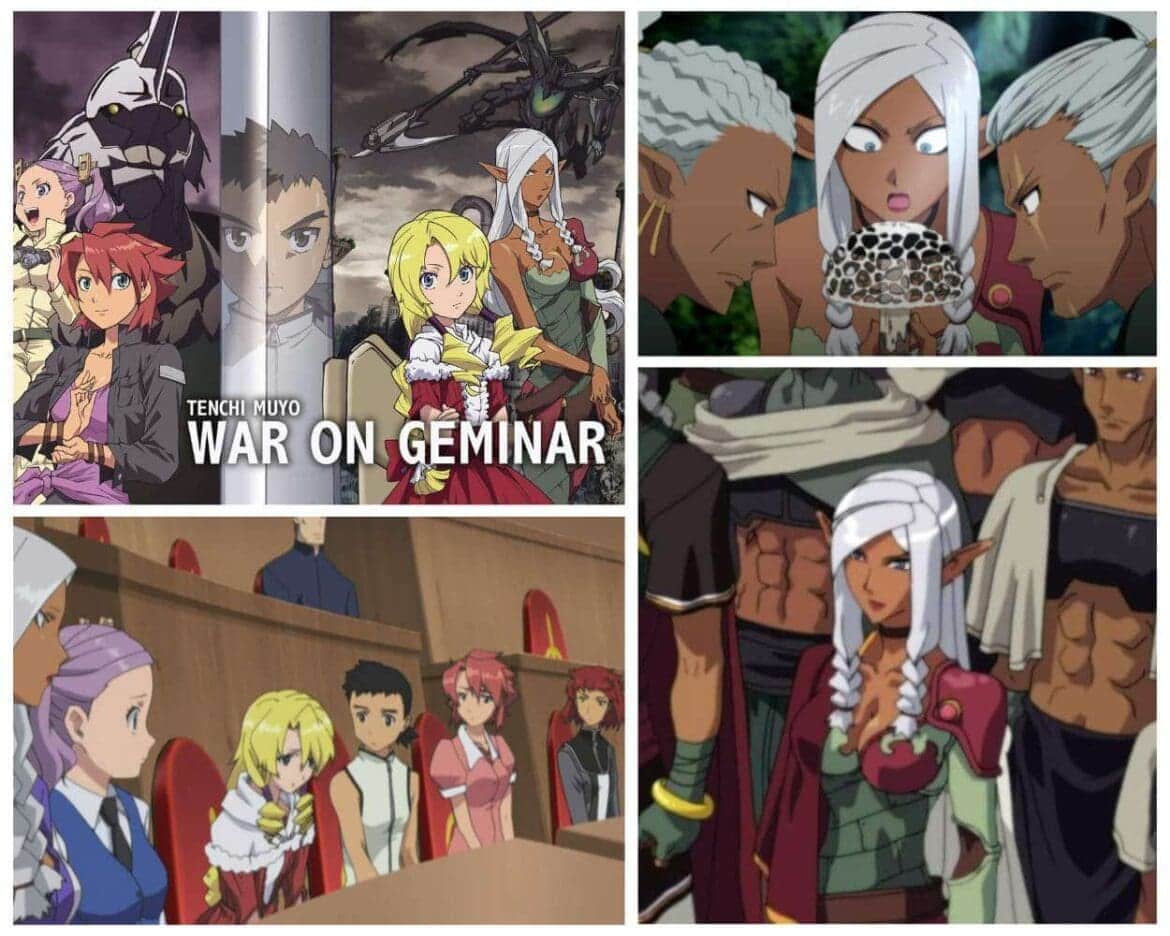
- Source: Spinoff of the long-running Tenchi Muyo! franchise created by Masaki Kajishima. Produced by AIC across 13 episodes 2009-2010.
- Premise: Kenshi Masaki is summoned to the world of Geminar as a “Sacred Mechamaster” to assassinate Princess Lashara. Things don’t go as planned, and Kenshi ends up enrolled in an elite Geminar academy.
- Categorization note: Most of the action takes place on the planet Geminar rather than in space, which makes the “space anime” classification somewhat loose.
- Tone: Harem mecha series. Watch original Tenchi Muyo! for the more space-focused franchise content.
2Infinite Ryvius (1999-2000)
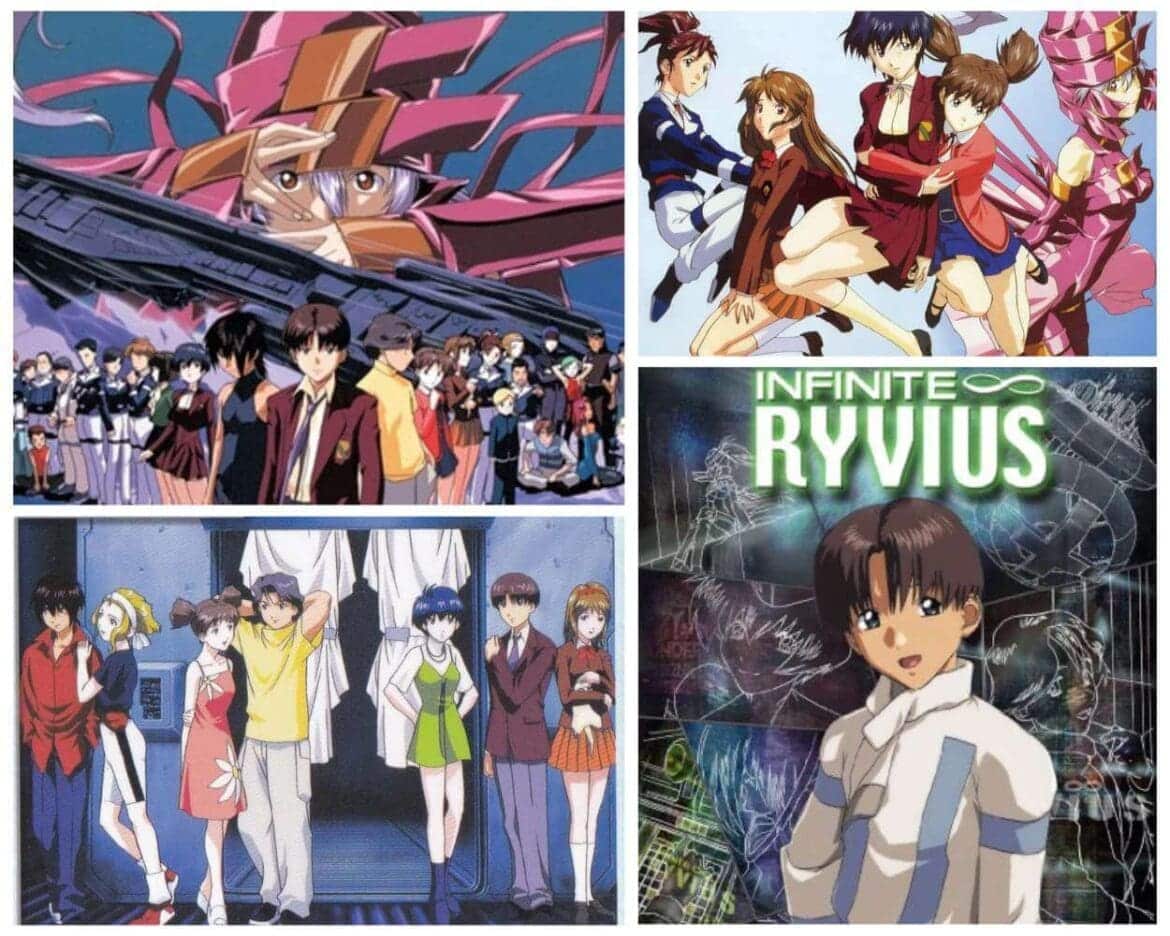
- Source: Original anime directed by Goro Taniguchi (later Code Geass director) at Sunrise across 26 episodes.
- Premise: 487 teenage students aboard a training station are stranded after a catastrophe. They take refuge in the mysterious experimental ship Ryvius, where they must form their own society to survive.
- Why watch: “Lord of the Flies in space” essentially. Real psychological depth as the students develop political factions, leadership structures, and interpersonal conflicts under sustained crisis.
- Where it stands: Underrated. One of the more thoughtful late-90s space anime.
1Blue Comet SPT Layzner (1985-1986)
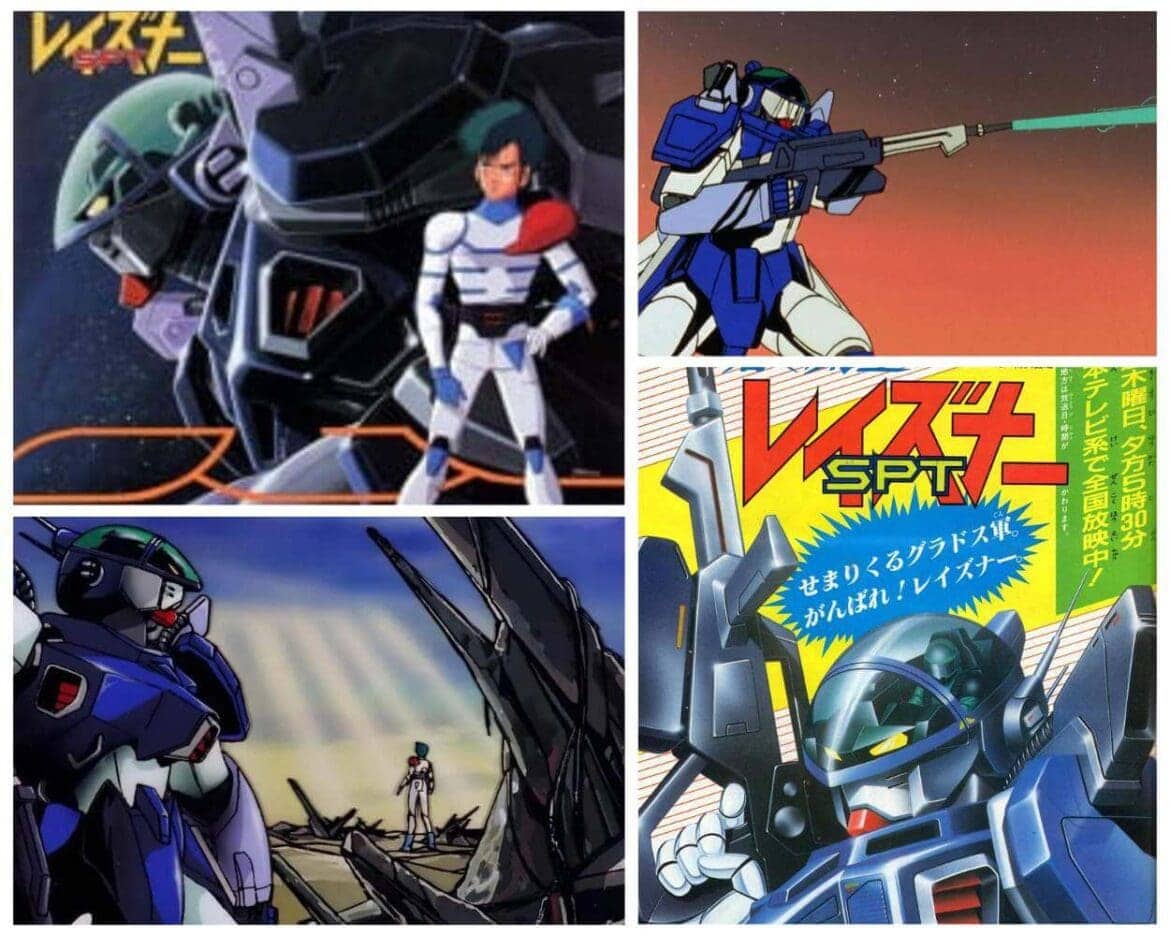
- Source: Original anime directed by Ryosuke Takahashi (the Armored Trooper Votoms creator) at Sunrise in 1985-1986.
- Premise: Set in an alternate 1996 (the show’s near-future) where the Cold War has expanded to Mars colonies. Eiji Asuka is a half-Earth, half-Gradosian who pilots the Layzner mecha to warn humans of an impending Gradosian invasion.
- Where it stands: A foundational 80s real-robot mecha series. Less famous internationally than Gundam but influential in Japan.
Where to Actually Start
If you’re new to space anime and want my honest recommendations:
- ✅ For absolute beginners: Cowboy Bebop. 26 episodes, episodic structure, immediately accessible. Still the genre’s best entry point.
- 💡 For complete-story modern space anime: Astra Lost in Space. 12 episodes, full mystery payoff, no commitment.
- 🔥 For genuine epic scope: Legend of the Galactic Heroes: Die Neue These (the 2018-2022 reboot). The galaxy’s greatest space opera made accessible.
- ✅ For mecha space combat: Mobile Suit Gundam: Iron-Blooded Orphans or The Witch from Mercury. The most accessible recent Gundam.
- 💡 For grounded hard sci-fi: Planetes. Realistic space work without the laser battles.
- 🔥 For pure adrenaline: Gurren Lagann. 27 episodes of escalating absurdity to a literally cosmic scale.
- ✅ For modern CG space horror: Knights of Sidonia. The Polygon Pictures CG style is genuinely unique.
Space anime is one of the most consistent producers of anime classics. The setting forces writers to engage with big questions (what makes humanity humanity when we’re scattered across stars, how do societies organize themselves in space, what’s worth fighting for at galactic scale). The genre has been answering these questions for almost 50 years and shows no signs of running out of new takes. Pick one and dive in.