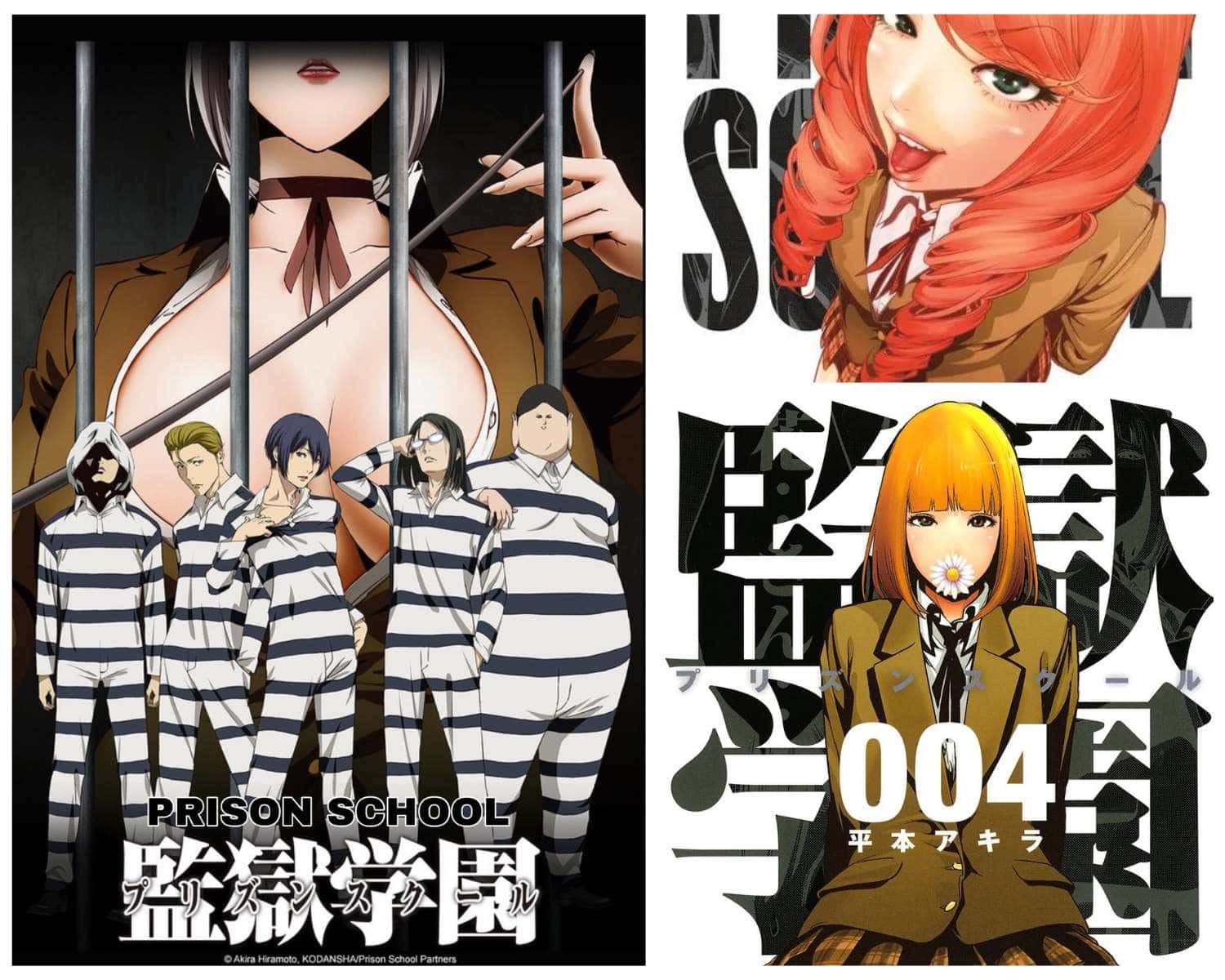
Prison School (Kangoku Gakuen) doesn’t have many natural peers. Prison School began as Akira Hiramoto’s 2011-2017 manga, adapted into a 2015 J.C. Staff anime, and it pushed the “boys at an all-girls school” premise to absurd extremes. Five male students get caught spying on the girls’ bathing area and end up imprisoned in the school’s secret underground facility, where the sadistic Underground Student Council subjects them to escalating physical and psychological torments. It’s part comedy, part prison drama, part shoujo-manga parody, and entirely unconcerned with restraint.
If Prison School worked for you, you’ve probably noticed nothing else quite hits the same combination. But several anime share its DNA in various ways: a willingness to embrace ecchi humor, school settings with absurd premises, over-the-top character designs, and a commitment to following a comedy bit way past where most shows would stop. Whether you want school-based chaos, gross-out comedy, mature humor, or just shows that aren’t afraid to be uncomfortable, these are the best places to look.
Anime Recommendations for Prison School Fans
14Grand Blue Dreaming
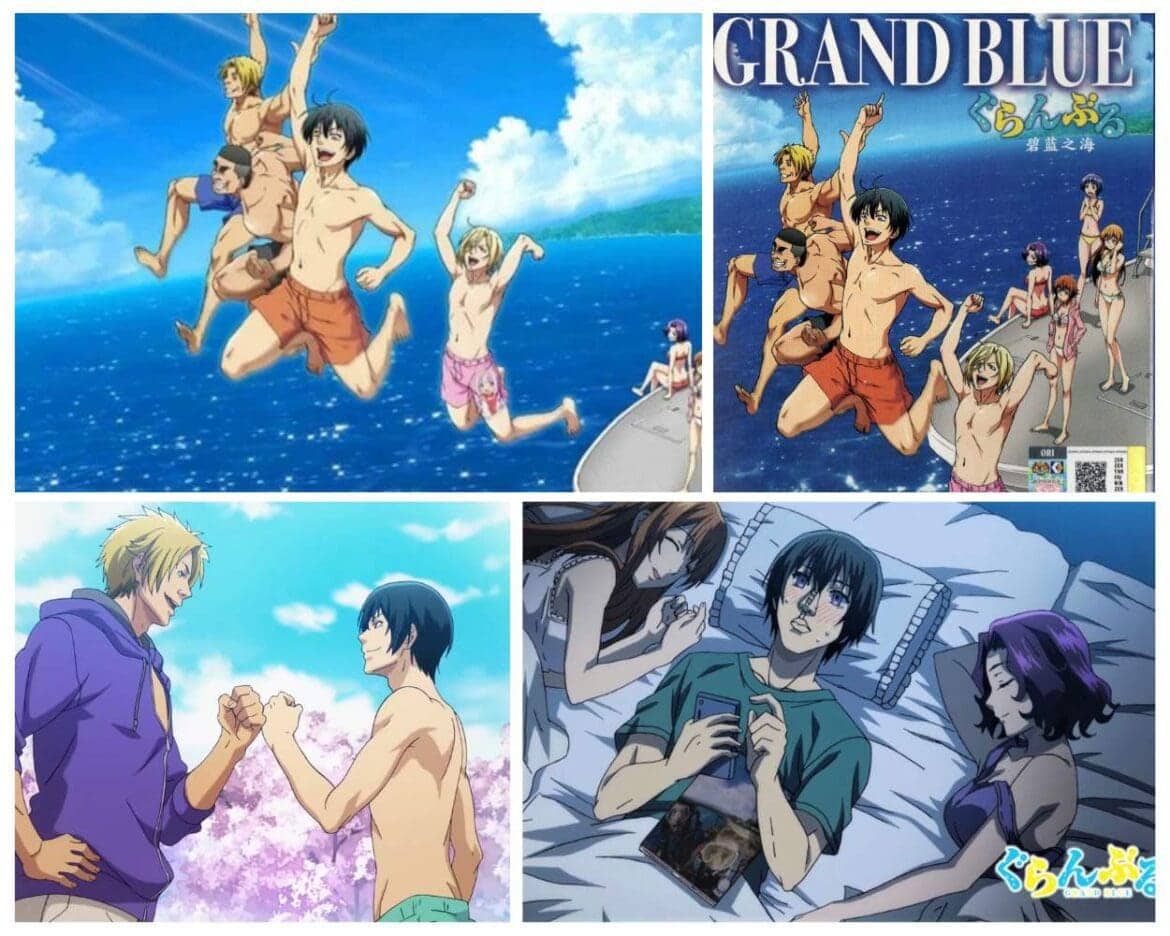
The 2018 anime by Zero-G, adapted from Kenji Inoue and Kimitake Yoshioka’s manga. Iori Kitahara starts college expecting a peaceful undergraduate life and instead gets pulled into Peek-a-Boo, his uncle’s scuba diving club whose members spend more time drinking and pulling clothes off each other than actually diving. This is probably the closest match to Prison School’s spirit on the entire list: the same commitment to following a gross-out gag to its absolute limit, the same willingness to depict its characters at their most pathetic, the same pristine animation rendering increasingly chaotic scenarios. If you only watch one Prison School successor, make it this.
- 🎬 The hook: a college scuba club that drinks and strips far more than it dives
- ⭐ Like Prison School for: the closest match, gross-out gags pushed to the absolute limit
13Kill la Kill
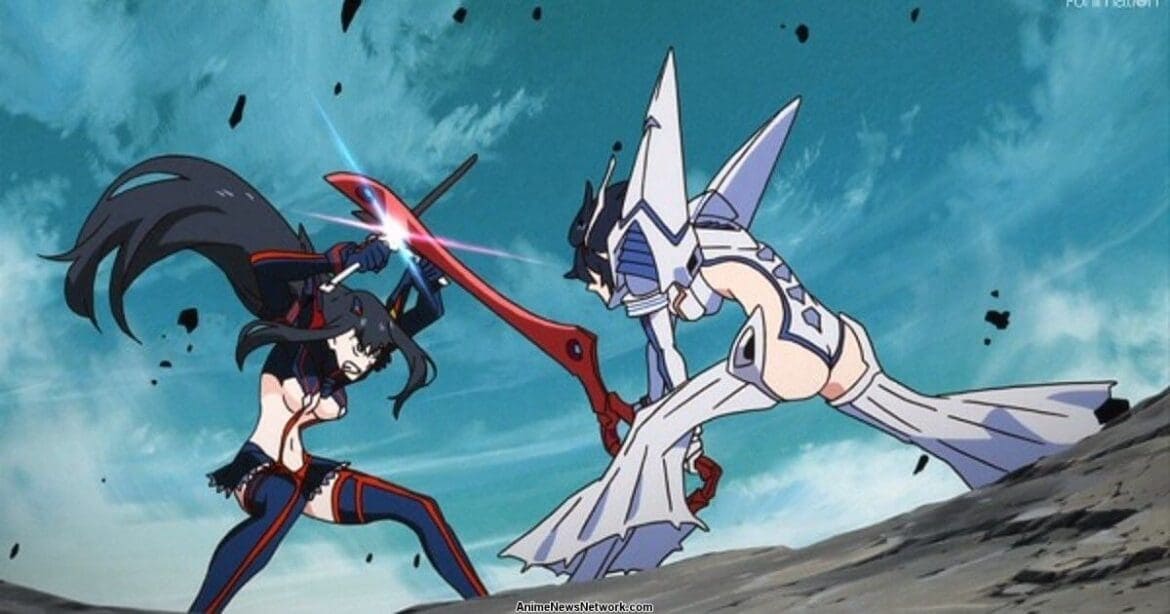
The 2013-2014 Studio Trigger anime directed by Hiroyuki Imaishi (also behind Gurren Lagann and Promare). Kill la Kill follows Ryuko Matoi, who transfers to Honnoji Academy seeking her father’s killer, armed with half of a special scissor blade and a sentient sailor uniform that grants her power when she wears it. The other half belongs to Satsuki Kiryuin, the academy’s iron-fisted student council president. Like Prison School, it’s set at an extreme version of a Japanese high school where the council holds absolute power, and the over-the-top action, constant ecchi humor, and absurd power escalation all hit similar notes. Trigger at the height of its powers.
- 🎬 The hook: a revenge story at a school ruled by an iron-fisted council and a living uniform
- ⭐ Like Prison School for: extreme school setting, all-powerful council, over-the-top ecchi action
12Great Teacher Onizuka
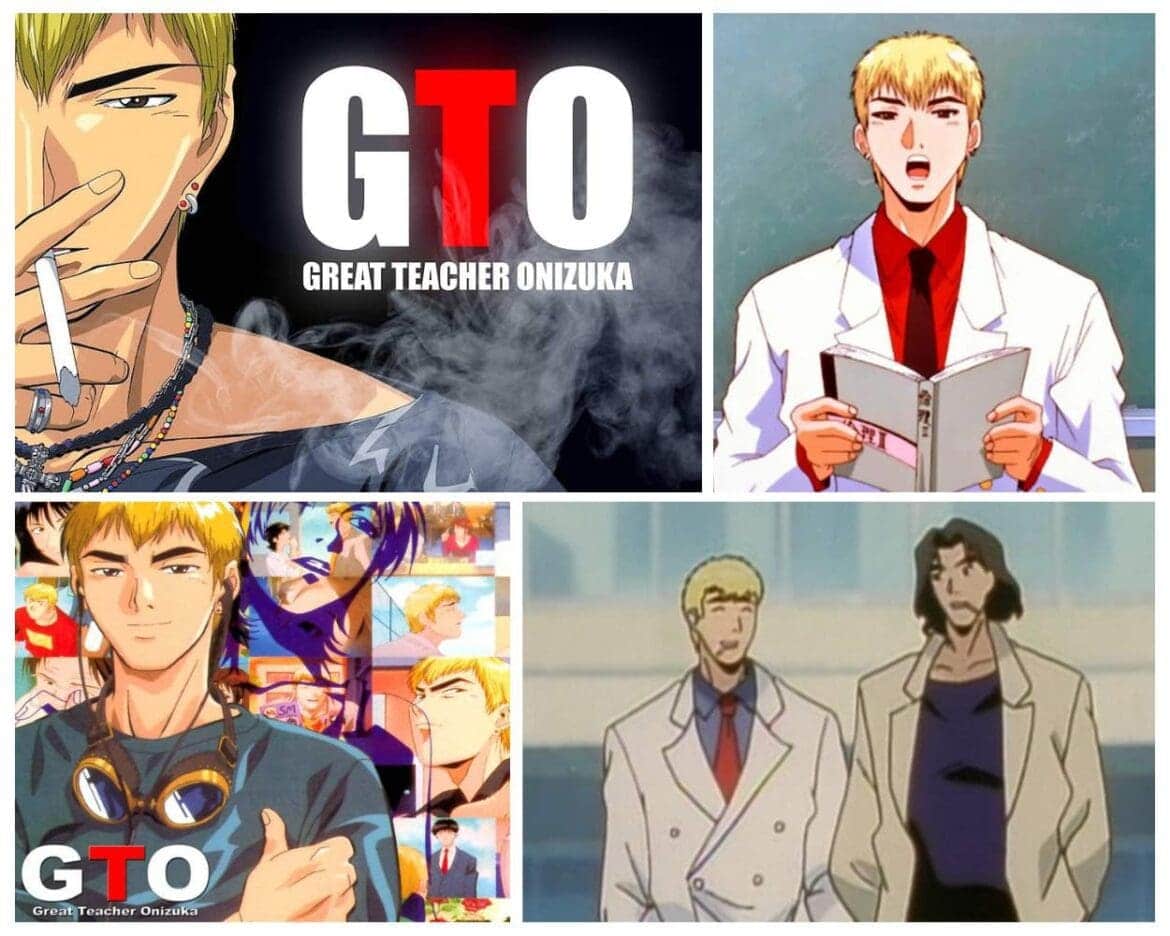
The 1999-2000 adaptation of Tooru Fujisawa’s legendary manga (1997-2002). Eikichi Onizuka is a 22-year-old former bike-gang leader who becomes a teacher to meet high-school girls, then slowly discovers he’s actually good at the job. His unconventional methods (often involving intimidation and emotional manipulation) somehow solve the deeper problems his students are facing. GTO is the foundational text for the “delinquent applies his disreputable skills to a traditional institution” comedy, and Prison School and several other shows here owe it a debt. The 43-episode anime is one of the most beloved adaptations of the late ’90s, and the manga is even better.
- 🎬 The hook: an ex-biker becomes an unorthodox teacher who actually gets through to his students
- ⭐ Like Prison School for: the foundational “delinquent in an institution” comedy
11Seitokai Yakuindomo

A 2010-2014 series based on Tozen Ujiie’s manga. Takatoshi Tsuda is the first male student to enroll at Ousai Academy after it goes co-ed, and he ends up as Vice President of the Student Council, surrounded by three female members whose conversations are wall-to-wall innuendo delivered with completely deadpan expressions. The humor is built entirely on the contrast between their polite, professional demeanor and the constant lewd content of what they’re actually saying. Several seasons plus films exist, and for Prison School fans who loved the council dynamics and the running humor, this is the most consistent match.
- 🎬 The hook: a deadpan student council whose every conversation is pure innuendo
- ⭐ Like Prison School for: the school-council dynamic and relentless running humor
10Keijo!!!!!!!!

A 2016 Xebec adaptation of Daichi Sorayomi’s manga, built around a fictional Japanese sport called “Keijo” in which competitors knock each other off floating platforms using only their bodies. The premise is exactly as ridiculous as it sounds, but the show works because it plays the absurdity completely straight as a legitimate sports anime: training arcs, tournament structure, rival schools, and named special moves all follow shonen sports tradition. Genuinely entertaining if you can embrace the concept, and like Prison School, it commits absolutely.
- 🎬 The hook: a preposterous fictional sport played dead straight as a shonen sports anime
- ⭐ Like Prison School for: total, unflinching commitment to an absurd premise
9D-Frag!
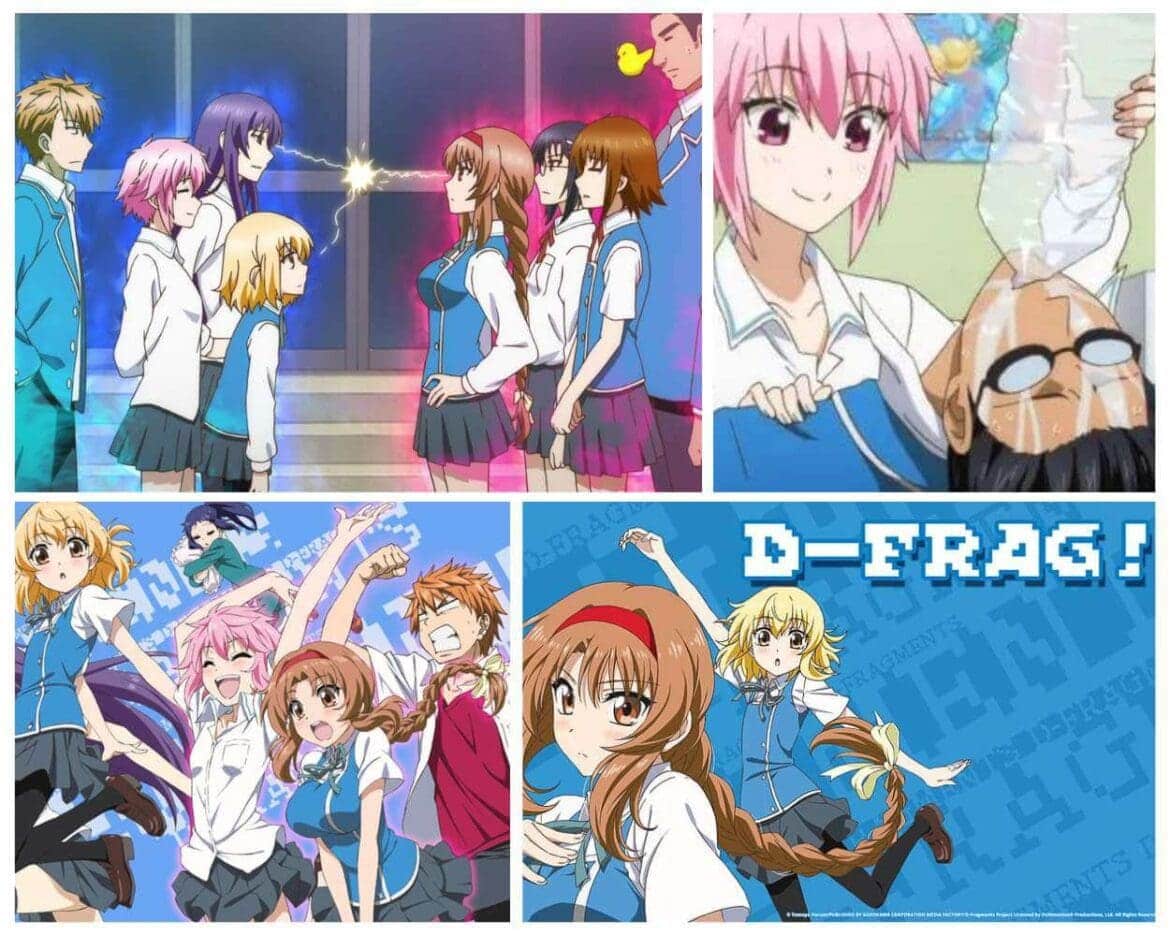
A 2014 anime by Brain’s Base based on Tomoya Haruno’s manga. Kenji Kazama considers himself a delinquent until he meets Roka Shibasaki and the rest of the Game Creation Club, who forcibly recruit him into their increasingly chaotic plans. Roka uses fire powers, Chitose lightning, Sakura earth, and the actual relationship between these “powers” and reality is never explained. D-Frag has Prison School’s chaotic energy and over-the-top character design without the harder ecchi content, so if you liked Prison School more for the absurd setting and eccentric cast than the explicit material, this is a great alternative.
- 🎬 The hook: a self-styled “delinquent” dragged into a chaotic games club
- ⭐ Like Prison School for: the absurd school and eccentric cast, minus the harder ecchi
8Gintama
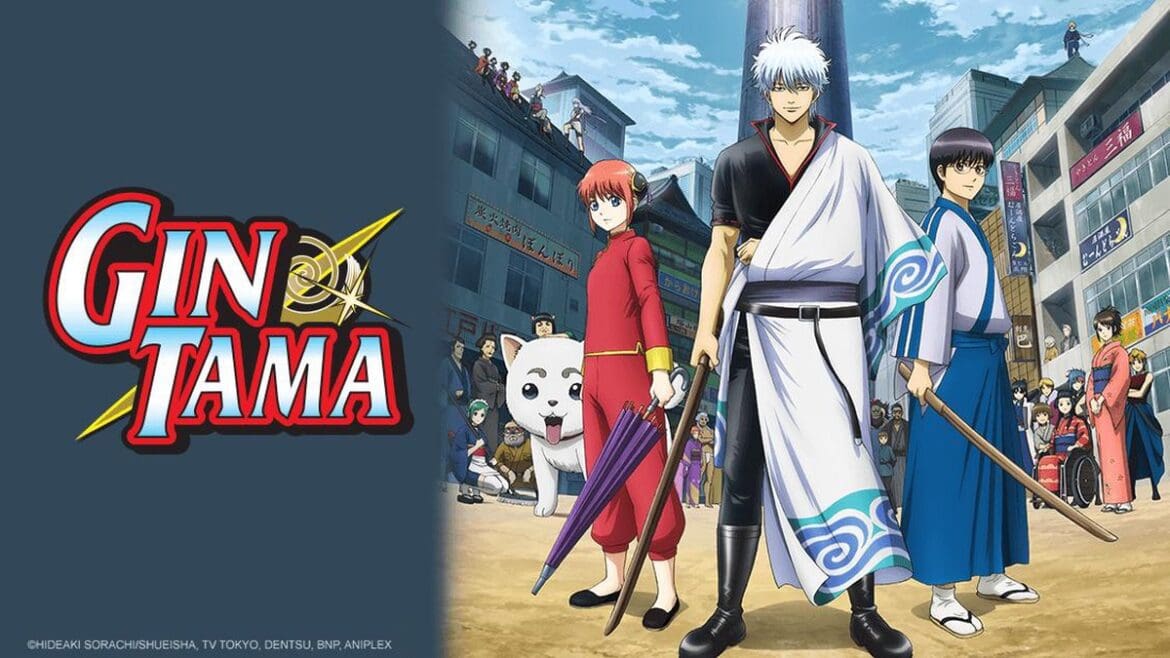
Hideaki Sorachi’s long-running manga (2003-2018) got an enormous 367-episode anime plus multiple films. Set in an alternate Edo Japan where aliens (Amanto) have invaded and banned swords, it follows Gintoki Sakata, a lazy ex-samurai running an odd-jobs business with two assistants. Gintama isn’t a school anime, but its commitment to absurdist comedy, mature humor, parody, and breaking the fourth wall shares Prison School’s DNA. When it gets serious, it produces some of the best samurai drama in anime; when it’s silly, it’s some of the funniest material ever animated. A massive time commitment, but well worth it.
- 🎬 The hook: a lazy ex-samurai’s odd-jobs business in an alien-occupied Edo
- ⭐ Like Prison School for: absurdist, fourth-wall-breaking comedy with no off switch
7Highschool of the Dead

The 2010 Madhouse adaptation of Daisuke and Shouji Sato’s manga. When a zombie outbreak hits Fujimi High School, a group of students and a teacher fight their way through hordes of “Them” while their relationships shift in the apocalypse. Like Prison School, it pairs a high-stakes premise with constant ecchi humor and exaggerated designs, and the action and survival-horror elements are taken seriously despite the gratuitous fan service. The manga sadly remains unfinished after writer Daisuke Sato’s death in 2017, but the anime is a complete enough watch.
- 🎬 The hook: a zombie outbreak tears through a high school
- ⭐ Like Prison School for: a high-stakes premise wrapped in constant ecchi and big designs
6Golden Boy
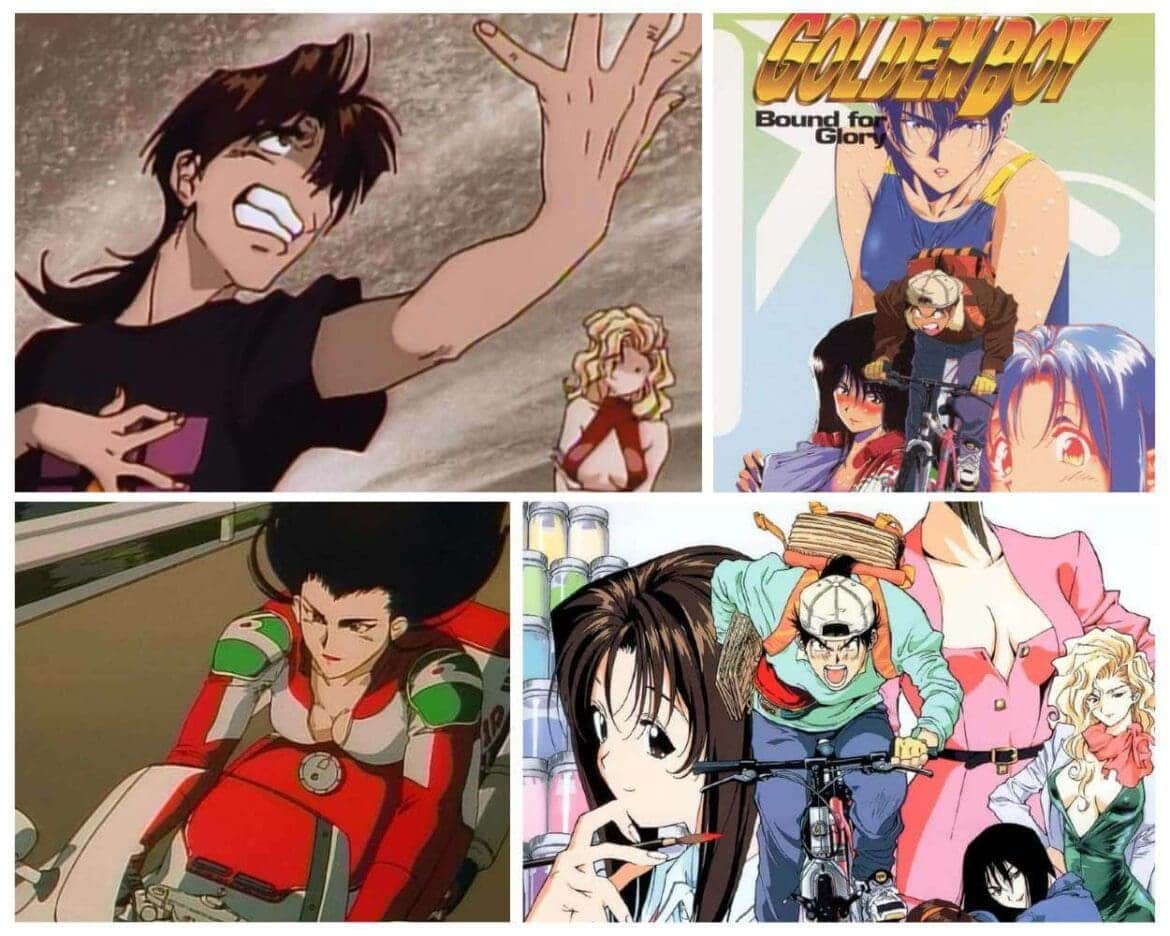
The 1995-1996 OVA series adapted from Tatsuya Egawa’s manga. Kintaro Oe is a 25-year-old wanderer with a law degree who travels Japan taking odd jobs and learning life lessons (and chasing women). Each of the six episodes is a self-contained story showcasing his surprising competence beneath a perverted exterior. This is the OG ecchi-comedy classic and foundational for the whole genre. The animation holds up well 30 years later, and Kintaro’s habit of studying everything he encounters became the template for countless ecchi protagonists who followed.
- 🎬 The hook: a brilliant 25-year-old drifter who studies everything (and everyone)
- ⭐ Like Prison School for: the OG template the whole ecchi-comedy genre grew from
5School Rumble

The 2004-2008 anime by Studio Comet adapted from Jin Kobayashi’s manga. Tenma Tsukamoto is a high schooler in love with the strange, silent Karasuma Oji, while delinquent Kenji Harima is in love with Tenma, and the resulting misunderstandings drive most of the series. It’s lighter than Prison School in content (no real ecchi), but it shares the same gift for chasing a gag to its furthest absurd conclusion. The “love is a battlefield” tagline genuinely fits, and School Rumble is a classic for a reason.
- 🎬 The hook: a tangle of one-sided high-school crushes and constant miscommunication
- ⭐ Like Prison School for: chasing a gag to its furthest absurd end (lighter, no ecchi)
4Rosario + Vampire
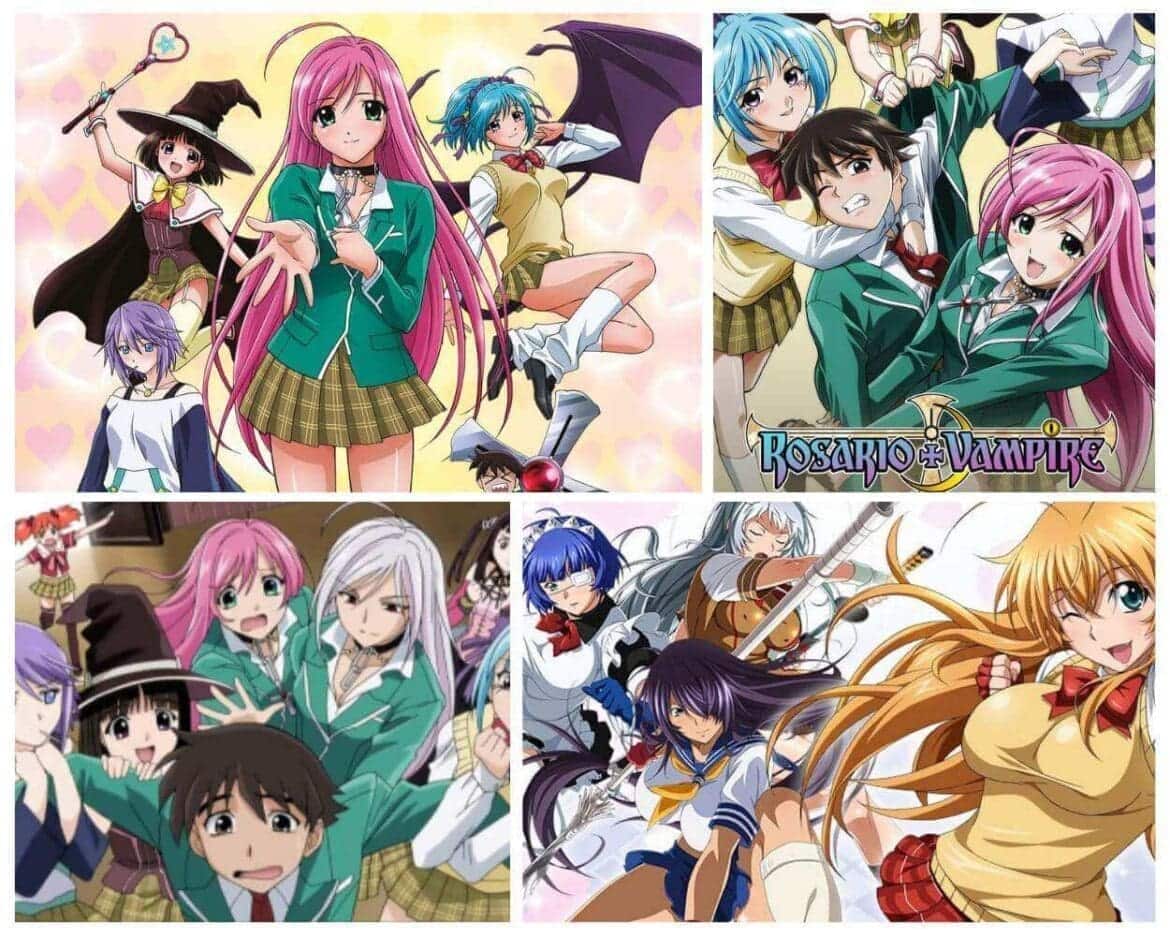
The 2008 adaptation of Akihisa Ikeda’s manga (2004-2014). Tsukune Aono fails to get into any normal high school, so his parents accidentally enroll him in Yokai Academy, a school exclusively for supernatural monsters. He has to hide his human identity (humans are killed on sight) while navigating interest from various monster girls. It’s a pure school harem anime: two seasons, plenty of fan service, increasingly elaborate monster-girl designs. For Prison School fans who liked the school setting and the dynamic between the protagonist and an exotic female cast, it hits the right notes.
- 🎬 The hook: a human hiding out at a monster academy full of monster girls
- ⭐ Like Prison School for: the school setting and protagonist-among-an-exotic-cast dynamic
3Panty & Stocking with Garterbelt
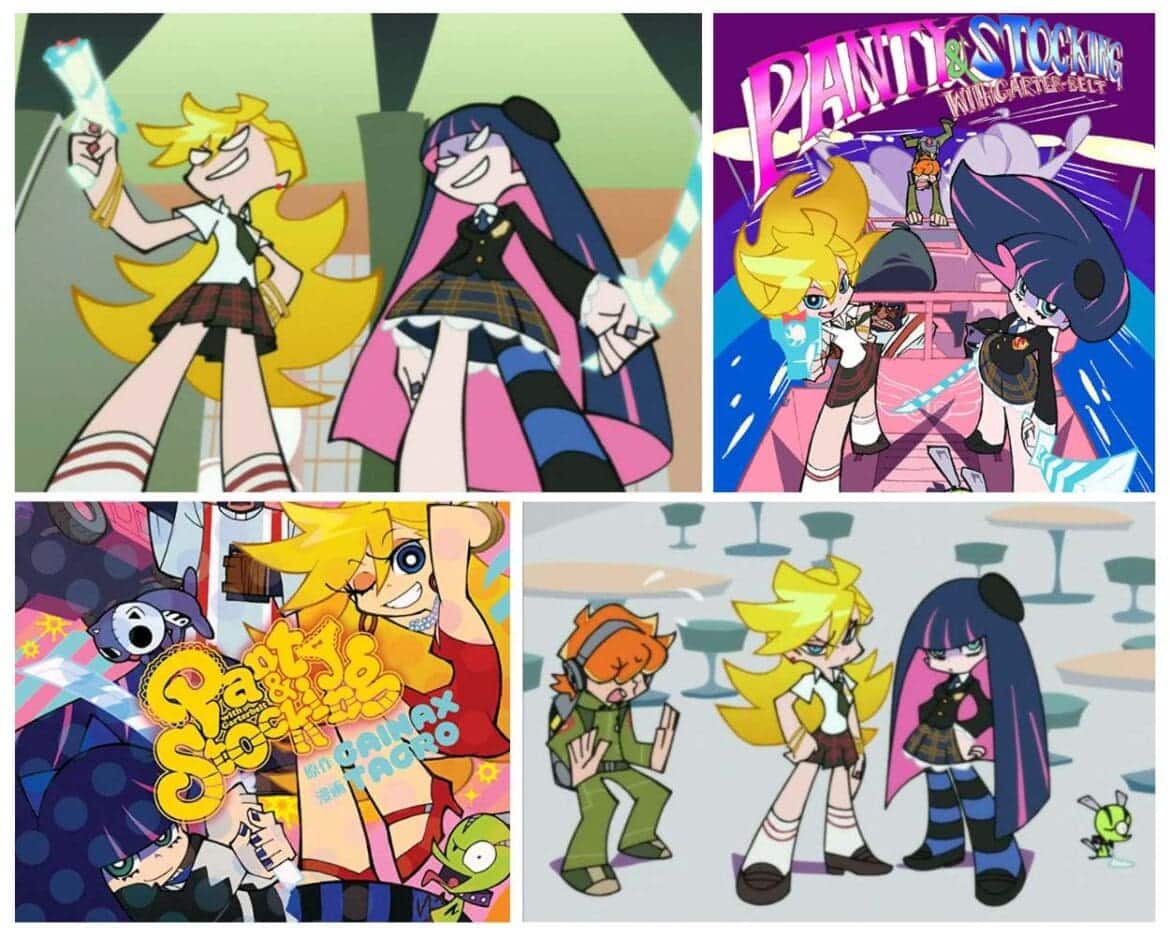
The 2010 anime by Gainax (the studio behind Evangelion and Gurren Lagann). Two fallen angels, Panty, the boy-crazy one, and Stocking, the goth glutton, work to earn their way back into Heaven by hunting ghosts in Daten City. The animation deliberately mimics Western cartoons like The Powerpuff Girls, giving the show a unique aesthetic unlike anything else in anime. It’s aggressively crude, gleefully blasphemous, and absolutely committed to its irreverent tone, with wild and inventive animation. A long-awaited second season finally arrived more than a decade after the original.
- 🎬 The hook: two foul-mouthed fallen angels hunt ghosts, drawn like a Western cartoon
- ⭐ Like Prison School for: gleeful, unrestrained crudeness and inventive animation
2Detroit Metal City
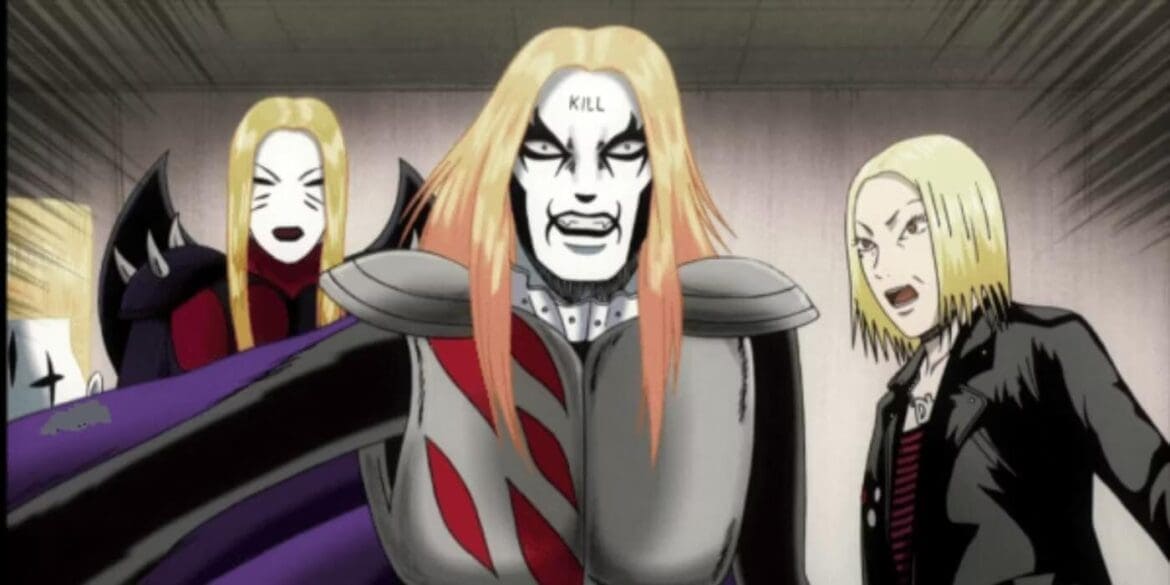
The 2008 OVA adaptation of Kiminori Wakasugi’s manga. Souichi Negishi is a sensitive young man who moved to Tokyo to become a soft-spoken Swedish-style pop musician. Instead, he’s somehow become the lead singer of Detroit Metal City, a death metal band, performing as the demonic “Johannes Krauser II” while desperately trying to keep his actual gentle personality secret. The premise is brilliant, and the comedy of Souichi’s double life produces some of the funniest sequences in any ecchi-adjacent anime. The OVA is short (12 episodes around 13 minutes each) but absolutely worth it. The manga is even better.
- 🎬 The hook: a gentle would-be pop musician trapped as a death-metal demon frontman
- ⭐ Like Prison School for: a brilliant premise pushed for maximum comedy
1Is This a Zombie?
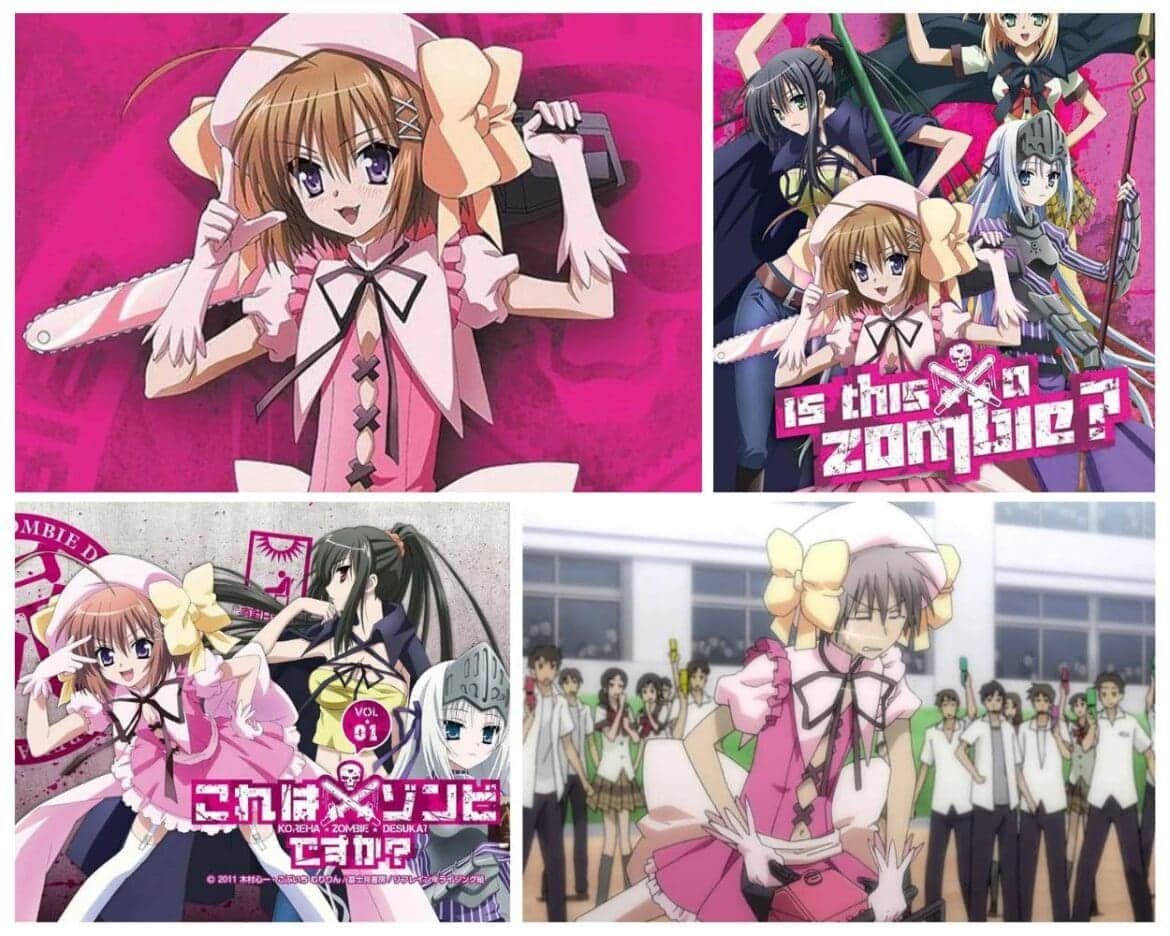
The 2011-2012 anime adapted from Shinichi Kimura’s light-novel series. Ayumu Aikawa is murdered, resurrected as a zombie by a necromancer, then accidentally absorbs the powers of a passing magical girl, so now he can transform into one himself, chainsaw and pink frilly outfit included. He has to protect both his necromancer benefactor (who lives in his house) and the magical girl whose powers he stole. The show throws zombie story, magical-girl parody, vampire mythology, and comedy harem into a blender and somehow makes it work, and that genre-blending and willingness to embrace the ridiculous match Prison School’s tonal commitment.
- 🎬 The hook: a resurrected zombie who becomes a chainsaw-wielding magical girl
- ⭐ Like Prison School for: gleeful genre-blending and total tonal commitment
What Defines Prison School and Its Peers
The shows that share Prison School’s DNA generally hit a specific combination of qualities:
- ✅ An absurd school premise: all-girls schools, monster academies, training facilities for fake sports. The setting itself is part of the joke.
- 💡 Adult humor played straight: the comedy works because the characters take their ridiculous situations seriously. The setup is absurd; the reactions are sincere.
- 🔥 Memorable character designs: the visual identity of these shows is often as important as the writing, with distinctive silhouettes and exaggerated features that read instantly.
- ✅ Commitment to following the bit: the best entries refuse to back off from their premises. They follow the joke to its absolute end.
- 💡 Genuine character investment: for the comedy to work, the audience has to actually care about the characters. The best ecchi comedies layer real emotional stakes underneath the absurdity.
- 🔥 High-quality production: Prison School’s animation budget was visible on screen, and its successors generally share that commitment to polished execution despite (or because of) the absurd content.
Where to Start
If you want the closest spiritual successor to Prison School, watch Grand Blue Dreaming first: same energy, same commitment to absurd scenarios, same willingness to push gags way past what other shows would attempt.
For pure ecchi comedy with strong action, Kill la Kill is the best in class and the most accessible entry point. For more depth and emotional weight underneath the comedy, Great Teacher Onizuka is the foundational classic of the entire “delinquent in an institution” genre. For non-stop sexual humor with committed deadpan delivery, Seitokai Yakuindomo is unmatched.
The shorter watches (Detroit Metal City‘s 12-episode OVA, Golden Boy‘s 6-episode OVA) are good for sampling the genre without a major time commitment. Gintama is the inverse problem: 367+ episodes is daunting, but it’s worth it for fans who love this comedy style.
Whatever you start with, the genre rewards viewers willing to embrace the absurd. Prison School set a high bar, and these shows clear it in their own ways. Which one would you add?