Kishou Arima is the character who makes Tokyo Ghoul one of the great modern shōnen tragedies instead of just another action manga. The CCG’s White Reaper. The undefeated ghoul investigator. The quietly broken man at the center of one of the most ambitious anime stories of the 2010s.
If you’ve watched Tokyo Ghoul, you have an opinion on Arima. Probably a strong one. Let’s talk about why.
Spoiler warning: This post discusses Kishou Arima’s full character arc across both Tokyo Ghoul and Tokyo Ghoul:re. Major reveals about his identity, his backstory, and his ending are all on the table. If you haven’t finished the manga or the anime adaptations, come back later. You’ve been warned.
Who Is Kishou Arima?
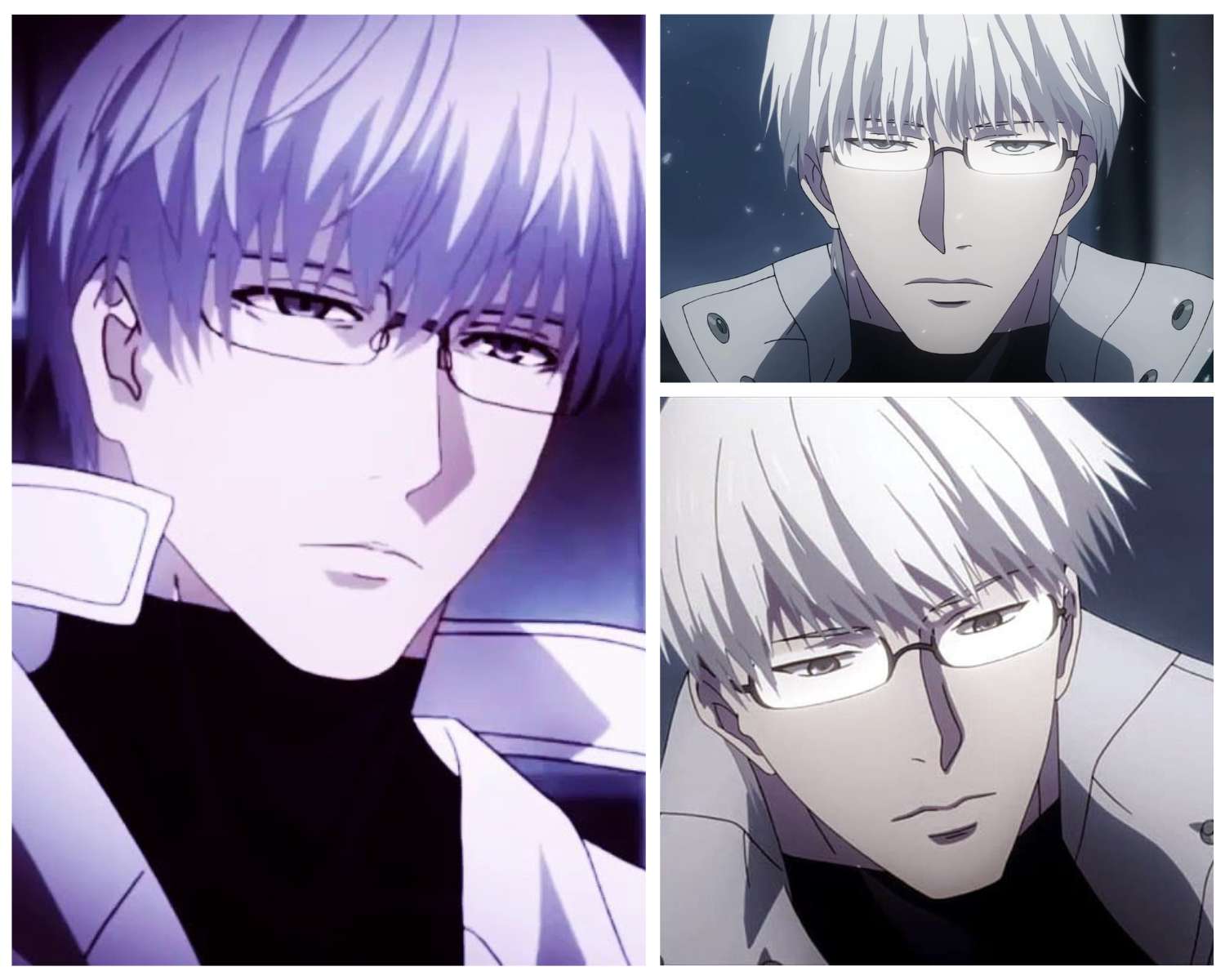
Kishou Arima is the Commission of Counter Ghoul’s most lethal investigator. Tall, slender, white-haired, perpetually wearing glasses. He moves through battlefields with the calm of someone reading a book. He’s killed more high-rank ghouls than anyone else alive. He has never lost a fight on-screen.
His title is the “White Reaper.” His other names include the “CCG’s Reaper,” “Jack” (from his teenage years in the prequel Tokyo Ghoul: Jack), and eventually the “One-Eyed King.” Each name marks a different phase of his life. Each is a different version of the same fundamentally lonely person.
He is, on paper, an antagonist for most of the original Tokyo Ghoul. By the end of Tokyo Ghoul:re, he’s something much more complicated.
The Calm Is the Point
Arima’s defining trait is calmness. Total, unbreakable, slightly inhuman calmness. He doesn’t yell. He doesn’t sweat. He doesn’t seem to feel fear or excitement during combat. He fights ghouls — creatures that eat humans for survival, that have armored bodies and weaponized appendages — with the focus of someone solving a math problem.
Why this works: In a series defined by emotional extremity — Kaneki’s screaming transformations, Touka’s grief, Hinami’s trauma, every ghoul’s existential horror — Arima is the still point. He’s the eye of the storm. The contrast makes him terrifying. Anyone fighting Arima is fighting a person who has already won internally before the battle starts.
Sui Ishida (the creator) designed Arima specifically to be the kind of antagonist you can’t reason with through emotion. He doesn’t have buttons to push. There’s no exploitable rage. You can’t bait him. That’s part of why Arima fights tend to be one-sided executions rather than back-and-forth duels.
The Quinques
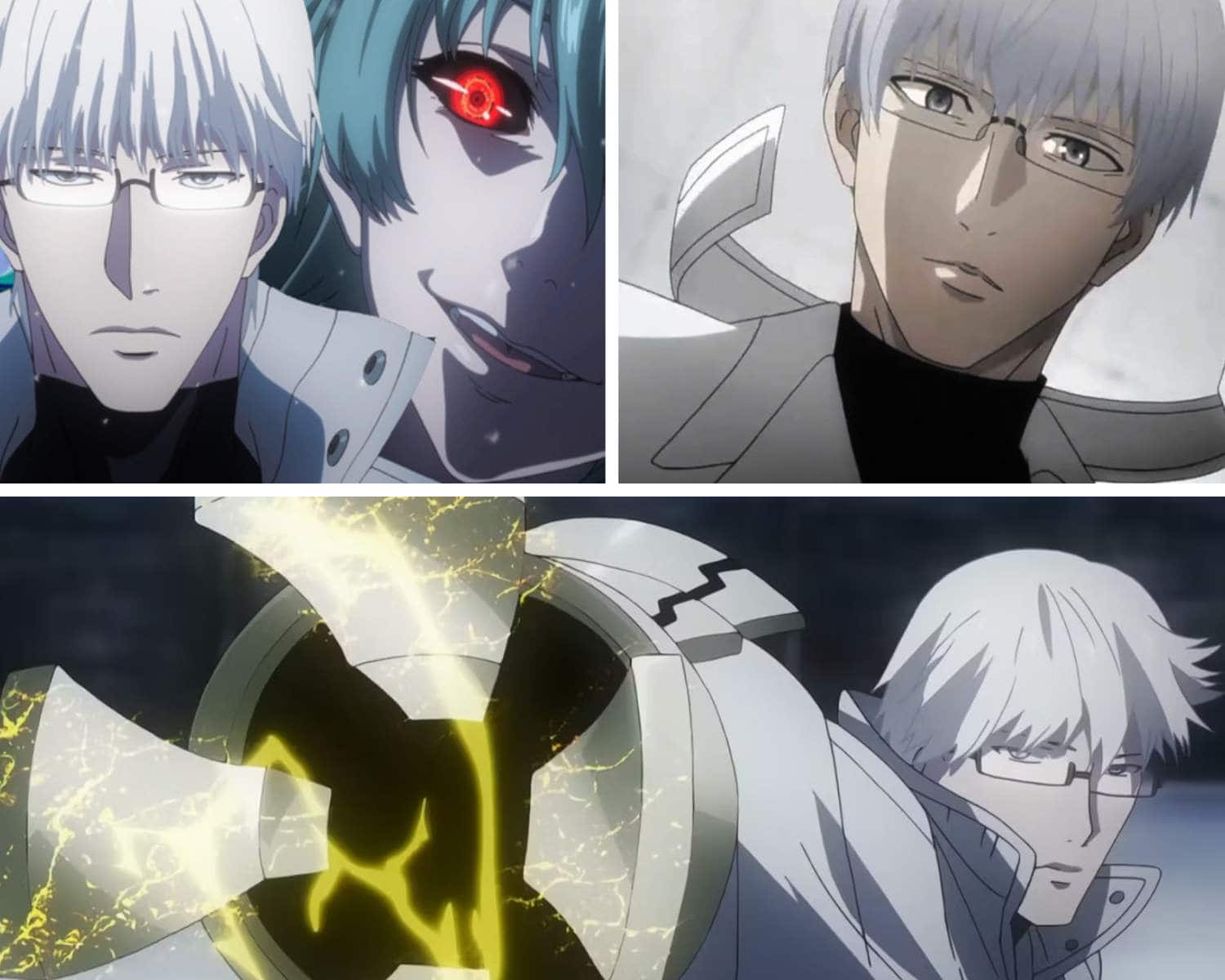
Quinques in Tokyo Ghoul are weapons made from the kagune (the predatory organ) of dead ghouls. The CCG harvests them and forges them into investigator gear. Most investigators carry one quinque and rely heavily on it. Arima carries multiple, and uses them all at different levels of mastery:
- IXA — his signature koukaku quinque, a versatile blade-and-cross-shaped weapon
- Narukami — an ukaku quinque that fires concentrated energy projectiles like lightning
- Yukimura 1/3 — a thin koukaku katana, his most refined personal blade
- Owl — the SSS-rated ukaku quinque made from the One-Eyed Owl, a weapon so dangerous most investigators wouldn’t even attempt to wield it
The fact that he can use all four at peak proficiency is the technical reason he’s the strongest investigator. The Owl quinque alone would be a career-defining weapon for most CCG operatives. Arima uses it casually.
Arima’s Half-Ghoul Identity
The reveal that recontextualizes everything: Late in Tokyo Ghoul:re, the manga reveals that Kishou Arima is not a regular human. He’s a “half-human,” a product of the secret Sunlit Garden program — the CCG’s hidden facility where they experimented with breeding ghoul/human hybrid children to use as weapons. Arima was raised in the Sunlit Garden. His inhuman calm, his physical capabilities, his accelerated reflexes — all of it comes from being engineered for this purpose.
This reveal changes everything about how to read his character. The man Tokyo Ghoul has spent its entire run framing as humanity’s greatest weapon against ghouls is, biologically, partially what he’s been killing. The CCG raised him to fight against his own kind.
It also explains his short lifespan. Sunlit Garden children age fast and die young. Arima has always known he wasn’t going to live long. That knowledge shapes every choice he makes.
Arima and Kaneki: The Father-Son Thing
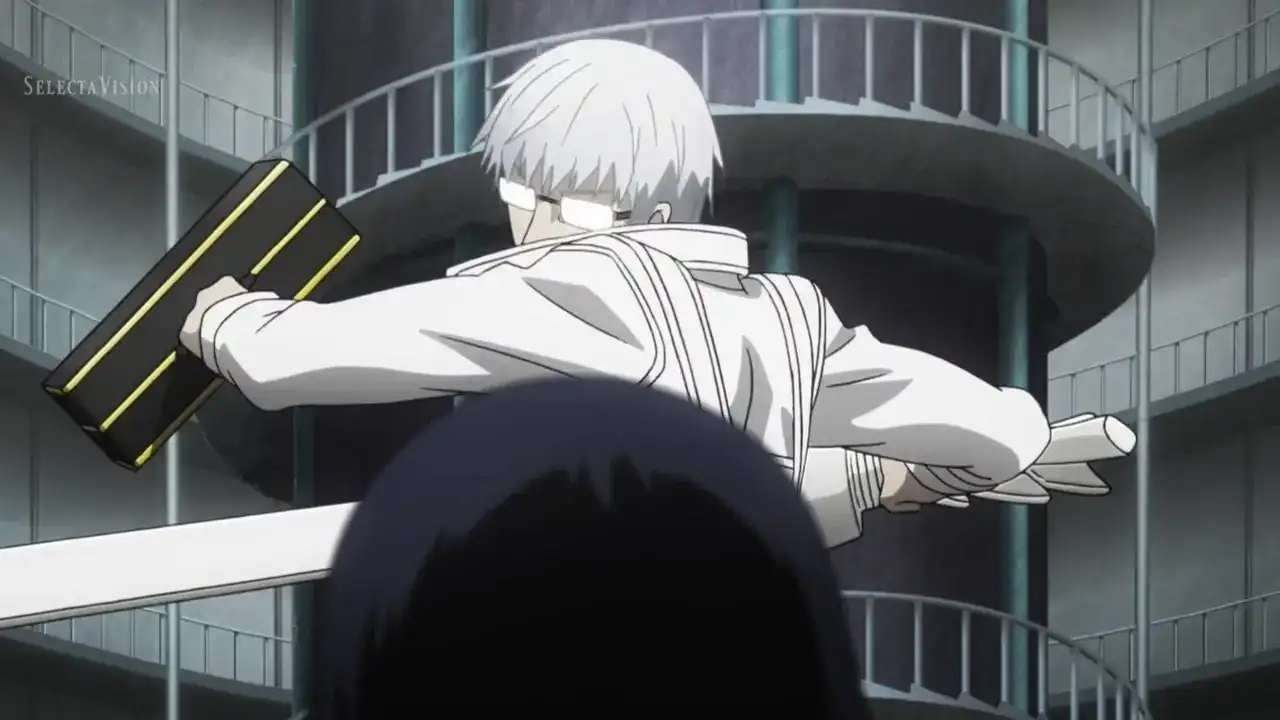
The most important relationship in Arima’s story is his connection to Ken Kaneki. At the end of the original Tokyo Ghoul, Arima brutally defeats Kaneki in the Owl Suppression Operation. Kaneki nearly dies. Then Arima takes him in.
In Tokyo Ghoul:re, Kaneki (now amnesiac and renamed “Haise Sasaki”) works under Arima at the CCG. Arima trains him. Arima shapes him. Arima becomes the closest thing to a father figure that Kaneki has had in his entire life. The fact that Arima is the man who nearly killed him is the bitter irony of the relationship.
The dynamic is genuinely one of the best mentor-student arcs in modern anime. It’s also one of the saddest, because both characters know what they are to each other on a level neither one fully says out loud. Arima knows Kaneki is the half-ghoul he was once sent to kill. Kaneki knows Arima is the most dangerous human alive. They train together anyway.
Arima as the One-Eyed King
One of the major mysteries of Tokyo Ghoul:re is the identity of the One-Eyed King — the legendary figure rumored to lead all ghouls. Many characters speculate about who it could be. Then the manga reveals: it’s Arima.
That’s right. The CCG’s strongest weapon against ghouls is also, secretly, the head of the underground ghoul resistance against the CCG. He’s been playing both sides for years, working to dismantle the system he was raised inside.
Why he did it: Arima’s plan was never simple revenge. He saw the Sunlit Garden program for what it was — a system that uses children as weapons. He saw the CCG’s treatment of ghouls as part of the same machinery. He couldn’t fight it openly without losing everything. So he worked from inside, killed who he needed to kill to maintain his position, and slowly positioned Kaneki to be the one who could actually destroy the system.
Arima as the One-Eyed King is one of the great long-game character reveals in modern manga. You can re-read the whole series with this in mind and watch every scene transform. He was never just a killer. He was always preparing his replacement.
Arima’s Death
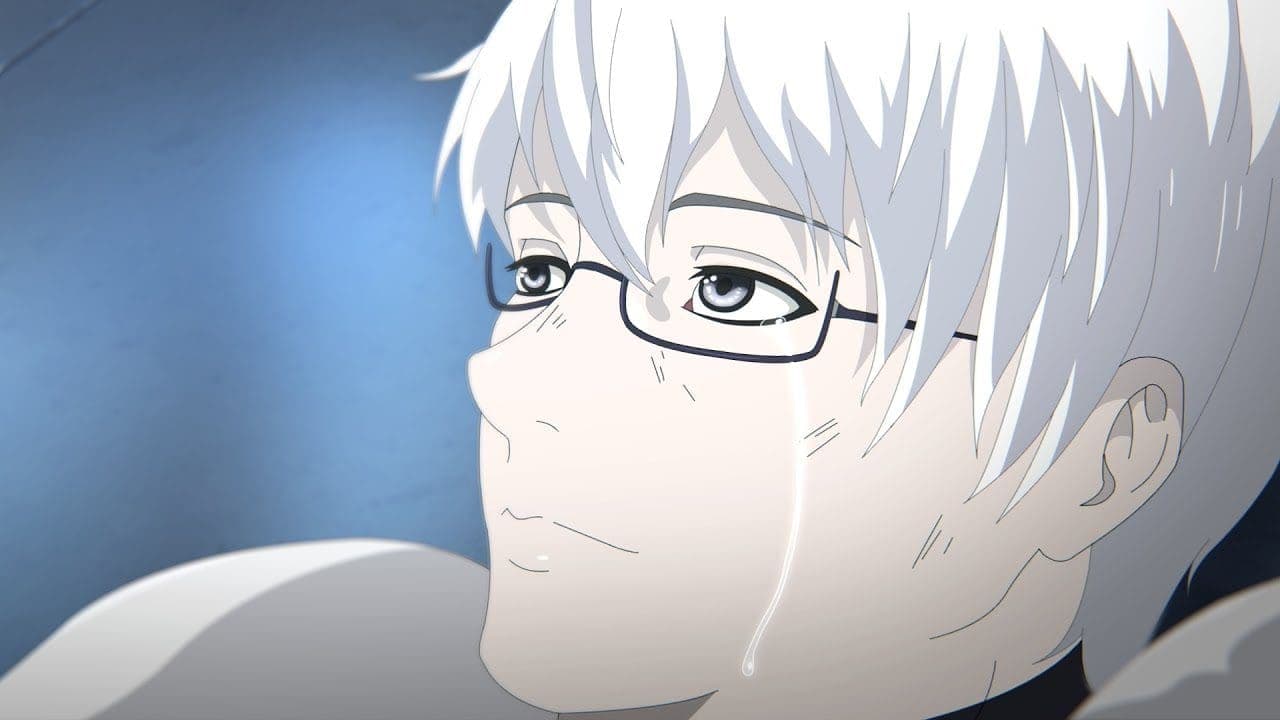
The hardest spoiler: Arima dies in Tokyo Ghoul:re Chapter 78, in a fight with Kaneki. It’s not a defeat. It’s a suicide. He intentionally lets Kaneki kill him to mark Kaneki’s official ascension as the next One-Eyed King and the symbol the ghoul resistance needs. Arima orchestrates his own death as the final move in his long plan. Kaneki doesn’t realize what’s happening until it’s too late.
The death scene is one of the most discussed moments in Tokyo Ghoul fandom. It’s quiet. It’s deliberate. Arima dies the way he lived — completely in control of the situation, even as the situation kills him. The fact that the man who never lost a fight chose to lose his last one to make a point is the kind of character writing that justifies the entire series.
Kaneki carries this for the rest of the manga. Arima passes the torch and is gone. The story keeps moving without him, but it’s never the same.
Arima’s Voice Cast
Arima is voiced by:
- Takahiro Sakurai (Japanese) — also voices Cloud Strife in Final Fantasy VII Remake, Suzaku Kururugi in Code Geass, Giyu Tomioka in Demon Slayer, and approximately a thousand other major anime roles. He’s one of the most respected seiyuu working.
- Kyle Hebert (English dub) — known for adult Gohan in Dragon Ball Z, Aizen in Bleach, Sosuke Aizen in various Bleach media, and many other major roles.
Both performances are excellent. Sakurai’s calm-but-tense delivery is iconic. Hebert’s English version brings a more measured restraint that fits the character’s Western dub interpretation.
Arima’s Design
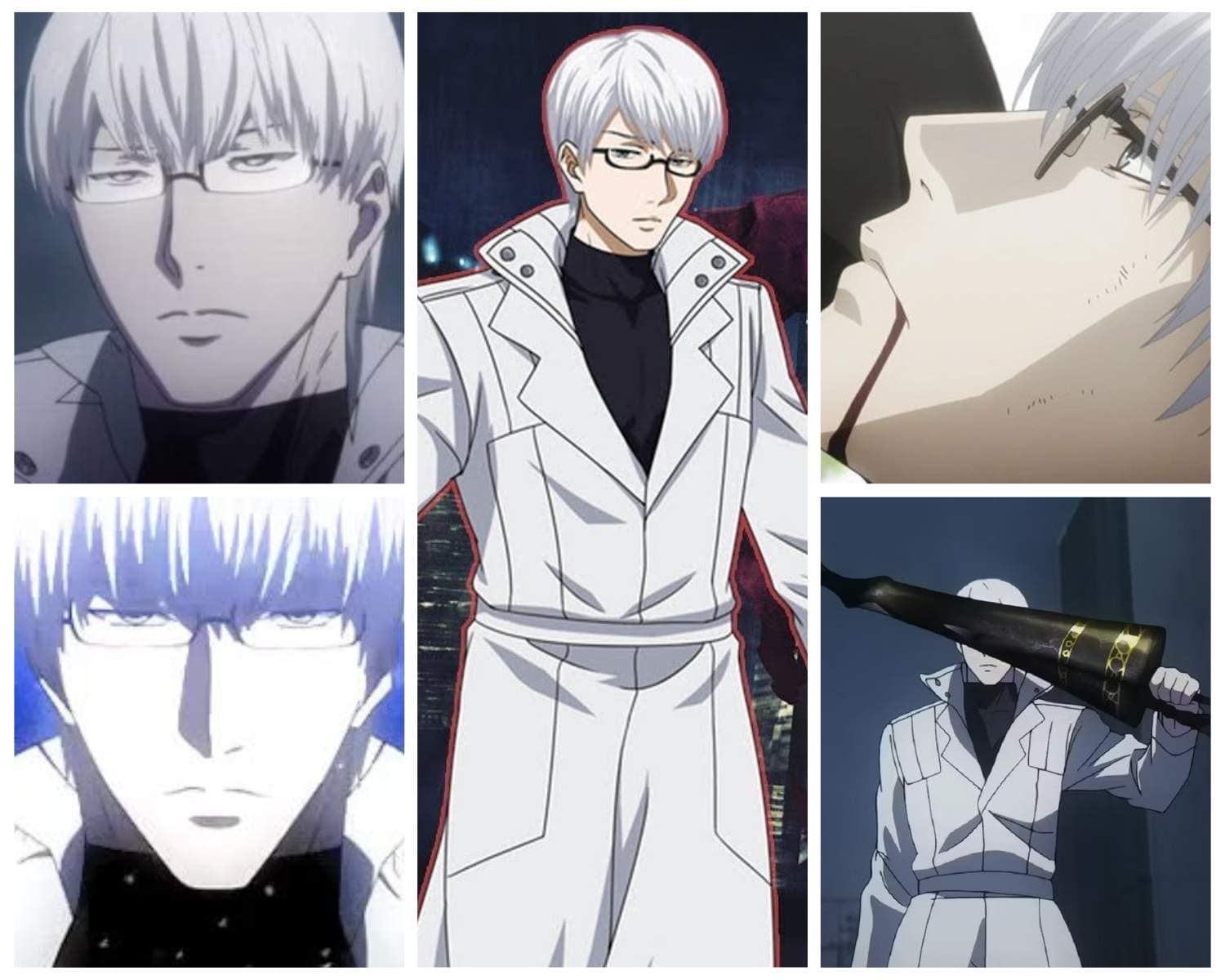
Sui Ishida designed Arima to be intentionally unintimidating on first glance. The glasses. The neat suit. The slender build. The neutral expression. Nothing about him says “lethal killing machine.”
That’s the design choice. Arima looks like an accountant or a librarian. Then he draws his quinque and you remember everything you’ve read about him. The disconnect between his appearance and his reputation is part of what makes him terrifying to other characters in-universe. The CCG’s most dangerous weapon doesn’t look the part.
The Arima Aesthetic
White hair. Glasses. Pale skin. Always wearing a CCG investigator suit. Always carrying multiple quinques on his belt. Always speaking in even, measured sentences.
The character has become a major aesthetic reference in modern anime fandom. The “calm, deadly, intellectual” archetype has Arima’s DNA all over it. You can see traces of him in characters that came after — particularly in Jujutsu Kaisen’s Gojo Satoru (calm power, glasses-obscured eyes, total tactical dominance) and various other 2020s anime mentors.
Where Arima Sits in the Tokyo Ghoul Pantheon
The Tokyo Ghoul cast is full of iconic characters. Kaneki obviously dominates as the protagonist. Hinami, Touka, Tsukiyama, Eto, and Yoshimura are all unforgettable. But Arima has the most complete arc of any single character in the series:
- Born into a system that exploited him
- Becomes the symbol of that system’s power
- Secretly plots to dismantle the system from inside
- Trains his own replacement
- Chooses his own death to make his replacement’s rise possible
That’s a Greek tragedy in five beats. Most anime characters don’t have arcs this complete. Sui Ishida built Arima to be a self-contained, beginning-middle-end character even while serving as a major antagonist and mentor to the main protagonist.
Arima Across the Tokyo Ghoul Series
Arima appears in:
- Tokyo Ghoul: Jack (prequel) — young Arima working with Kishou Arima’s mentor Taishi Fura. This is where his “Jack” nickname comes from. It’s also where his character development as a young investigator gets fleshed out.
- Tokyo Ghoul (original) — appears as a recurring antagonist, most notably in the Owl Suppression Operation arc and the climactic fight with Kaneki
- Tokyo Ghoul:re (sequel) — central mentor and antagonist figure throughout. His death in Chapter 78 is a major series turning point.
Both the original Tokyo Ghoul anime and Tokyo Ghoul:re anime adaptations are controversial among fans (the second half of the anime adaptation famously rushed and altered the manga’s story), but Arima is well-handled in both. His core characterization survived the adaptation issues.
The Tokyo Ghoul Anime Adaptation Problem
Important context for newcomers: The Tokyo Ghoul anime, especially the second half (Tokyo Ghoul √A onward), is widely considered inferior to the manga. Studio Pierrot’s adaptations made significant changes, skipped or compressed key arcs, and rushed major plot points. Arima’s character is more complete and more devastating in the manga. If you only know him from the anime, you’re missing significant character development. The manga is the canonical version of the story.
If you want the full Arima experience, read the manga. If you want the visual version of his story, watch the anime knowing you’ll be supplementing with the manga afterward.
Where to Read or Watch Tokyo Ghoul
As of 2026:
- Manga: Tokyo Ghoul and Tokyo Ghoul:re are both available through Viz Media in English. Digital versions are on most major manga platforms.
- Anime: The four seasons (Tokyo Ghoul, √A, :re, and :re S2) are on Crunchyroll, Hulu, and various other anime streaming services depending on region.
- Light novels and side material: Various Tokyo Ghoul spinoff novels exist, including some that flesh out Arima’s backstory.
Why Arima Hits Different
The honest take: Tokyo Ghoul has a lot of characters. Most are great. Arima is the one who elevates the entire series from “good edgy 2010s anime” to “actual literary tragedy.” His arc isn’t about power. It isn’t about revenge. It’s about a person who was made into a weapon by a corrupt system, and who spent his whole life using that weapon-self to slowly destroy the system that made him. He never gets to be a regular person. He never gets a happy ending. He gets to die on his own terms, having set up the future. That’s enough for him.
For a character introduced as “the unstoppable killer guy,” that’s a remarkable amount of character work. Sui Ishida wrote one of the best long-form character arcs in modern shōnen, and Arima is the proof.
So, where does Arima rank for you in Tokyo Ghoul, and how did you feel about his ending? For me, the moment he lets Kaneki “kill” him is one of those scenes that just sits in the chest. I read it once and had to put the manga down for a week. Tell me your reaction.