Let’s talk about Doug Funnie, the awkward, journal-writing, Quailman-imagining 11-year-old protagonist of the classic 1990s animated series Doug.
If you grew up in the 90s, you probably watched Doug at some point. Whether it was the original 1991-1994 Nickelodeon run or the 1996-1999 Disney revival, the show was on every kid’s radar. Doug Funnie himself became one of the most quietly influential animated protagonists of the decade. Not because he was flashy. Not because he had powers. But because he felt like an actual 11-year-old kid with believable insecurities, crushes, friendships, and weird daydream fantasies.
In this post, I’m breaking down everything about Doug Funnie: who he is, his family, his iconic superhero alter ego Quailman, his never-ending crush on Patti Mayonnaise, and why this seemingly unremarkable cartoon character holds such a beloved place in 90s nostalgia.
Who Is Doug Funnie?
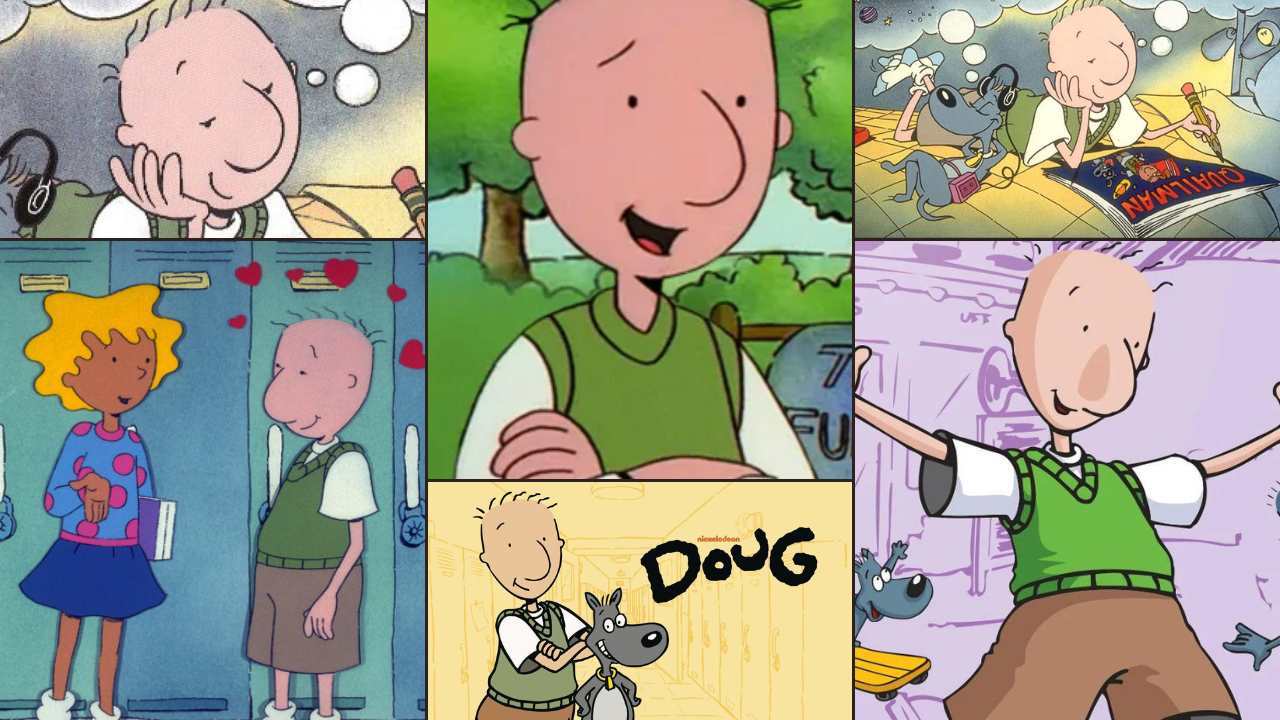
Douglas “Doug” Yancey Funnie is the main character of the animated series Doug, which originally aired on Nickelodeon from 1991 to 1994 and was later revived as Disney’s Doug (also known as Brand Spanking New! Doug) on ABC’s One Saturday Morning from 1996 to 1999.
Doug is an 11-year-old boy (later aged up to 12½ in the Disney version) who recently moved from the small town of Bloatsburg to the larger town of Bluffington when his father got a new job. He’s a 6th grader at Bluffington School in the Nickelodeon series, then a 7th grader at Beebe Bluff Middle School in the Disney revival. The show was created by Jim Jinkins and was based on his real childhood experiences.
📓 Doug Funnie Quick Facts
- Full name: Douglas Yancey Funnie
- Age: 11 (Nickelodeon), 12½ (Disney)
- Hometown: originally Bloatsburg, then Bluffington
- Created by: Jim Jinkins
- Voice actors: Billy West (Nickelodeon, 1991-1994), Tom McHugh (Disney, 1996-1999)
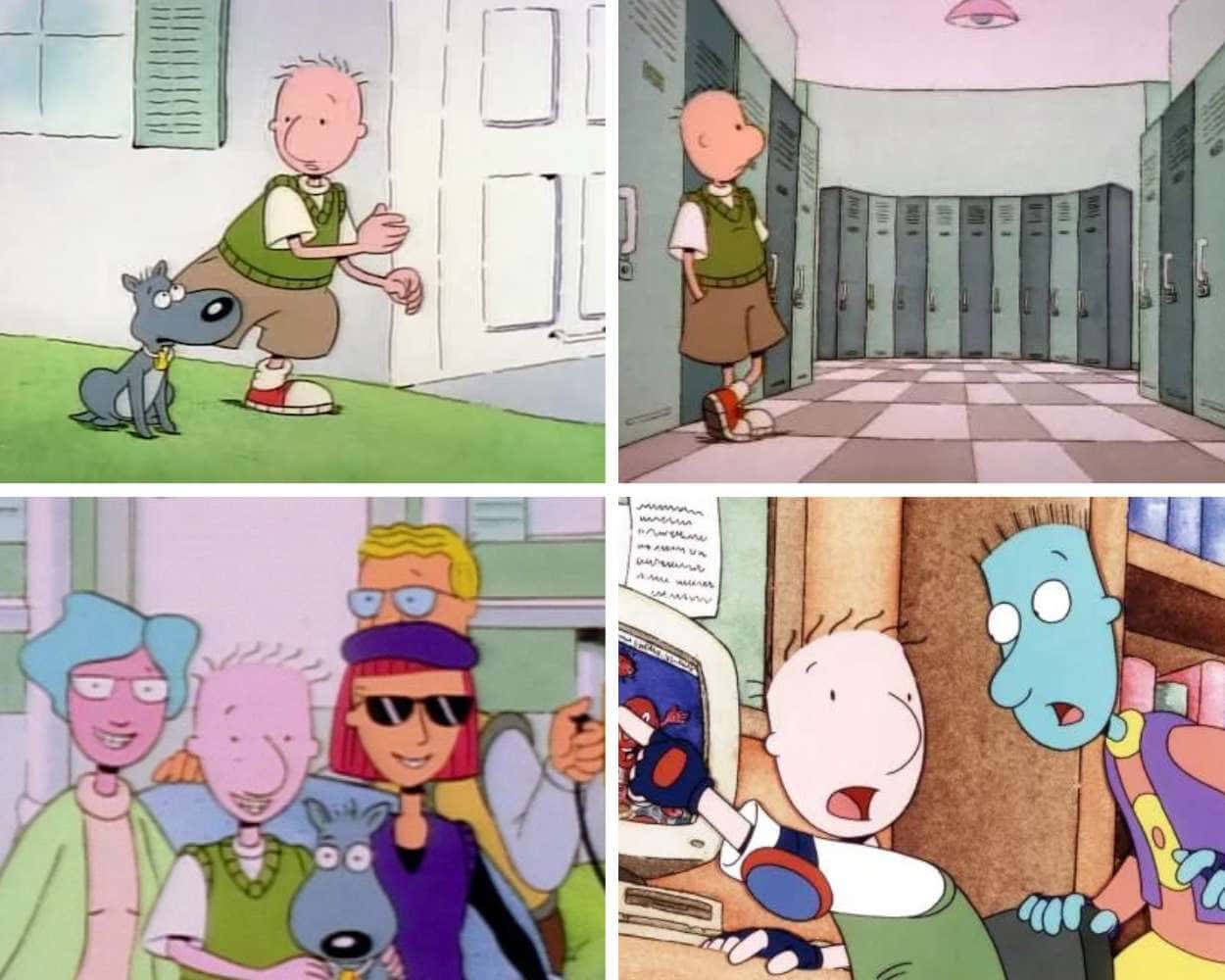
- Pet: Porkchop the beagle
- Best friend: Skeeter Valentine
- Crush: Patti Mayonnaise
- Main bully: Roger Klotz
- Superhero alter ego: Quailman
The Funnie Family
Doug’s family is one of the most realistically portrayed cartoon families of the 90s, with relatable dynamics that grounded the show’s gentle humor.
- ✅ Phil Funnie (father) — Doug’s calm, supportive dad who often dispenses life advice and teaches Doug things like the legendary “Funnie Fireball” pitch.
- 💡 Theda Funnie (mother) — Doug’s mom, who provides emotional support and a stable home base for the family.
- 🔥 Judy Funnie (older sister) — the dramatic, theatrical older sister obsessed with the arts. Voiced by Becca Lish.
- ✅ Cleopatra “Dirtbike” Funnie (younger sister) — added in the Disney revival series. The Funnies’ new baby daughter.
- 💡 Porkchop (pet beagle) — Doug’s loyal, surprisingly intelligent dog who lives in a doghouse modeled after a miniature suburban home, complete with TV and recliner. Easily one of the most iconic cartoon pets of the 90s.
Doug’s Personality and Character
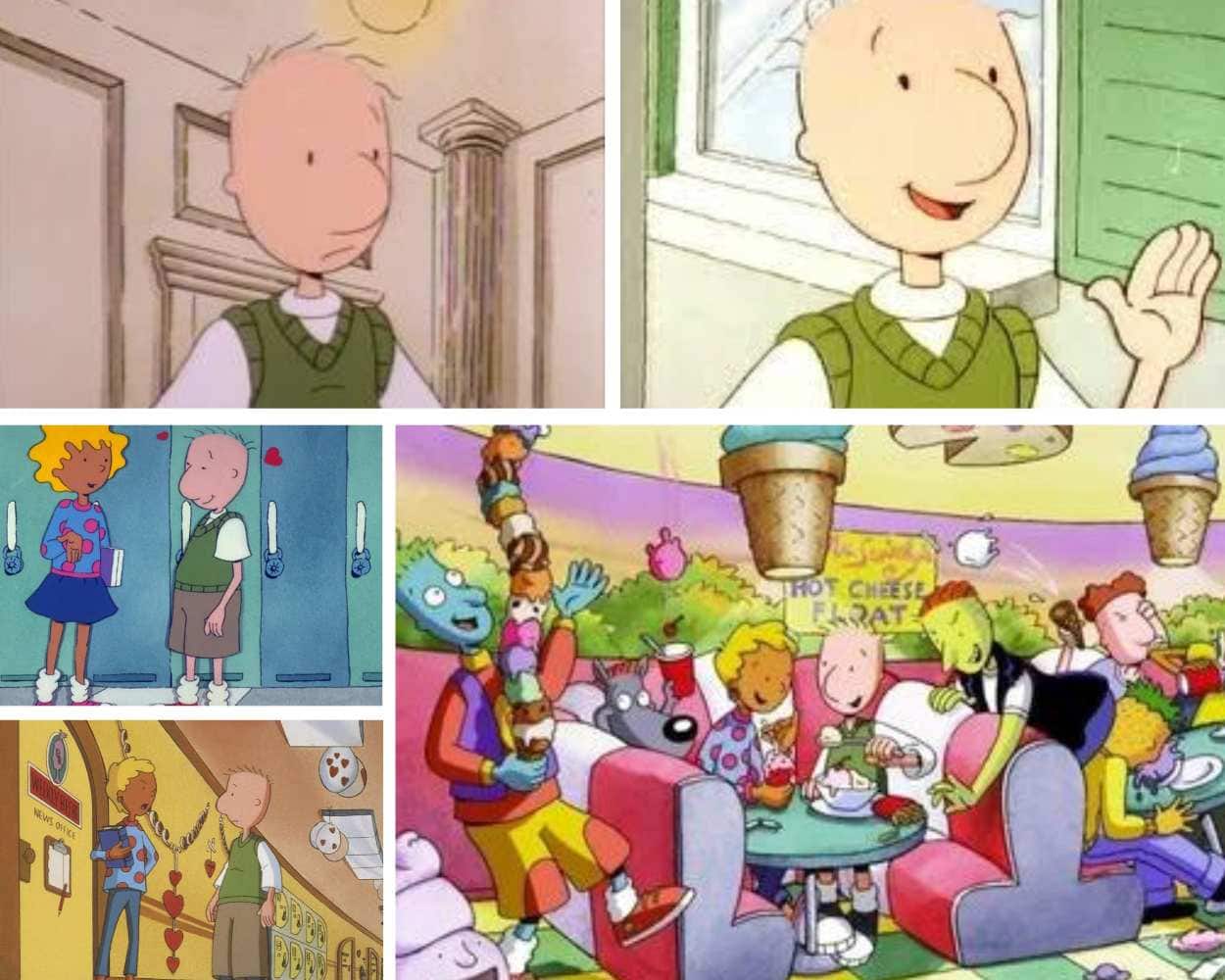
What made Doug Funnie distinctive among 90s cartoon protagonists was how genuinely average he was. He’s not a superhero. He’s not a chosen one. He’s not unusually talented or popular. He’s just a thoughtful, slightly anxious 11-year-old trying to navigate middle school, friendships, and his enormous crush on Patti Mayonnaise.
A few defining traits:
- ✅ Shy and introverted: Doug spends much of the show overthinking social situations, fearing judgment, and second-guessing himself before doing the right thing anyway.
- 💡 Imaginative and creative: Doug is an aspiring writer and cartoonist, which is why so much of the show takes place inside his elaborate daydream fantasies (Quailman, Race Canyon, Smash Adams).
- 🔥 Genuinely kind-hearted: despite his anxieties, Doug consistently tries to do the right thing, even when it’s inconvenient or socially costly.
- ✅ Emotionally vulnerable: the show actually lets Doug cry. Multiple episodes feature him processing genuine sadness, embarrassment, or grief in age-appropriate ways. Rare for 90s kids’ shows.
- 💡 Occasionally jealous and temperamental: Doug isn’t perfect. He has flashes of jealousy, especially around Patti’s male friends, and his temper can flare up when he feels betrayed or wronged.
That mix of relatable virtue and equally relatable flaw is what made Doug feel real to young viewers in a way that more idealized cartoon protagonists didn’t.
Quailman: Doug’s Iconic Superhero Alter Ego
Doug’s most iconic imagined alter ego is Quailman, a superhero who looks exactly like Doug in his tighty-whities, a red cape, and a belt worn on his forehead like a headband. The look is deliberately ridiculous, and that’s part of the joke.
Quailman’s powers include the “patience of a quail,” the “speed of a quail,” and the “power of a quail.” Practical interpretation: he flies, has super-vision, and uses his brain instead of brute force. Whenever Doug couldn’t figure out a real-world problem, his imagination would shift to Quailman saving the day in a metaphorical version of the same dilemma.
The Quailman segments were brilliant because they let the show explore the symbolic dimension of Doug’s everyday struggles. The school bully becomes a supervillain. The romantic rival becomes an evil mastermind. The lost homework becomes a kidnapped citizen. It taught generations of kids that imagination is a legitimate way to process difficult emotions.
Doug also imagined other alter egos throughout the series, including:
- ✅ Smash Adams (spy parody of James Bond)
- 💡 Race Canyon (Indiana Jones-style adventurer)
- 🔥 The Durango Kid (cowboy hero)
Doug and Patti Mayonnaise: The Quintessential 90s Crush
Doug’s crush on Patti Mayonnaise is one of the most iconic puppy-love subplots in 90s animation. From the first episode, Doug is hopelessly smitten with Patti, the kind, athletic, popular girl who’s somehow also Doug’s friend.
What made the relationship work was its emotional honesty. Doug is in love. Patti is friendly but oblivious for most of the original series. The two of them are genuinely good friends. And the show takes Doug’s feelings seriously without making them tragic or dismissive.
The relationship slowly developed across the Nickelodeon run, and in the Disney revival (and 1999’s Doug’s 1st Movie), it eventually evolved into mutual romantic interest. The first kiss between Doug and Patti became a generation-defining cartoon moment.
Doug’s Friend Group: Skeeter, Beebe, and the Bluffington Crew
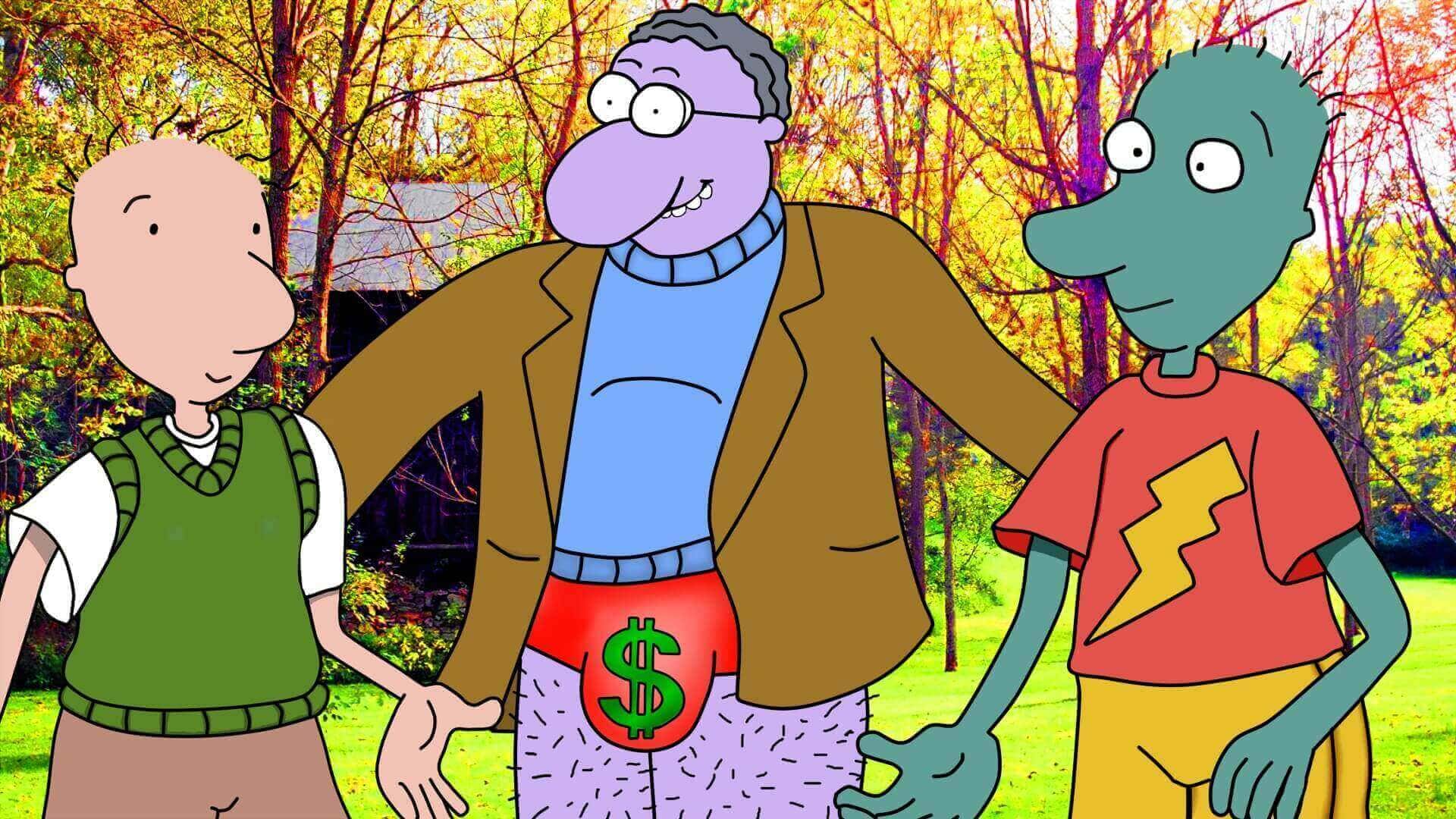
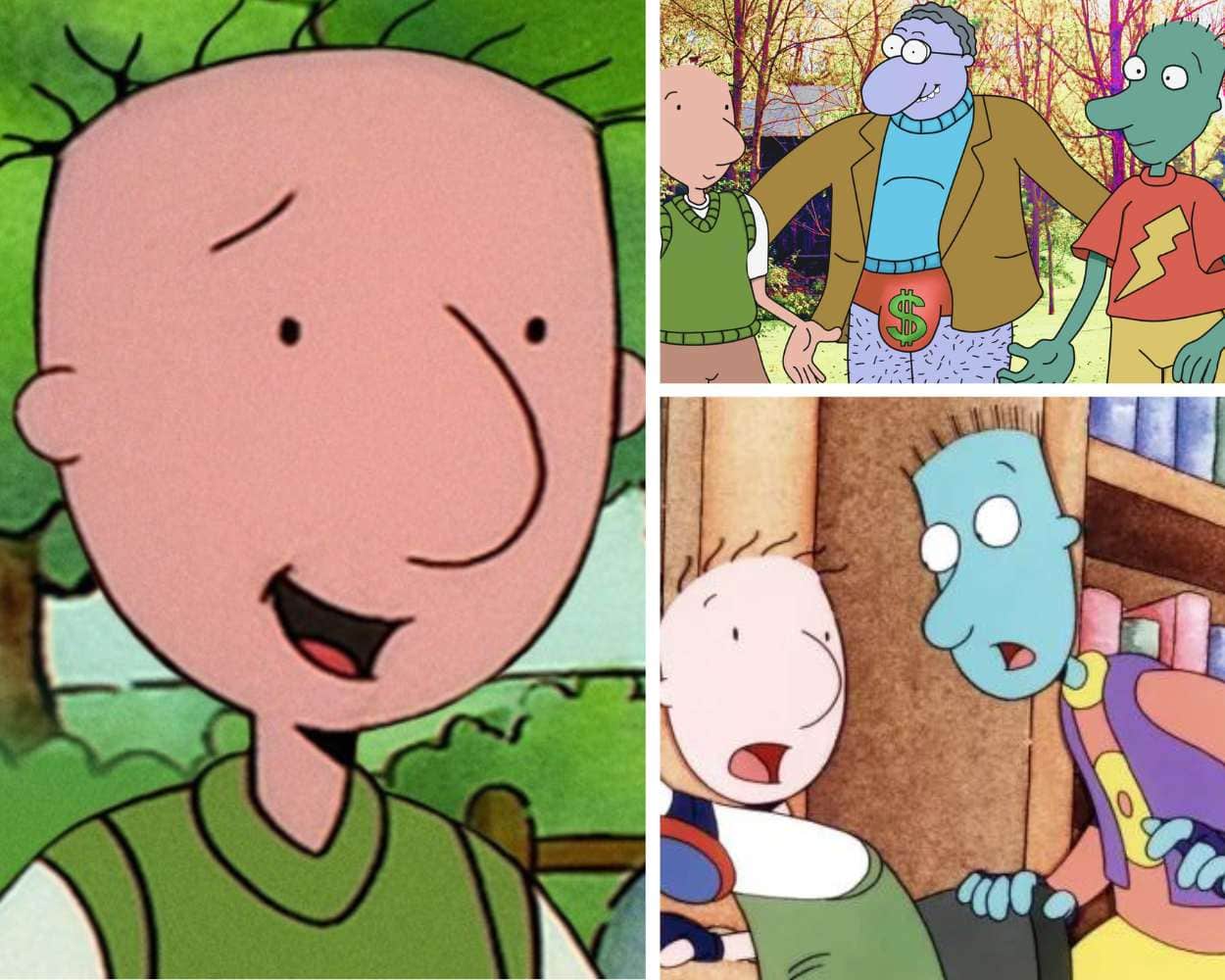
The show’s supporting cast is built around Bluffington’s diverse student body, where every character has distinctive (and often unusual) skin colors. This was a deliberate creative choice by Jim Jinkins to avoid real-world racial coding.
- ✅ Skeeter Valentine (blue) — Doug’s loyal, supportive best friend. The kind of friend everyone hopes to have. Known for his “honk honk” catchphrase.
- 💡 Roger Klotz (green) — the obnoxious school bully who constantly torments Doug. Despite this, Roger has surprising moments of vulnerability that humanize him throughout the series. Voiced by Billy West (who also voiced Doug himself).
- 🔥 Beebe Bluff (white/pink) — the daughter of Bluffington’s wealthy founder, Bill Bluff. Spoiled but ultimately a good person.
- ✅ Chalky Studebaker (light tan) — the school’s athletic star and one of Doug’s friends.
- 💡 Connie Benge (peach) — Doug’s confidante and one of his closer female friends after Patti.
- 🔥 Al and Moo Sleech (green) — Doug’s smart, science-obsessed twin friends.
Doug’s Journaling and the Show’s Storytelling Voice
A signature element of Doug is the journal entries that frame every episode. The show is essentially narrated by Doug himself, with the framing device of him writing each story down in his journal as it happens.
This voiceover narration gives the show its distinctive intimate, reflective tone. We’re not just watching Doug navigate his life. We’re inside his head, hearing his thoughts, second-guesses, and observations. The journal also serves as a thematic device, modeling for young viewers the value of writing down their feelings and processing their experiences through reflection.
The Nickelodeon vs Disney Versions
Doug ran in two distinct eras with different production teams:
Nickelodeon Doug (1991-1994)
The original 52-episode run on Nickelodeon (4 seasons). Created by Jim Jinkins and produced by Jumbo Pictures. Billy West voiced both Doug and Roger Klotz. This is the version most 90s kids remember as the “real” Doug.
Disney’s Doug (1996-1999)
After Disney acquired Jumbo Pictures in 1996, the series was revived as Disney’s Doug (later renamed Brand Spanking New! Doug) on ABC’s One Saturday Morning programming block. The Disney version aged Doug up to 12½, moved him to Beebe Bluff Middle School, and introduced his younger sister Cleopatra. Tom McHugh replaced Billy West as Doug’s voice. The Disney version is generally considered weaker than the original by longtime fans, though it produced Doug’s 1st Movie (1999).
Doug’s 1st Movie and Later Appearances
The Doug franchise’s main theatrical release was Doug’s 1st Movie (1999), which followed Doug and Skeeter trying to save a friendly lake monster named Herman Melville from an evil polluter. The film features the long-awaited first kiss between Doug and Patti.
Doug Funnie also had a brief but memorable cameo in 2022’s Chip ‘n Dale: Rescue Rangers film as part of its self-aware “where are they now” treatment of classic animated characters. He’s depicted as having retired from showbiz and now sells used cars, which fans both loved and found bittersweet.
Doug at the Theme Parks
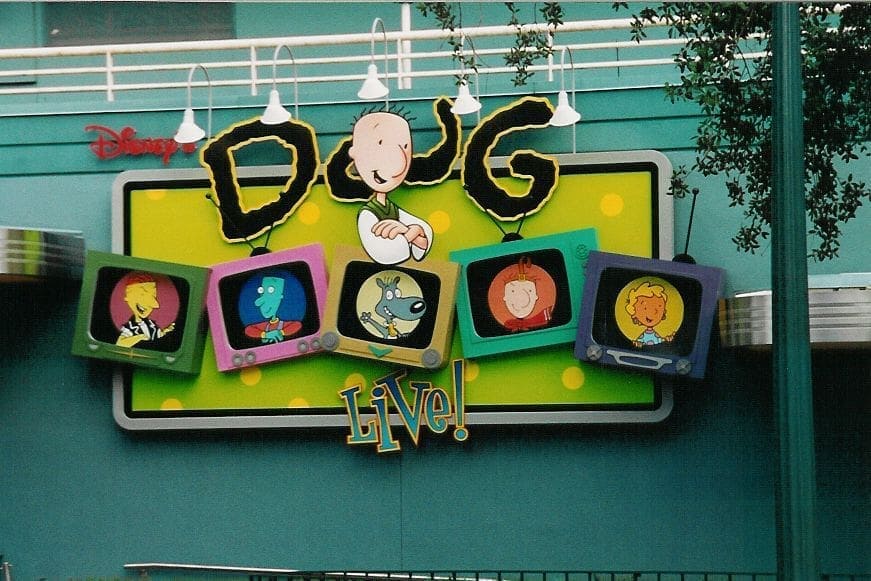
From January 1999 to May 2001, Doug had his own live theater show at Disney-MGM Studios (now Disney’s Hollywood Studios) called Doug Live! Doug and Patti were also walk-around meet-and-greet characters during this era, making them the only One Saturday Morning characters to appear in person at Disney parks.
Before that, between 1991 and 1995, Doug also appeared at Nickelodeon Studios at Universal Studios Florida (where Nickelodeon ran most of its theme park operations) sporting his Nickelodeon-era look.
Frequently Asked Questions
Who created Doug Funnie?
Doug Funnie was created by Jim Jinkins, who based the character loosely on his own childhood in Virginia. Jinkins originally pitched the show concept to Disney in the 1980s. After Nickelodeon picked it up first in 1991, Disney later acquired Jinkins’s company Jumbo Pictures in 1996 and revived the show under their banner.
Who voices Doug Funnie?
Two actors have voiced Doug. Billy West (who also voiced Roger Klotz and is famous for Futurama’s Fry, Stimpy, and many other characters) voiced Doug in the Nickelodeon series from 1991 to 1994. Tom McHugh took over for the Disney revival from 1996 to 1999.
What is Doug’s full name?
Doug’s full name is Douglas Yancey Funnie. The middle name “Yancey” was rarely used in the show but is part of his official character bio.
What is Quailman’s costume made of?
Quailman wears Doug’s regular white t-shirt and tighty-whitey underwear, plus a red cape and a brown belt strapped around his forehead. The deliberately ridiculous costume is part of the joke. The “quail” theme references Doug’s fascination with the bird, which he considers underrated.
Is Doug related to Cleopatra Funnie?
Yes. Cleopatra “Dirtbike” Funnie is Doug’s baby sister, introduced in the Disney revival series. She didn’t exist in the original Nickelodeon run, but the Disney version added her to the family.
Is Doug’s first kiss with Patti in Doug’s 1st Movie?
Yes. Doug’s 1st Movie (1999) features the long-awaited first kiss between Doug and Patti Mayonnaise. It was a major event for fans who had watched the slow-burn romance develop across the entire 8-year TV run.
Why do the characters have unusual skin colors?
Show creator Jim Jinkins deliberately gave the characters non-realistic skin colors (blue, green, purple, etc.) to avoid coding any character as belonging to a specific real-world race or ethnicity. The choice was meant to make Bluffington feel like a universal, inclusive community where any kid could see themselves in the cast.
Can I still watch Doug today?
Yes. Disney+ has the Disney revival run of the show. The original Nickelodeon series has been harder to find on streaming in recent years due to rights complications, but it’s been available periodically on Paramount+ and through Nickelodeon archival programming. Availability changes regularly.