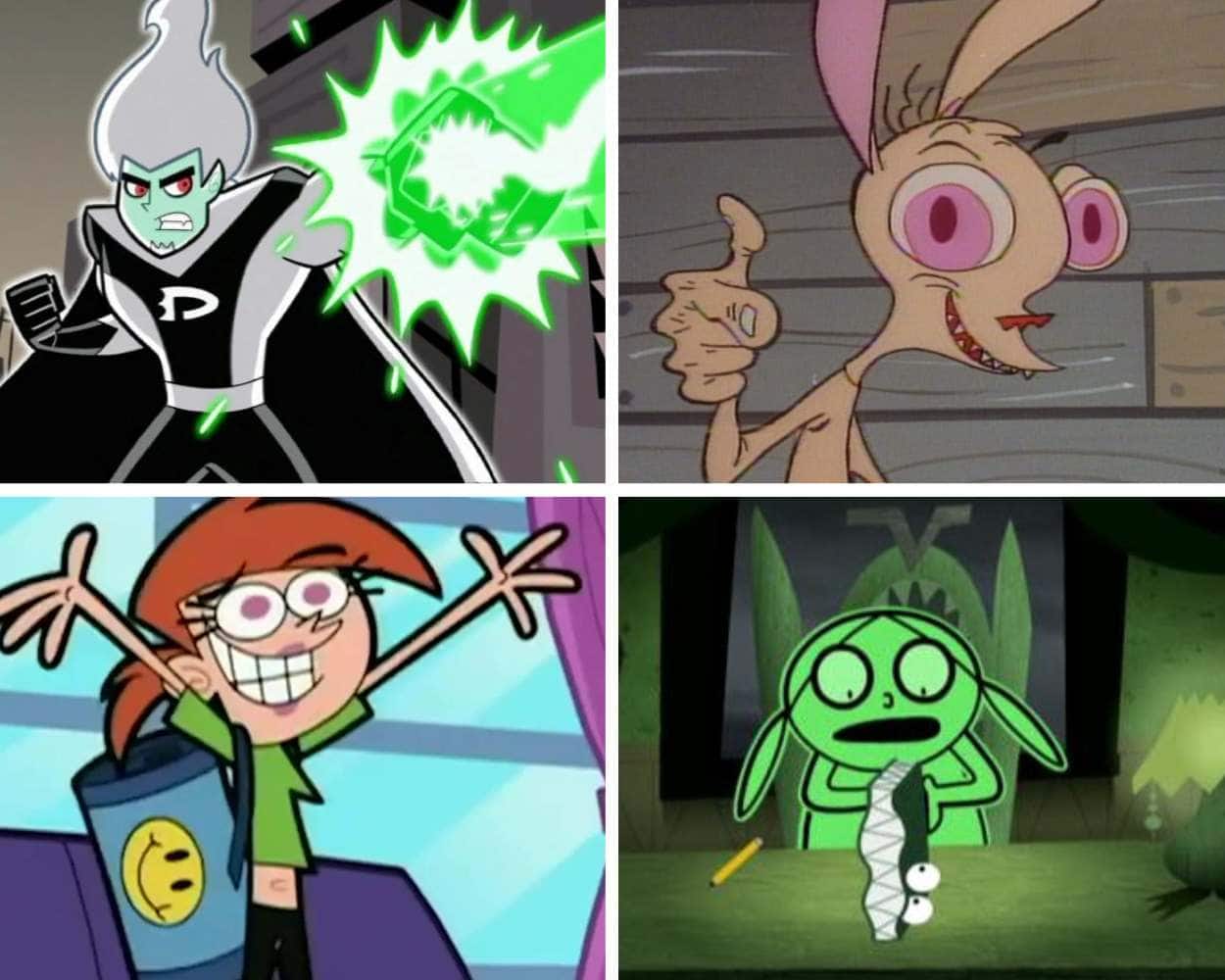
Nickelodeon has spent four decades convincing parents that its programming is wholesome family entertainment. The reality has always been weirder than that. Yes, you got SpongeBob’s optimistic adventures and Rugrats’s preschool philosophy. You also got episodes about psychological torture, dictatorial tyranny, blood-bending magic, and one cartoon character so wrapped in despair that he had a tombstone for his own hopes and dreams.
The best Nickelodeon cartoons were never afraid to go dark. They just hid the darkness under bright colors and goofy character designs so kids absorbed it without recognizing what they were watching. As an adult rewatching this stuff, the surface-level kid-friendly veneer falls away and you suddenly realize: this character was genuinely menacing, that character was psychologically broken, this storyline was openly about loss and trauma.
Here are 12 Nickelodeon characters who were darker than they had any right to be on a kids’ network.
The Genuinely Sinister
12Amon (The Legend of Korra)
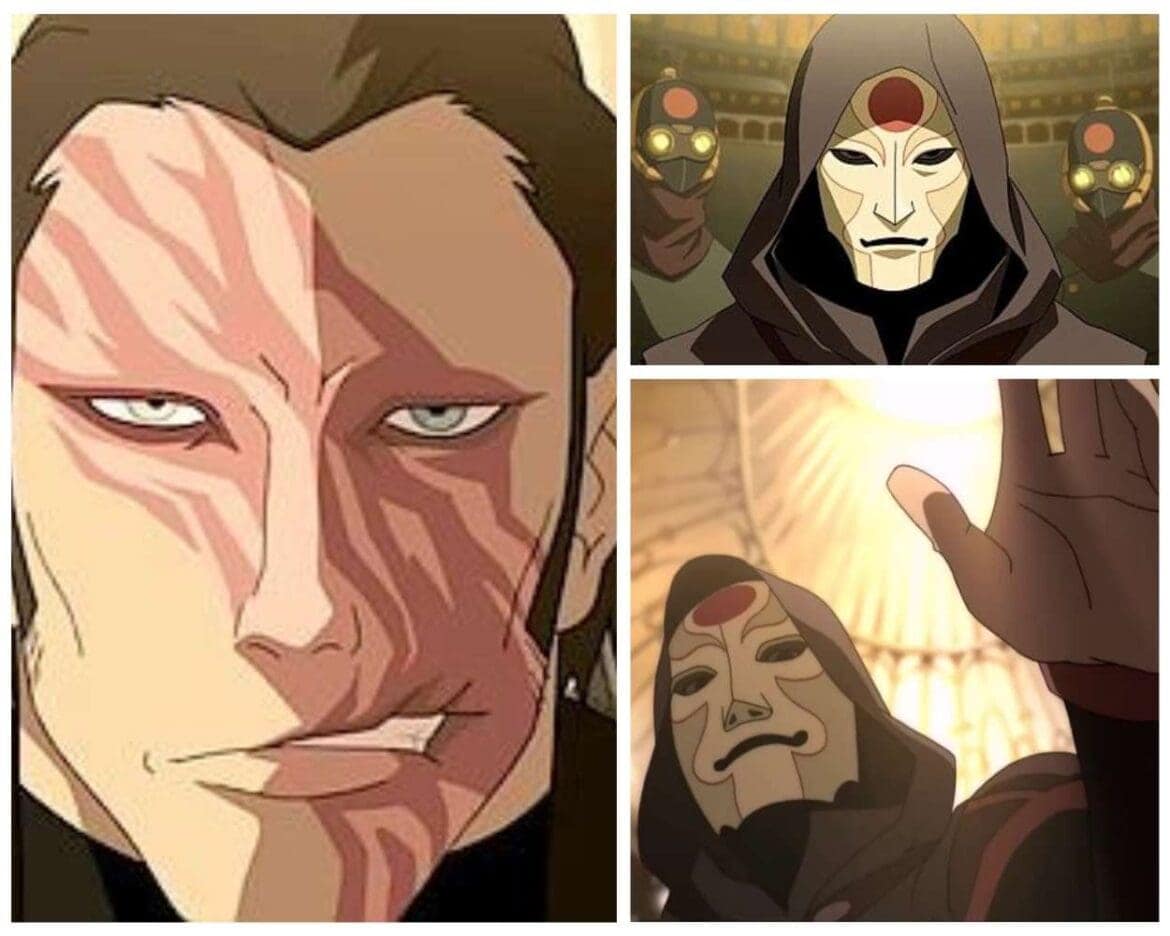
The darkest character Nickelodeon ever aired, full stop. Amon is the masked leader of the Equalists in The Legend of Korra (2012-2014). His public position is anti-bender egalitarianism. His actual ability is the absolutely terrifying power to remove people’s bending permanently through psychic bloodbending.
The implication of that power for a young audience watching is genuinely disturbing. Amon can strip you of who you are without killing you. His operation is paramilitary, his rhetoric is populist demagoguery, and his eventual reveal as Noatak (Tarrlok’s brother and Yakone’s son) ties his villainy into intergenerational trauma. Steve Blum‘s vocal performance gives Amon a quiet, controlled menace that’s far more frightening than a screaming villain would be.
Korra didn’t try to be a kids’ show. It was an action drama that happened to air on Nickelodeon. Amon is the proof.
11Azula (Avatar: The Last Airbender)
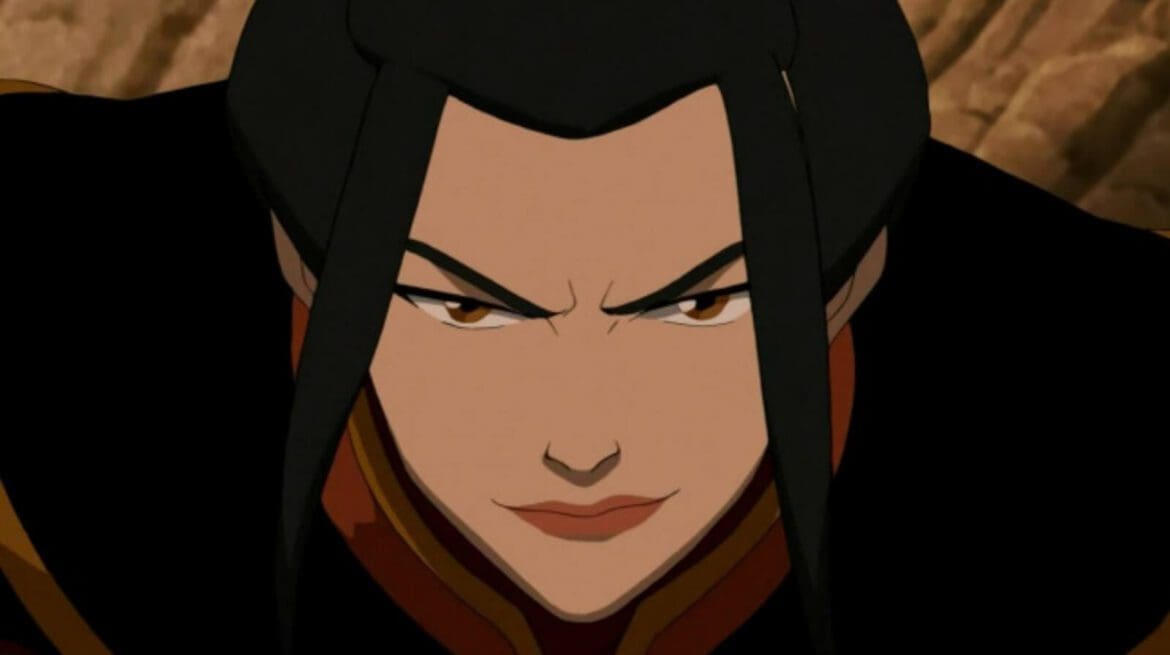
Azula is arguably the best-written villain in any 2000s animated series. Voiced by Grey DeLisle (who also voiced Daphne in Scooby-Doo), Azula is the prodigy daughter of Fire Lord Ozai, a master firebender by 14, and a psychological terror with absolute control over everyone around her.
What makes her work as a villain is that the show eventually shows her humanity. The final season’s “The Beach” episode and her eventual mental breakdown in Sozin’s Comet reveal Azula as someone whose entire identity has been built on her father’s approval and her own perfectionism. When that breaks, she breaks completely. The “hair-cutting scene” in the finale is one of the most disturbing moments in any kid’s show ever made.
Azula doesn’t just lose. She dissolves on screen. The fact that this aired on Nickelodeon during Saturday morning programming is genuinely wild in retrospect.
10Dark Danny (Danny Phantom)
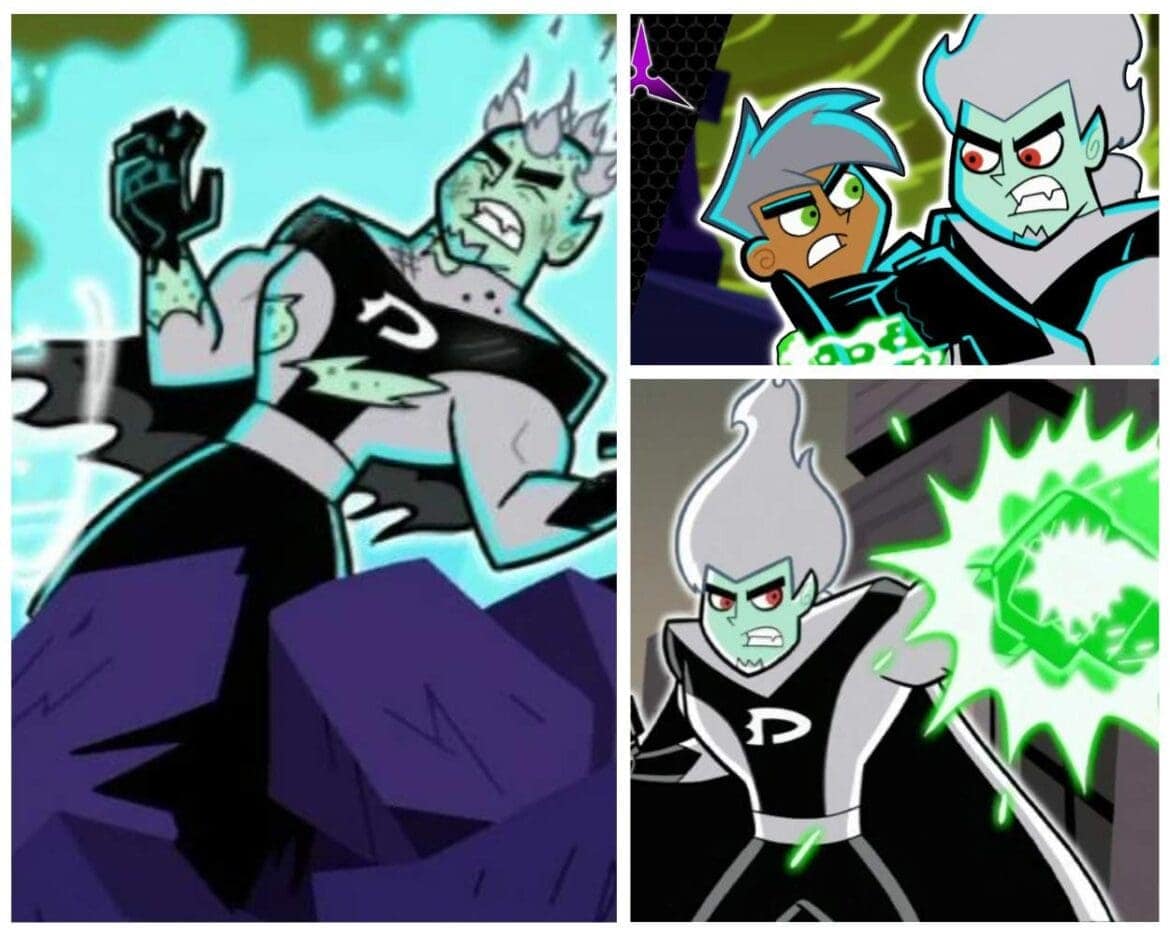
Dark Danny appears in the “The Ultimate Enemy” hour-long special of Danny Phantom (2004-2007). The premise: a future version of Danny Fenton, having lost his family and humanity in a tragedy, fuses with his arch-enemy Vlad Plasmius’s ghost half. The result is a 10-year-future evil version of the protagonist who has destroyed most of his original world.
The plot is essentially Future Trunks meets the Joker. The version of Danny we know is forced to confront the version of himself he could become if he stopped caring. Voiced by Eric Roberts (yes, the actor Eric Roberts, Julia Roberts’s brother), Dark Danny is genuinely unsettling in ways the show usually wasn’t.
The episode is widely considered Danny Phantom’s high point, and Dark Danny remains one of the more disturbing concepts ever shown in an American kids’ cartoon.
The Psychologically Disturbing
9Vendetta (Making Fiends)
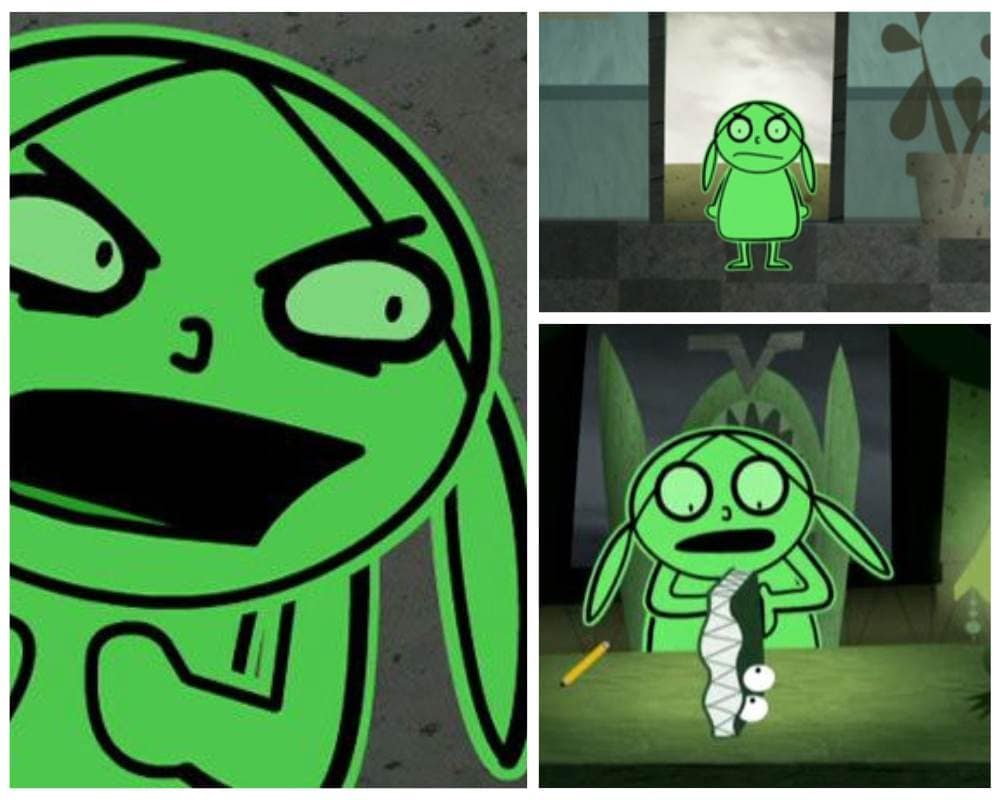
Making Fiends (2008) was the brief Nickelodeon adaptation of Amy Winfrey‘s acclaimed indie web series. The premise: a small green girl named Vendetta hates everyone in her town and creates monsters (“fiends”) to terrorize them. The town’s adults are too afraid of her to intervene. The children are routine victims. Only the relentlessly cheerful Charlotte fails to recognize Vendetta is the villain.
The show ran for only one season on Nicktoons Network because, frankly, it was too dark for the channel’s typical audience. The “Charlotte tries to be Vendetta’s friend while Vendetta tries to kill her” premise is genuinely uncomfortable. The animation style is deliberately ugly and unsettling. The whole project feels like adult horror filtered through a children’s show framework.
Watch a few episodes if you’ve never seen it. It’s not what you’d expect from a Nickelodeon production.
8Vicky (The Fairly OddParents)
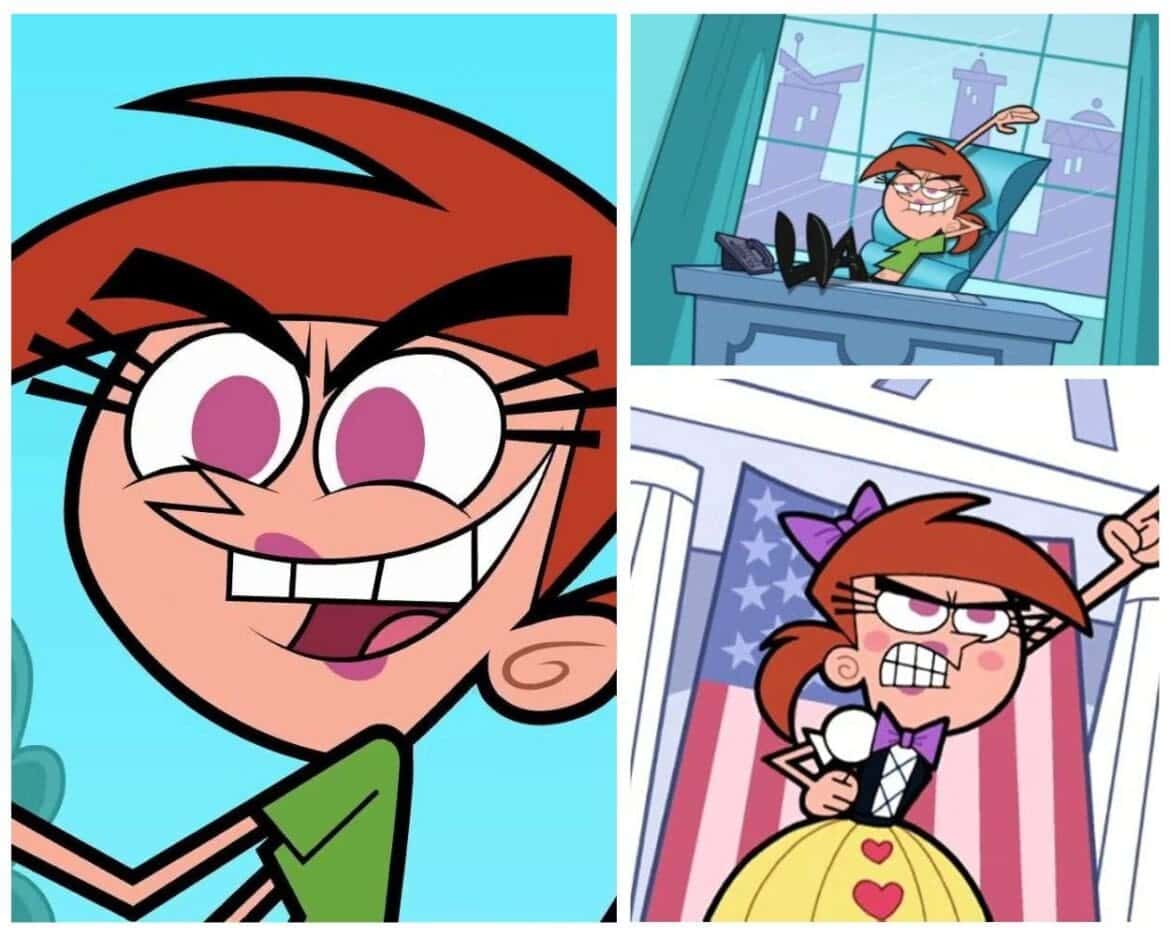
Vicky, voiced by Grey DeLisle (the same actress who voiced Azula), is The Fairly OddParents’s recurring antagonist. She’s a teenage babysitter who systematically psychologically and sometimes physically abuses Timmy Turner whenever she’s left in charge of him.
The show plays Vicky for comedy, but Timmy’s existence as a frequently-traumatized child whose parents trust this terrible person with him is the foundational tragedy of the entire series. Cosmo and Wanda exist because Timmy is miserable and needs godparents to compensate for his parents’ neglect and Vicky’s abuse.
If you watch The Fairly OddParents with that framework in mind, the entire series becomes uncomfortable. Vicky is more central to the show’s themes than her recurring-villain status would suggest.
7Helga Pataki (Hey Arnold!)
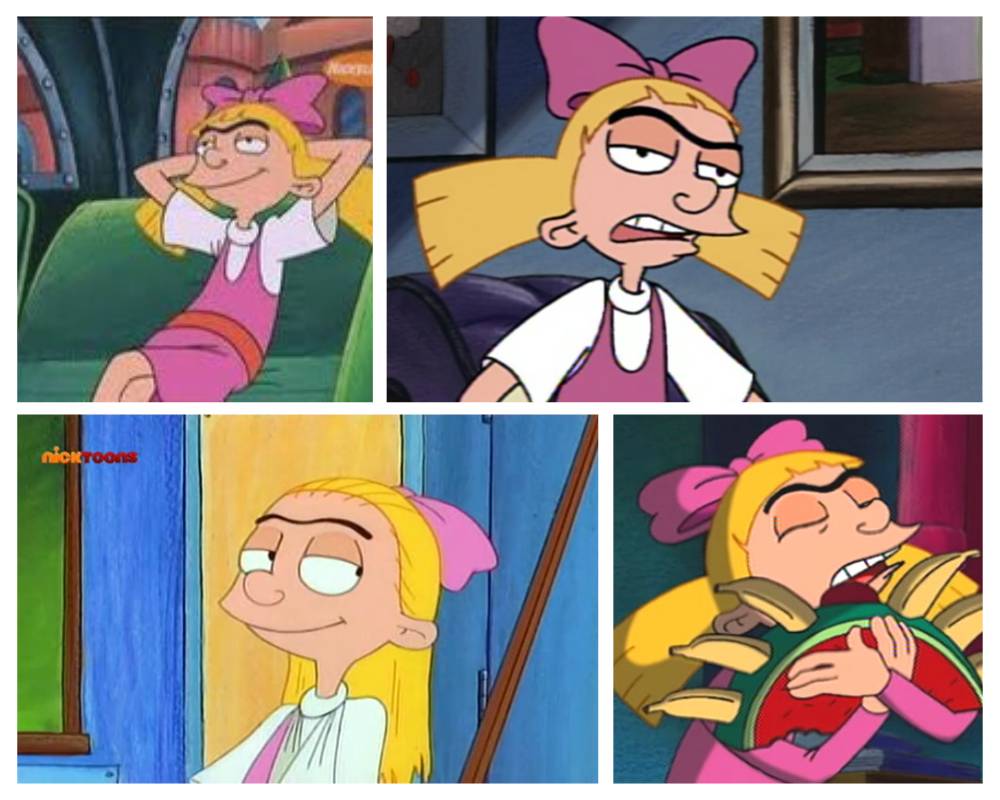
Helga Pataki isn’t a villain in the traditional sense, but she’s one of the most psychologically complex characters Nickelodeon ever wrote. The schoolyard bully with a profound, secret, almost-mystical obsessive love for Arnold. The poems she writes about him in private. The literal shrine she’s built to him in her bedroom. The bruises she inflicts on her classmates because she can’t process her feelings.
The character is based on creator Craig Bartlett‘s observations of complex psychology in children. Helga’s home life (alcoholic mother, oblivious father, perfectionist older sister) shaped her into someone using bullying as defense and writing poetry as catharsis. She’s a kid in pain.
Voiced by Francesca Marie Smith, Helga is one of the deepest characters in the Nickelodeon catalog. The film The Jungle Movie (2017) finally gave her storyline real resolution.
The Casual Cruelty
6Plankton (SpongeBob SquarePants)
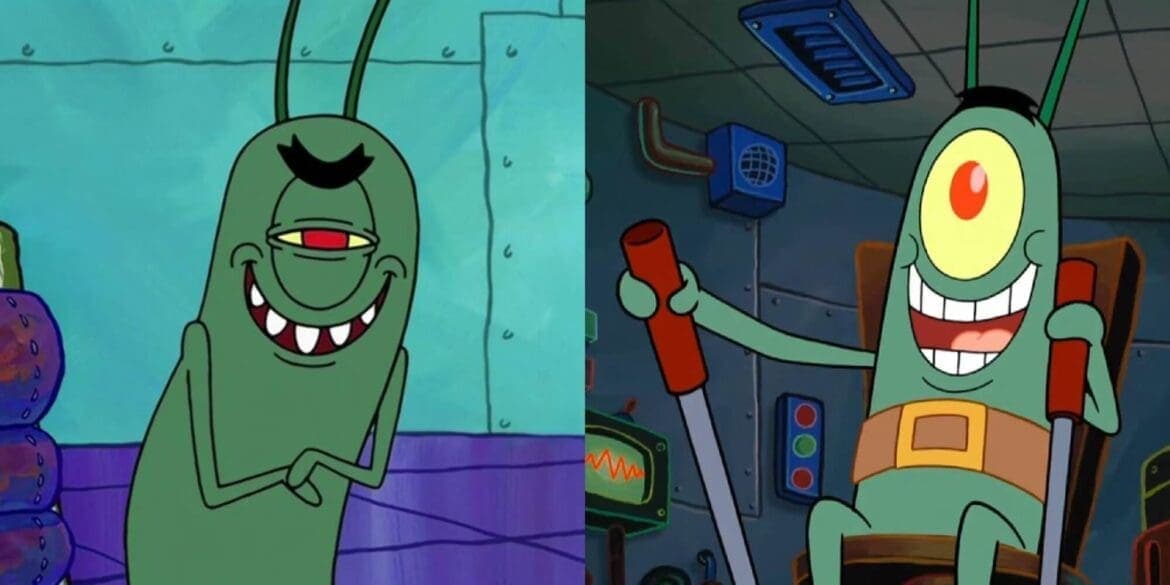
Sheldon J. Plankton is voiced by Mr. Lawrence (the same actor who voices Filburt on Rocko’s Modern Life). Plankton runs the Chum Bucket and has dedicated his entire existence to stealing the Krabby Patty secret formula from Mr. Krabs.
The dark thing about Plankton isn’t his villainy, which is mostly comedic. It’s that his obsession is consuming his entire life. He has a wife (Karen, his computer wife, voiced by Jill Talley), and he treats her terribly because he’s so consumed by his rivalry with Krabs. He has every opportunity to be happy. He chooses obsessive bitterness instead.
Plankton works as a comedy villain because his rage and resentment feel real. Mr. Lawrence plays him with a constant undercurrent of bitter exhaustion that makes the character genuinely funny even when his schemes are objectively terrible.
5Squidward Tentacles (SpongeBob SquarePants)
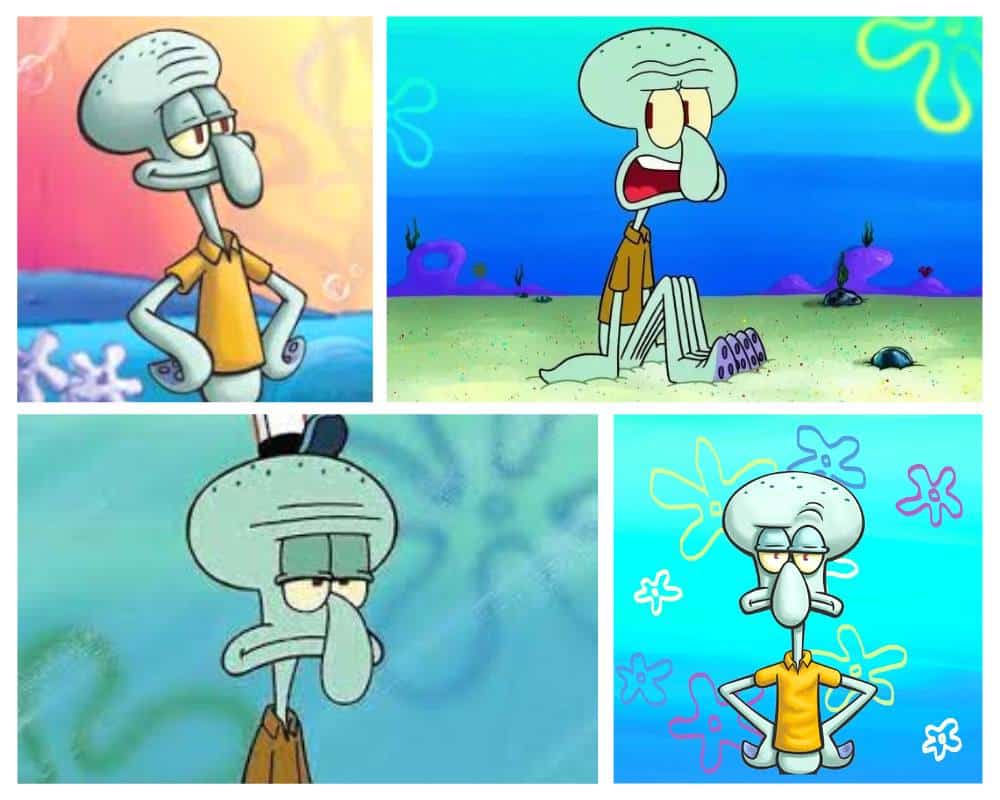
The case for Squidward being one of the saddest characters in animation is well-documented at this point. He has a grave for his “hopes and dreams.” He invites Krusty Krab customers to physically hit him during low moments. He lives next door to two people he openly cannot stand. His clarinet skills will never be good enough.
Voiced by Rodger Bumpass, Squidward is essentially a man trapped in a 24-hour loop of disappointment. The episode “Squidward in Clarinetland” is genuinely uncomfortable to watch. The episode “Are You Happy Now?” deals with Squidward’s depression so directly that it’s been the subject of legitimate critical analysis.
Squidward isn’t evil. He’s just a working artist whose creative ambitions are constantly thwarted while he watches a yellow sponge accidentally become beloved. It’s the most relatable thing in the show.
4Ren Höek (The Ren & Stimpy Show)
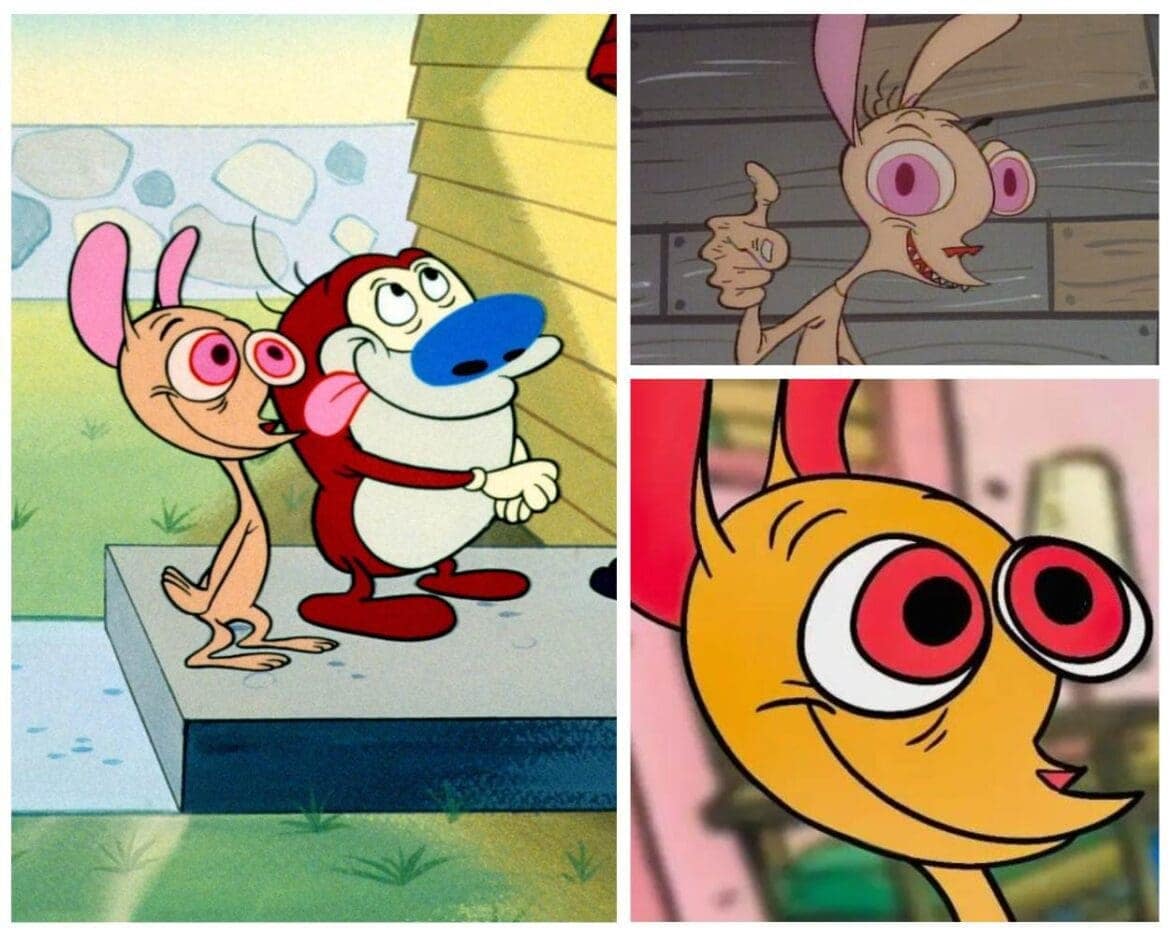
Ren Höek, an “asthma-hound chihuahua” voiced by creator John Kricfalusi, is psychologically violent toward his roommate Stimpy in ways the show plays for slapstick comedy but which read as genuine abuse on rewatch. His rage attacks, his manipulative behavior, his constant verbal degradation of Stimpy.
The 2003 “Ren and Stimpy Adult Party Cartoon” revival on Spike TV doubled down on the dark themes that the original Nickelodeon run had hinted at. The original Nickelodeon series (1991-1995) was edited heavily before air, but enough of Ren’s psychological cruelty came through that the character became culturally iconic for darkness.
Kricfalusi’s later legal troubles add a layer of uncomfortable context to the character, but Ren on his own merit is a deliberately disturbing creation that pushed the limits of what kids’ animation could portray in the early 90s.
The Cartoon Menaces
3Invader Zim (Invader Zim)
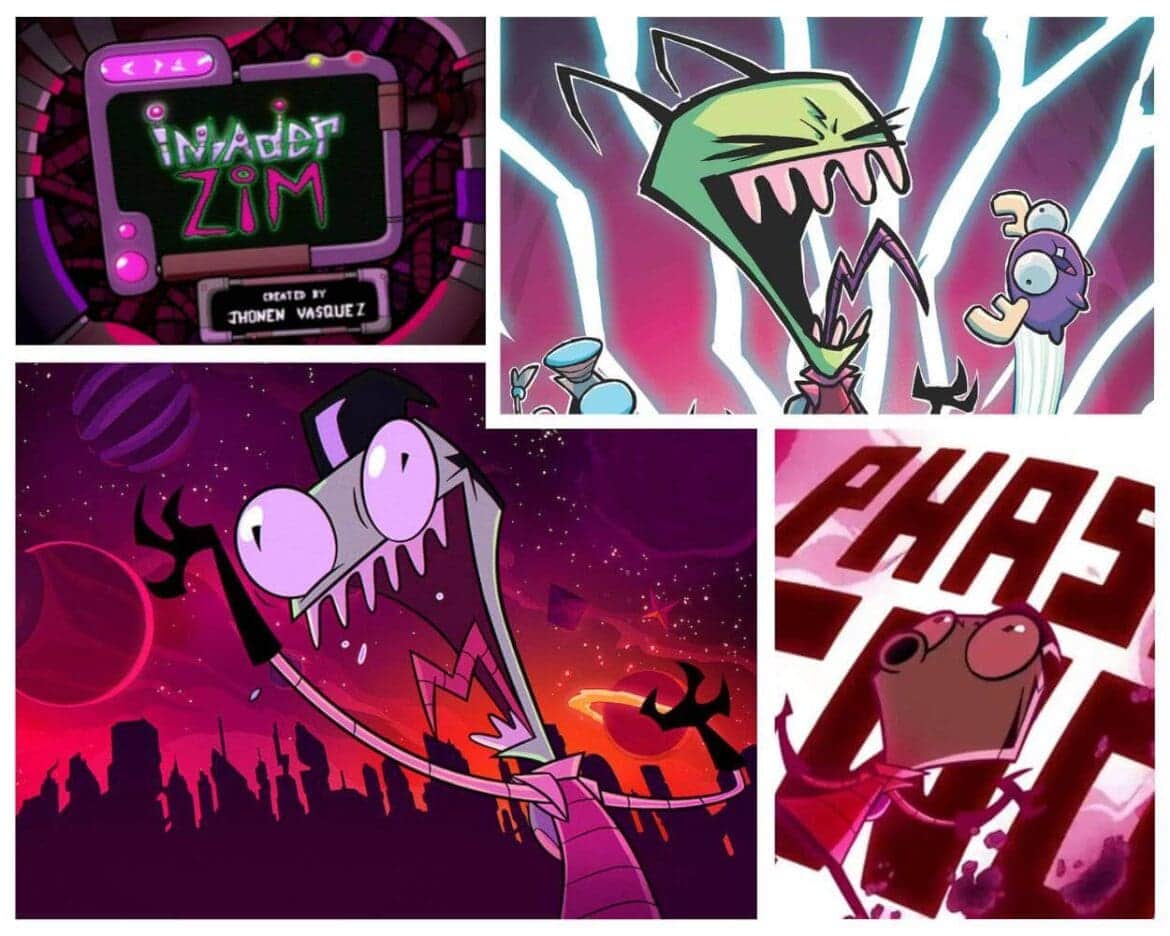
Jhonen Vasquez‘s 2001-2006 Nickelodeon series featured an alien protagonist whose entire purpose was conquering Earth. The show was deeply dark, deliberately ugly, and committed to its premise that Zim is a fundamentally evil little guy who would happily exterminate humanity if given the chance.
The show was cancelled by Nickelodeon partly because it was too dark for kids’ programming. The 2019 Netflix sequel film Invader Zim: Enter the Florpus brought the character back with even more openly dark humor.
Zim isn’t dark in the way Amon or Azula are dark. He’s dark in the way that pretending he’s just goofy comedy doesn’t quite work. The character was always meant to be a satirical commentary on dictators, and Vasquez never softened the underlying premise.
2Rancid Rabbit (CatDog)
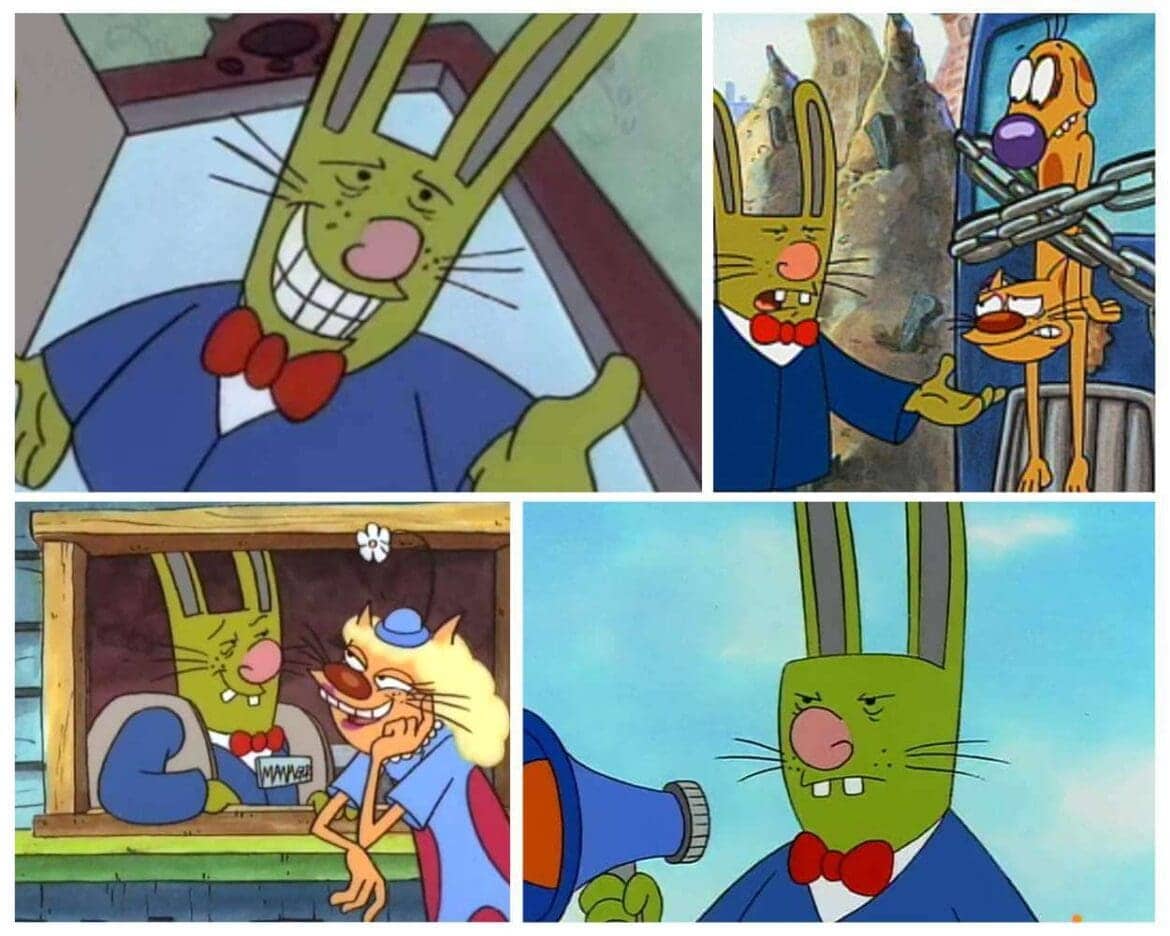
Rancid Rabbit appears in CatDog (1998-2005) as the show’s recurring corruption-themed villain. He plays whatever profession the plot needs (mayor, banker, police officer, judge) and uses each role to scheme against CatDog. He’s a comedic version of casual institutional corruption, but the joke is that he never faces consequences and his cruelty is constant.
The character is voiced by Billy West (Doug Funnie, Futurama’s Fry, dozens of other roles). West gives Rancid a fast-talking, deliberately oily delivery that makes the character feel slimy in a way kids picked up on.
1Exo-Skin (My Life as a Teenage Robot)
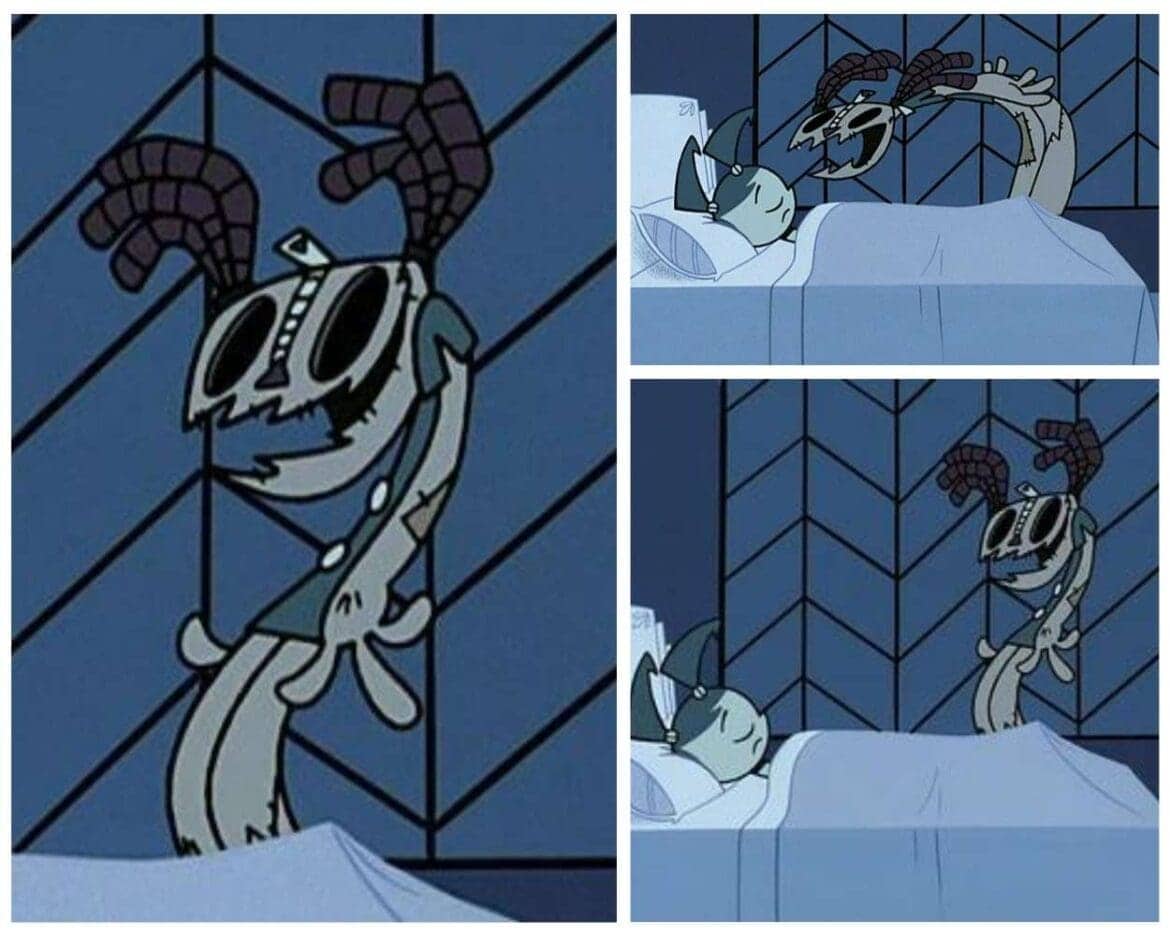
The Exo-Skin from My Life as a Teenage Robot (2003-2009) is a one-off creation by Dr. Wakeman that develops sentience and tries to take over Jenny’s body. The visual design (sharp teeth, soulless eyes, vaguely fleshy/decaying texture) is openly horror-themed. The premise (a sentient skin that needs a host body to function) is body horror dressed up as a kids’ cartoon.
The Exo-Skin doesn’t have the cultural footprint of the other characters on this list, but it represents the willingness of Nickelodeon shows in the 2000s to dip into genuinely creepy creature design that wouldn’t be allowed in modern kids’ programming.
Why Nickelodeon Had So Many Dark Characters
The trend isn’t an accident. Nickelodeon in the 90s and 2000s deliberately positioned itself as the network that took kids seriously, which meant being willing to engage with difficult themes:
- ✅ Creator-driven programming. Nickelodeon explicitly let creators like Jhonen Vasquez (Invader Zim), Bryan Konietzko and Michael DiMartino (Avatar, Korra), and Steve Hillenburg (SpongeBob) follow their creative visions. When creators care about good villains, you get good villains.
- 💡 Animation as a delivery mechanism. Cartoons can convey darkness through visual abstraction in ways live-action can’t. A masked face removing someone’s powers is genuinely terrifying without showing on-screen violence. The medium permits things kids’ live-action TV could never do.
- 🔥 The “kids can handle it” approach. Nickelodeon’s better shows operated on the assumption that kids are smarter and more resilient than they’re given credit for. Avatar’s themes about genocide and political tyranny are real. The Fairly OddParents’s themes about parental neglect are real. The shows took the audience seriously.
- ✅ The Adult Swim influence. By the mid-2000s, networks knew that adult viewers were watching kids’ programming on cable. Shows had to work for parents and older siblings, not just core demographics. That meant deeper writing and more sophisticated villains.
The Avatar franchise alone (Last Airbender and Korra together) produced some of the best animated villains in television history. The fact that this happened on Nickelodeon is one of the great cultural anomalies of 2000s/2010s programming.
The lesson is that when network executives let animators be ambitious, animated children’s programming can produce villains and dark themes as sophisticated as anything on prestige adult television. The 12 characters above are proof.