Tim from Solar Opposites is one of those characters who starts out looking like the hero… and then slowly reminds me why power should come with a warning label and maybe a therapist.
At first, Lindsey Tim Weekly feels like the everyman trapped in the nightmare terrarium known as the Wall.
He’s scared. He’s ordinary. He’s trying to survive.
Then the story keeps going, and suddenly I’m watching him make choices that made me sit up like, “Oh no, buddy. We are not calling this leadership.”
That’s what makes Tim so interesting. He is not a simple villain from the start. He is a character who gets swallowed by the very system he once fought against.
And honestly, that is way scarier than a tiny sci-fi prison full of crumbs.
Who Is Tim From Solar Opposites?
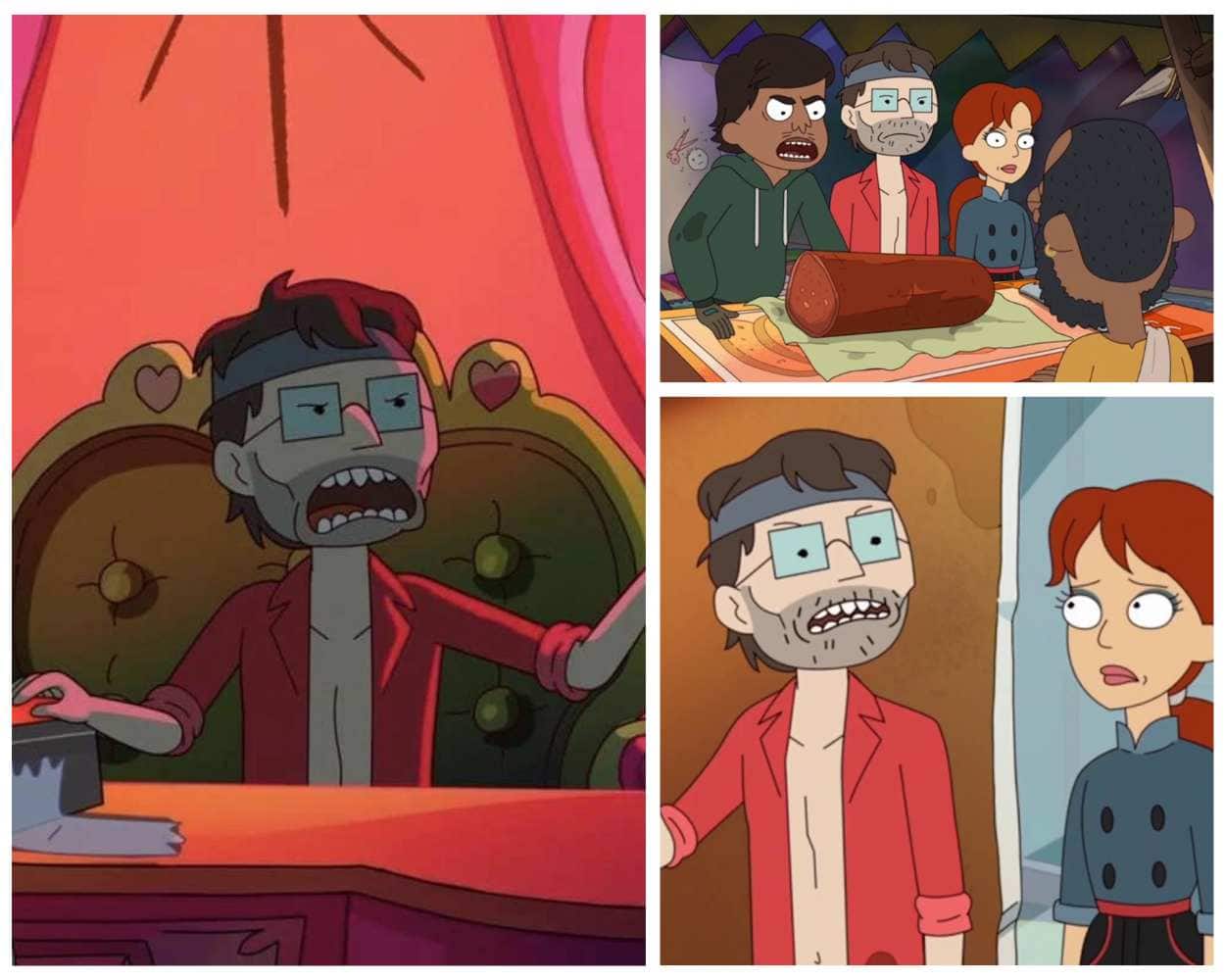
Tim from Solar Opposites, also known as Lindsey Tim Weekly, is one of the central human characters in the Wall storyline.
He begins as a captive inside the Wall, the miniature society created after Yumyulack shrinks humans and traps them in a giant enclosure.
Which is already a deeply rude way to organize a neighborhood.
Tim initially comes across as a normal guy caught in an impossible situation. He is not a warrior, not a king, not a genius rebel strategist. He is just someone trying to survive inside a terrifying micro-civilization built out of scraps, trauma, and whatever snack residue happens to be lying around.
Quick Tim breakdown:
- Full name: Lindsey Tim Weekly
- Show: Solar Opposites
- Storyline: The Wall
- Role: Survivor, rebel, leader, and eventual antagonist
- Love interest: Cherie
- Character arc: Ordinary captive to revolutionary hero to corrupted ruler
What makes the Solar Opposites Tim Wall character so compelling is how believable his fall feels.
He doesn’t wake up one day and decide, “You know what sounds fun? Betrayal.”
It builds.
Fear builds. Status builds. Power builds. And then suddenly the guy who fought oppression starts protecting his own control over the system.
Tim’s story is basically a tiny dystopian warning: surviving power and handling power are two very different things.
Lindsey Tim Weekly and The Wall
The Wall is one of the best parts of Solar Opposites because it feels like an entirely different show hiding inside the main show.
While Korvo, Terry, Yumyulack, and Jesse are doing alien sitcom chaos, the Wall is over here serving miniature class warfare, revolution, betrayal, survival drama, and emotional damage in a glass container.
Tim fits perfectly into that setup because he starts as someone the audience can root for.
He is thrown into a brutal society where people are small, resources are scarce, and leadership usually means someone is probably hoarding candy.
At first, Tim’s rise feels hopeful.
He challenges The Duke’s control, gives people something to believe in, and becomes a symbol of resistance.
But that is exactly why his later betrayal hits so hard.
He knows what tyranny looks like.
Then he starts copying the shape of it anyway.
So, Who Is Tim From Solar Opposites?
Tim begins as the kind of guy who probably wouldn’t stand out much in the normal world.
He is awkward, ordinary, and not exactly built like a classic revolutionary leader.
But inside the Wall, ordinary can become extraordinary fast.
When survival is hard and hope is rare, even a normal person can become a symbol.
That is what happens to Tim.
He steps up against The Duke and becomes part of the resistance, helping spark the kind of change the Wall desperately needs.
And for a while, I’m on his side.
Completely.
Then the hole to the outside world changes everything.
Once The Duke escapes and Tim realizes there is a way out, he makes the choice that defines his entire arc: he betrays Cherie to keep the exit secret and preserve his own power.
That moment turns Tim from hopeful hero into fallen leader.
It is brutal because it reveals what he fears most.
Not death.
Not hardship.
Not even The Duke.
Tim fears going back to being nobody.
A Human Touch
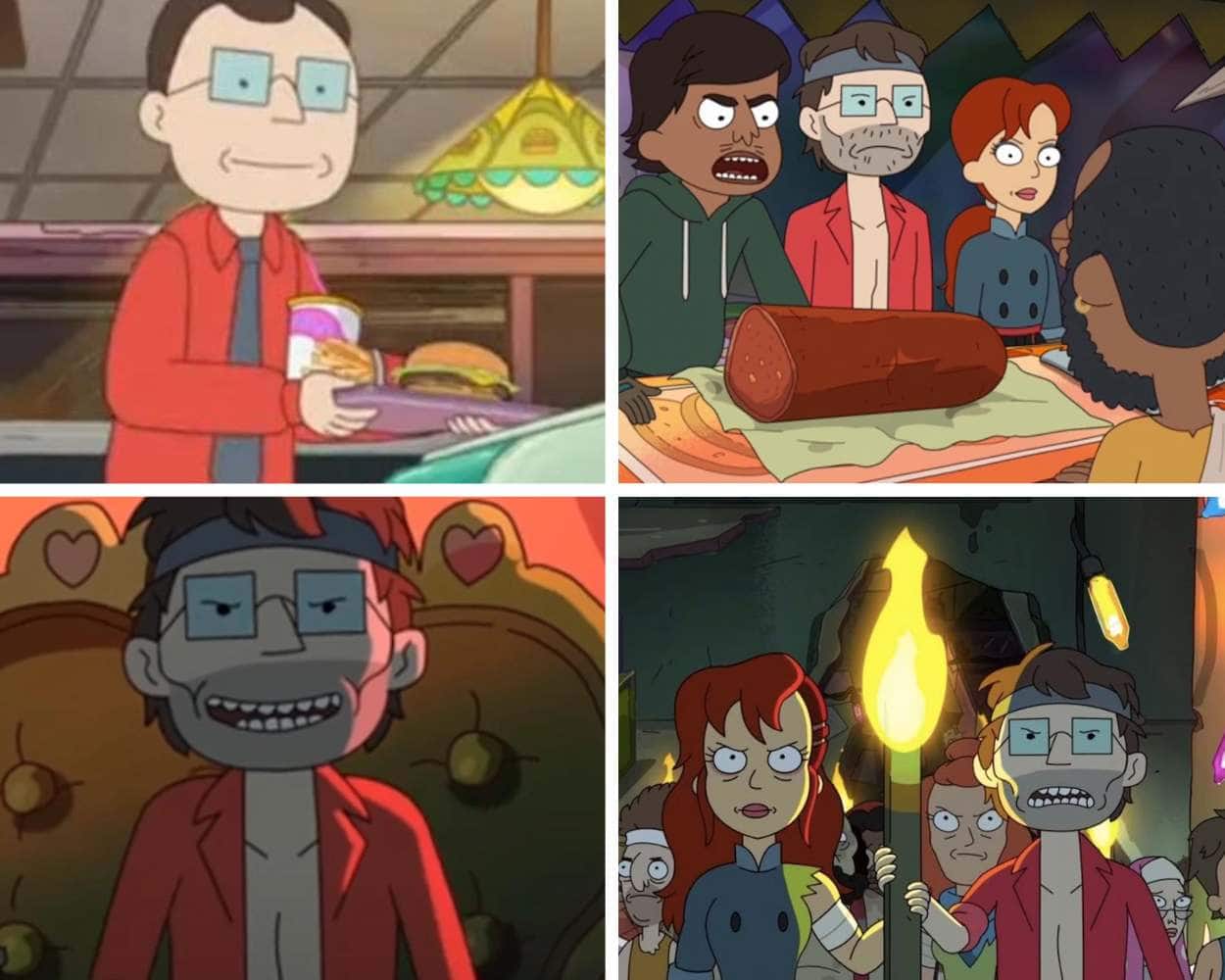
What I like about Tim’s arc is that the show does not turn him into a mustache-twirling villain overnight.
He still feels human.
That is what makes him uncomfortable.
In Season 2, Tim clearly struggles with guilt and self-doubt. He knows what he did to Cherie was wrong, and the weight of that choice does not just disappear.
But instead of confessing and facing the consequences, he keeps building around the lie.
Classic terrible leadership move.
Tim becomes more like The Duke because he chooses stability over truth.
He convinces himself that the Wall needs the illusion. That people need order. That keeping control is better than risking chaos.
And maybe part of him believes that.
But another part of him knows the truth: he likes being important.
The Wall gives Tim a status he never had outside.
That makes returning to the real world feel less like freedom and more like erasure.
That is painfully human.
Ugly, but human.
Why Was Tim in the Wall?
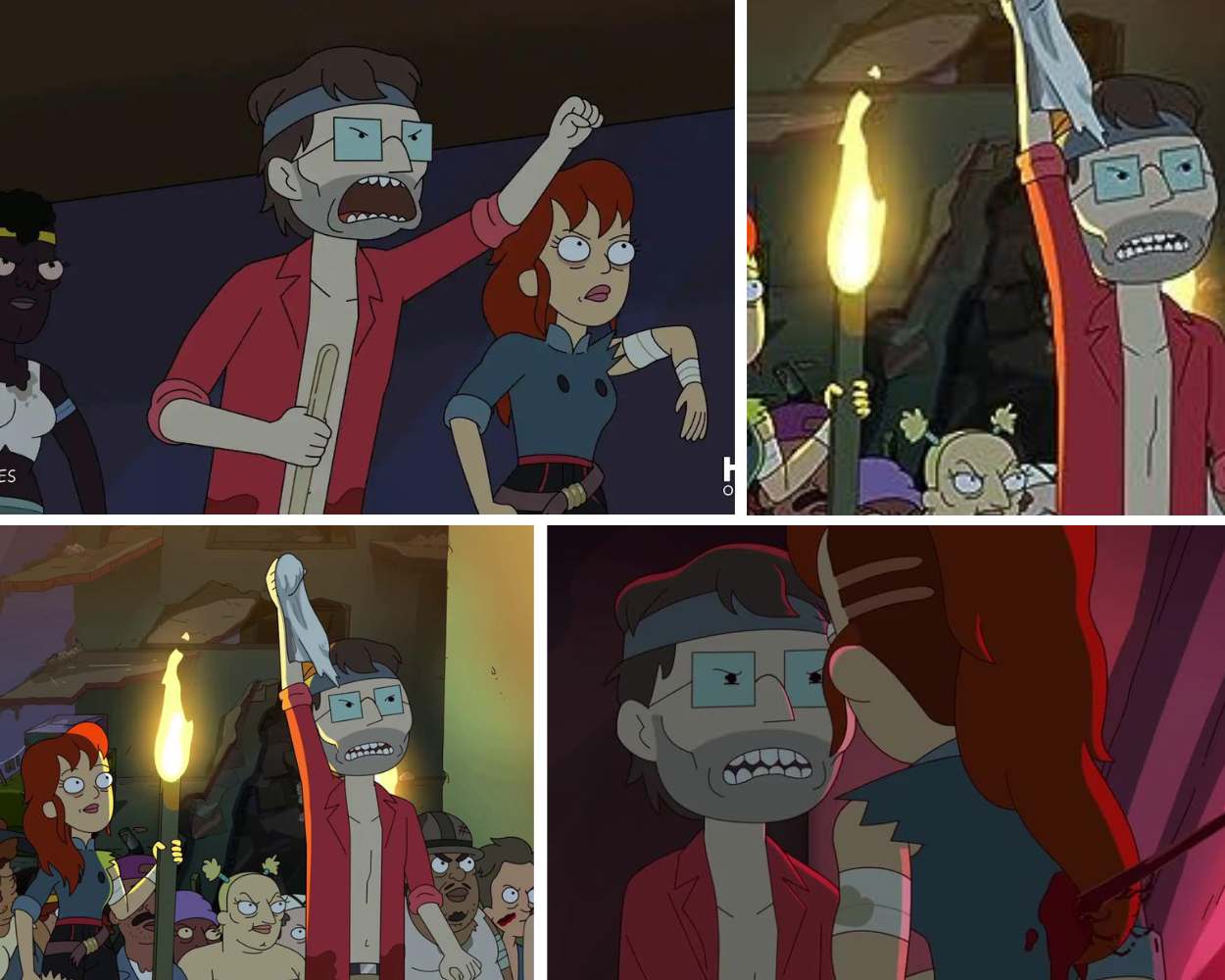
If you’re wondering why Tim was in the Wall, the answer is almost insulting in its simplicity.
He was shrunk and trapped because he wore a red shirt.
That’s it.
No grand crime. No dramatic betrayal. No secret villain origin.
A red shirt.
This detail is funny, but it also connects to a classic pop culture trope. In Star Trek, “red shirts” are famously associated with expendable characters who often meet unfortunate ends to show danger.
Tim’s red shirt works like a joke about that idea.
At first, he seems like nobody.
Disposable. Random. Unimportant.
Just another person trapped by Yumyulack for a petty reason.
That makes Tim’s rise in the Wall even more meaningful.
He goes from “random red-shirt guy” to leader of a whole society.
But that rise also explains why he clings to power so hard.
Once Tim becomes somebody inside the Wall, the idea of going back to being ordinary is terrifying.
And that fear curdles into betrayal.
Tim and Cherie in Solar Opposites
The relationship between Tim and Cherie in Solar Opposites is one of the emotional anchors of the Wall storyline.
At first, their bond gives Tim’s story warmth.
Cherie is strong, capable, and brave, and she believes in a future beyond The Duke’s rule.
Tim’s love for her seems real.
Which makes his betrayal much worse.
Because this is not just a political betrayal.
It is personal.
Cherie represents truth, freedom, and the chance to break the Wall open.
Tim chooses secrecy instead.
That choice tells me everything about where his priorities have shifted.
He does not just betray Cherie to protect the Wall.
He betrays her to protect the version of himself that only exists inside it.
Ouch.
Cartoon subplot, why are you hurting me like prestige drama?
Tim’s Betrayal
Tim’s betrayal is one of the most shocking moments in the Wall storyline.
After everything he and Cherie go through, he chooses power over honesty.
And the worst part is that it makes sense.
Not morally.
Emotionally.
Tim has finally become important. He has followers. He has influence. He has a place in a world where he matters.
The hole threatens all of that.
If people know there is a way out, the Wall’s entire structure changes.
Tim’s leadership becomes unnecessary.
So he hides the truth.
His betrayal works because it is not random villain behavior.
It is insecurity with political consequences.
And honestly, that is often how bad leadership starts: one scared person deciding their fear is more important than everyone else’s freedom.
Tim’s Death in Hululand
Tim’s death is one of the strangest and most darkly funny endings in the Wall storyline.
After all the betrayal, guilt, leadership, and corruption, he dies because of a vintage Burger King glass.
Specifically, the glass contains lead, poisoning him fatally.
That is such a Solar Opposites way to end a power arc.
A man survives miniature dystopian warfare, political upheaval, and moral collapse, only to be taken out by collectible fast-food glassware.
It is absurd, but also weirdly perfect.
Tim’s downfall is not a glorious battle.
It is not a noble sacrifice.
It is not even a dramatic revenge scene.
It is the universe saying, “Actually, the weird little object you prized in your chambers is poisonous.”
That feels thematically cruel in the exact right way.
Power did not make Tim immortal.
It made him careless.
Solar Opposites Show Details
- Program creators: Justin Roiland and Mike McMahan
- Writers: Justin Roiland, Mike McMahan, Garrick Bernard, and others
- First episode date: May 8, 2020
- Genre: Adult animation, animated sitcom, science fiction
- Original network: Hulu
The Wall works so well because it lets Solar Opposites tell a totally different kind of story inside its own sci-fi comedy.
Tim’s arc is one of the biggest reasons that subplot became so memorable.
He starts as the guy I root for.
Then he becomes the guy I’m yelling at through the screen.
That is good character writing.
Why Tim’s Arc Works So Well
Tim’s story works because it understands something uncomfortable: not every hero stays a hero.
Sometimes people fight oppression because they believe in freedom.
Sometimes they fight oppression because they want to be the one in charge.
Sometimes even they do not know the difference until power lands in their hands.
Why I think Tim is one of the Wall’s best characters:
- He starts ordinary: Tim feels like a normal person trapped in an insane situation.
- He becomes inspiring: his resistance against The Duke gives the Wall hope.
- He becomes corrupted: power exposes his fear of returning to insignificance.
- His betrayal is personal: hurting Cherie makes his fall hit harder.
- His death is ironic: after all that drama, a Burger King glass takes him out.
For me, Tim’s arc is the Wall storyline in miniature.
It is funny, tragic, brutal, weird, and weirdly human.
All inside a subplot about tiny people living in a wall because aliens are irresponsible.
Television is amazing.
Final Thoughts
Tim from Solar Opposites is one of the show’s most fascinating human characters because his story refuses to stay simple.
He begins as a victim.
Then he becomes a hero.
Then he becomes the kind of leader he once helped overthrow.
That fall makes him frustrating, memorable, and strangely believable.
Tim’s tragedy is that the Wall gives him meaning, and he becomes so afraid of losing that meaning that he sacrifices the truth to keep it.
And then, because Solar Opposites has a sick sense of humor, he dies from a lead-poisoned vintage Burger King glass.
That is dark, ridiculous, and absolutely on brand.
Now I’m curious: did Tim’s betrayal shock you, or did you see his Wall dictator era coming?