Natural disaster anime is one of the most emotionally heavy subgenres Japanese animation produces. Earthquakes, tsunamis, pandemics, climate collapse — the country has a real-world relationship with these events that bleeds into its storytelling in ways no other animation industry replicates.
This list ranks the 15 best natural disaster anime, from absolute masterpieces like Grave of the Fireflies and Suzume to underrated cult picks like Tokyo Magnitude 8.0. Let’s go.
Quick note on scope: I’m including both literal natural disasters (earthquakes, typhoons, climate events) and disaster-adjacent stories (post-apocalyptic worlds, biological catastrophes, war as systemic destruction). The throughline is humanity dealing with the aftermath of catastrophe.
15Suzume

Makoto Shinkai’s 2022 film is the definitive modern earthquake anime. Suzume Iwato finds an ancient door that, when left open, unleashes catastrophic earthquakes across Japan. The film is explicitly built around Japan’s lived experience with the 2011 Tōhoku earthquake and tsunami, and Shinkai treats that trauma with real care.
Why it tops the list: Suzume isn’t just a story with earthquakes in it. It’s a story about how Japan processes earthquakes culturally, emotionally, and collectively. The 2011 disaster is the unspoken weight behind every scene. Shinkai handles it without becoming exploitative, which is harder than it looks.
14Grave of the Fireflies
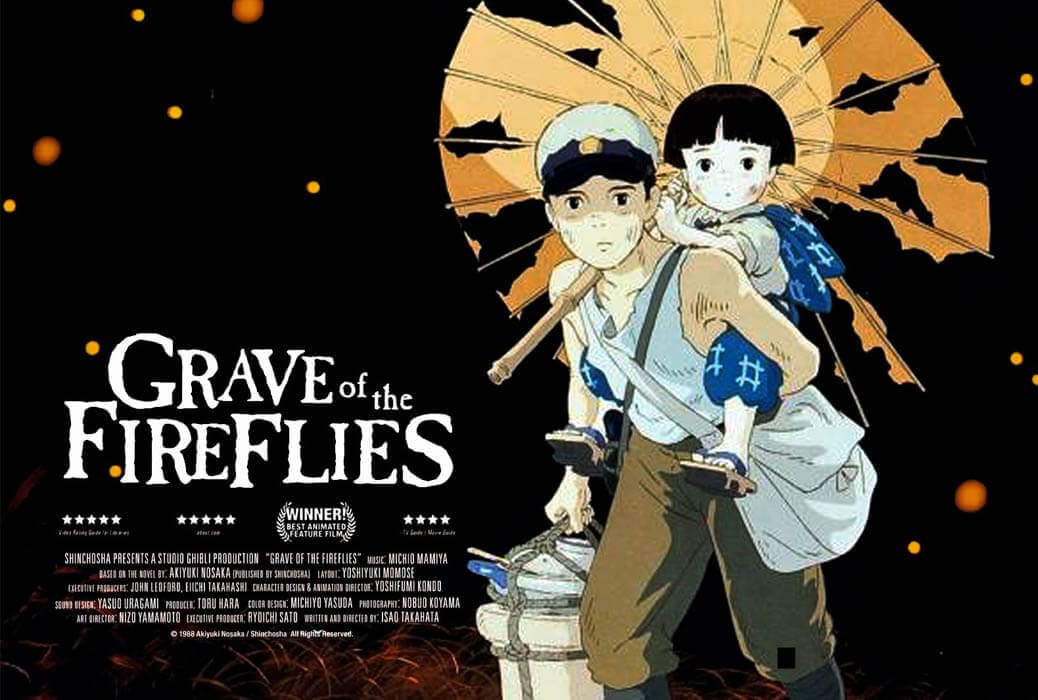
Isao Takahata’s 1988 Studio Ghibli masterpiece. War isn’t a natural disaster, but the World War II firebombing of Kobe operates like one — a man-made cataclysm that destroys everything in its path. Seita and Setsuko’s story is one of the most devastating things ever animated. Watch it once. You will not need to watch it again.
13Nausicaä of the Valley of the Wind
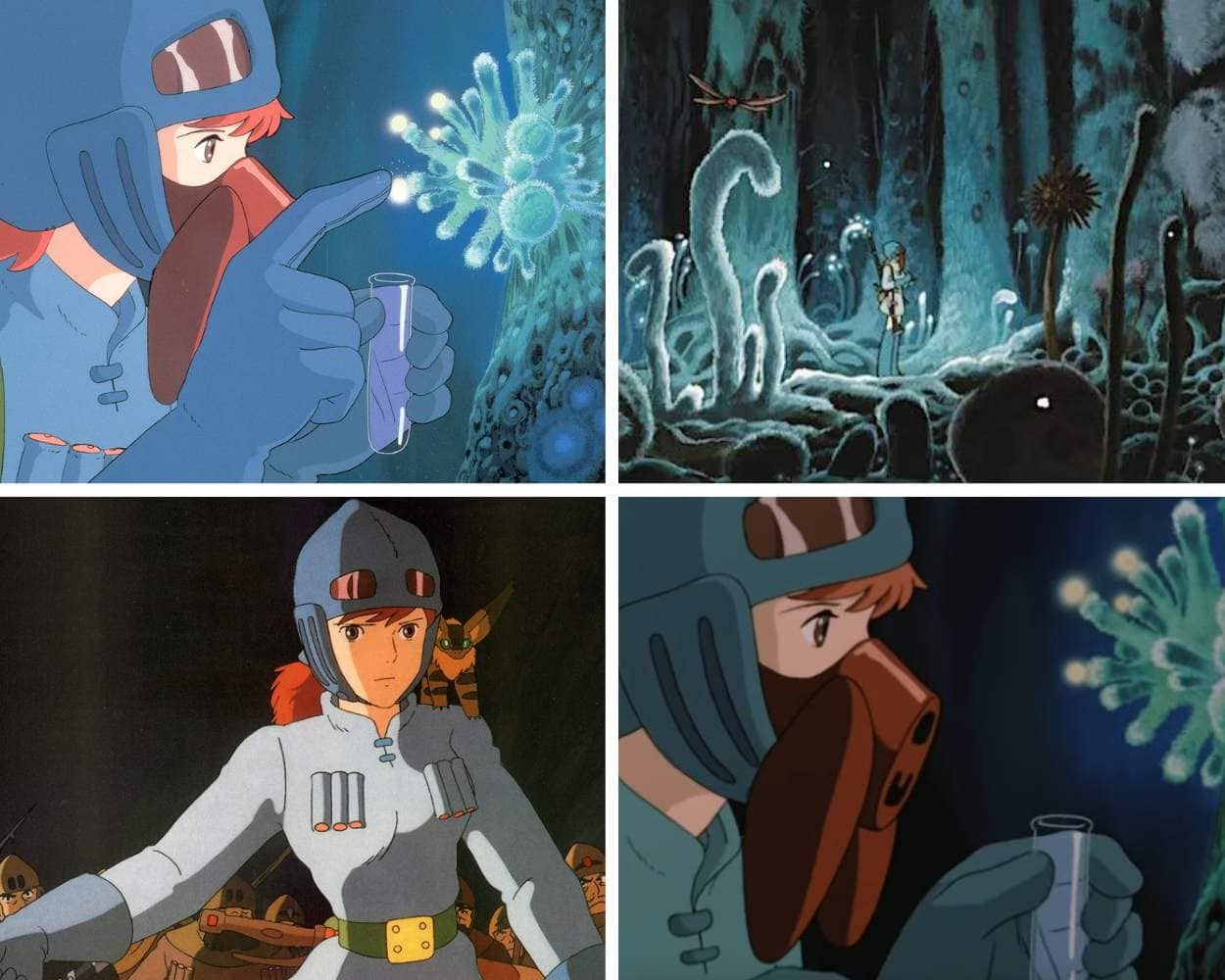
Hayao Miyazaki’s 1984 ecological disaster anime, set in a post-apocalyptic world where toxic forests have consumed most of Earth. Nausicaä, princess of the Valley of the Wind, tries to broker peace between humanity and the dying ecosystem. The film established Miyazaki’s entire environmental thematic sensibility — every Ghibli film about nature owes Nausicaä a debt.
12Neon Genesis Evangelion
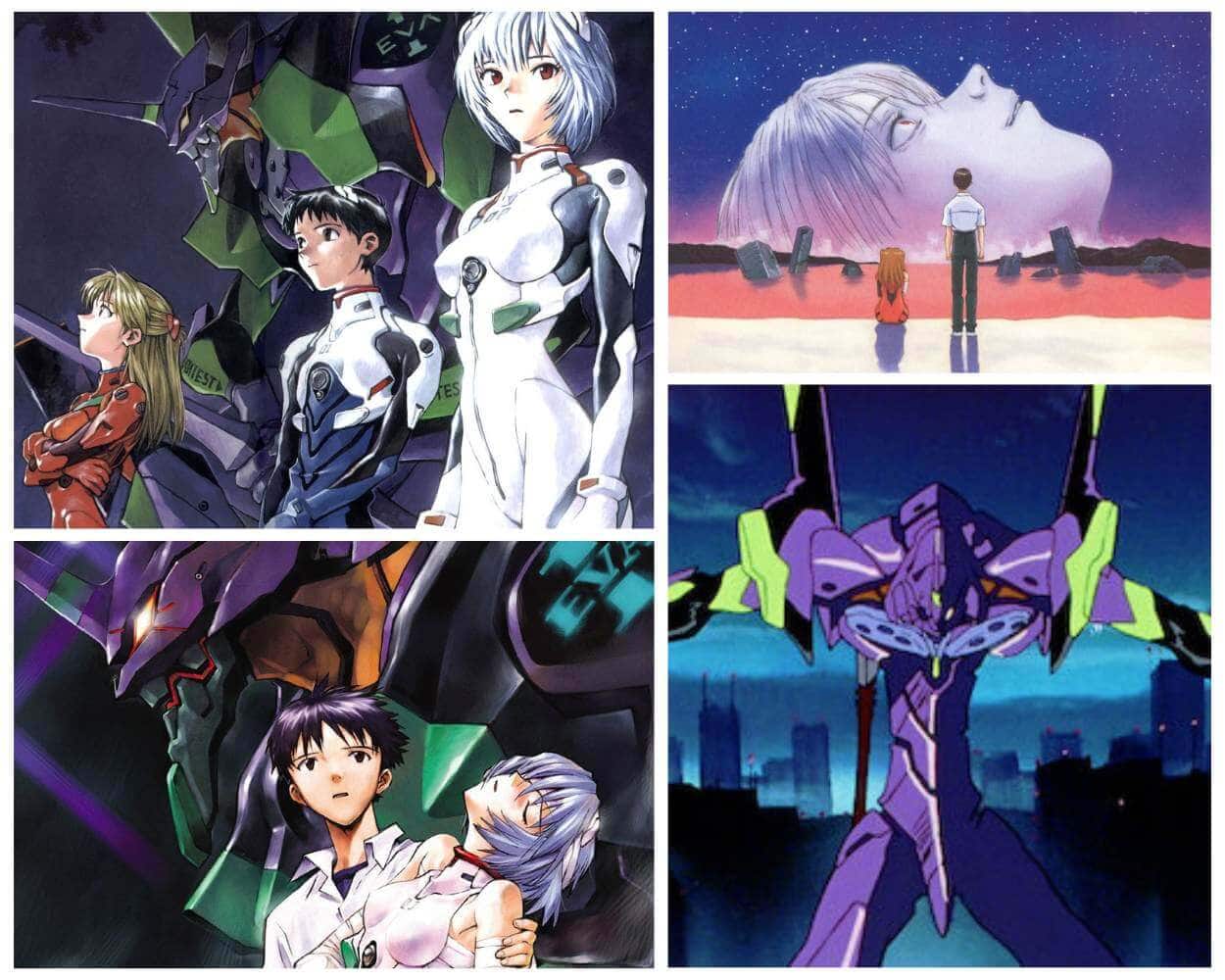
The “Second Impact” — a global cataclysm that flooded coastal regions, killed half the world’s population, and reshaped Earth’s climate — is the founding disaster of the Evangelion universe. The entire show is what happens 15 years after the world ended and barely came back together. Shinji Ikari pilots Eva Unit-01 against the Angels in a world that’s already broken.
Evangelion is many things: a mecha show, a psychological drama, a religious allegory. It’s also a meditation on what it means to live in a world that has already experienced the apocalypse.
11Weathering With You
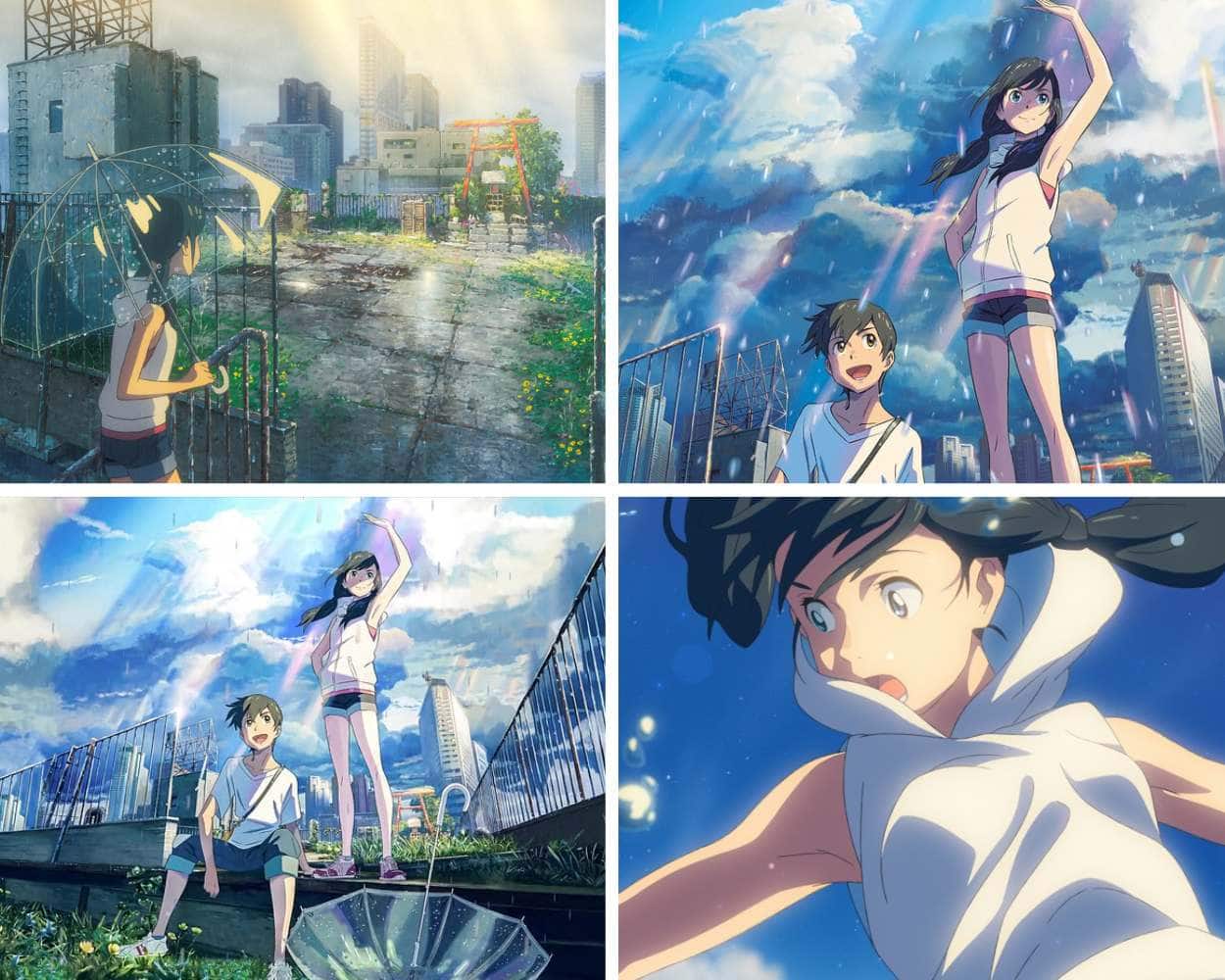
Makoto Shinkai’s 2019 film, the climate change anime. Tokyo experiences endless rain. Hodaka runs away to the city and meets Hina, a girl who can briefly stop the rain through prayer. The ending is one of the most morally complicated climate-themed conclusions in mainstream animation.
The thematic punch: Weathering With You ends with the protagonists choosing each other over fixing the weather. Tokyo stays flooded. It’s a choice that some viewers found beautiful and others found indefensible. Either way, it’s a movie that takes a real stance on climate-era ethics.
10Tokyo Magnitude 8.0

Maybe the most realistic disaster anime ever made. The 2009 series follows siblings Mirai and Yuuki as they try to make their way home through Tokyo after a catastrophic 8.0 magnitude earthquake. There are no monsters. There’s no magic. There’s just collapsed buildings, dead bodies, broken infrastructure, and two kids trying to survive.
The animation studio consulted with disaster experts to depict the earthquake’s effects accurately. It works as both a story and as a sobering preparedness lesson.
9From the New World (Shinsekai Yori)

One of the most underappreciated anime of the 2010s. A thousand years in the future, humans have psychic powers, and society has rebuilt itself in unsettling ways after a catastrophic collapse caused by uncontrolled psychic evolution. Saki Watanabe and her friends slowly uncover what their society has been hiding.
The disaster is in the backstory, but the entire present-day worldbuilding is shaped by it. The show is dense, slow-paced, and absolutely worth the patience.
8Japan Sinks: 2020

Masaaki Yuasa’s Netflix adaptation of Sakyo Komatsu’s 1973 novel Japan Sinks. The premise: Japan, as an archipelago, is literally sinking into the ocean due to catastrophic geological events. The Mutoh family tries to survive while their country dissolves around them.
Viewer warning: Japan Sinks: 2020 is brutal. Major characters die in graphic ways. The series doesn’t pull punches about what large-scale natural disaster actually looks like. Watch it expecting emotional damage.
7Black Bullet
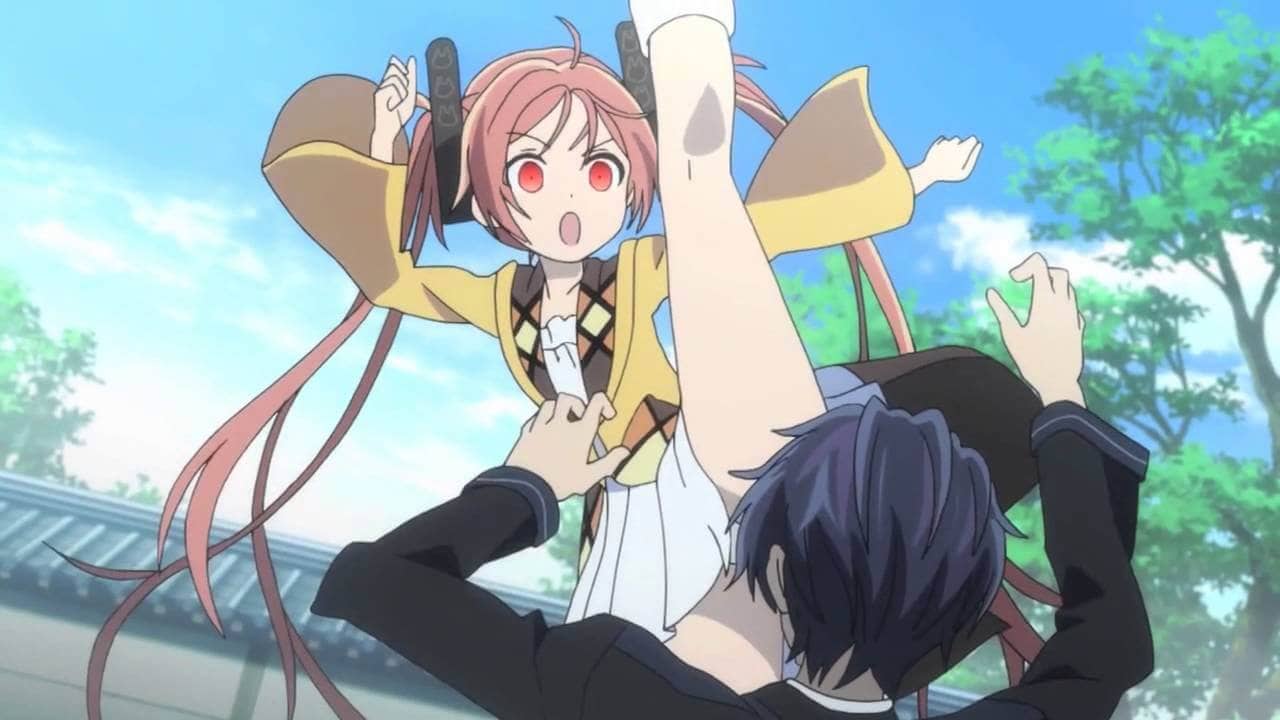
Set after the Gastrea Virus pandemic that nearly destroyed humanity, Black Bullet follows Rentaro Satomi and his Initiator partner Enju as they fight to protect what’s left of Tokyo. The viral apocalypse premise hit different after 2020, and many viewers have circled back to this 2014 series in the post-COVID era.
6Coppelion

Tokyo, 20 years after a nuclear disaster. The city is abandoned, radioactive, and inhabited only by the dead and the genetically engineered. Three high school girls — the “Coppelion” — are sent in because their bodies are designed to resist radiation. They search for survivors and confront what’s left of the country.
The 2013 anime is bleak in the best way. Watching abandoned Tokyo overgrown with vegetation is haunting in a quiet, post-Fukushima way.
5Zetsuen no Tempest

“Blast of Tempest” — the anime that openly references Shakespeare’s The Tempest and Hamlet. Mahiro and Yoshino try to stop the Tree of Exodus from spreading a deadly plague called the Black Iron Syndrome. It’s part biological disaster, part magical mystery, part literary homage. The 2012 series is smarter than most genre anime, and the disaster scaffolding gives it real weight.
4Blue Gender
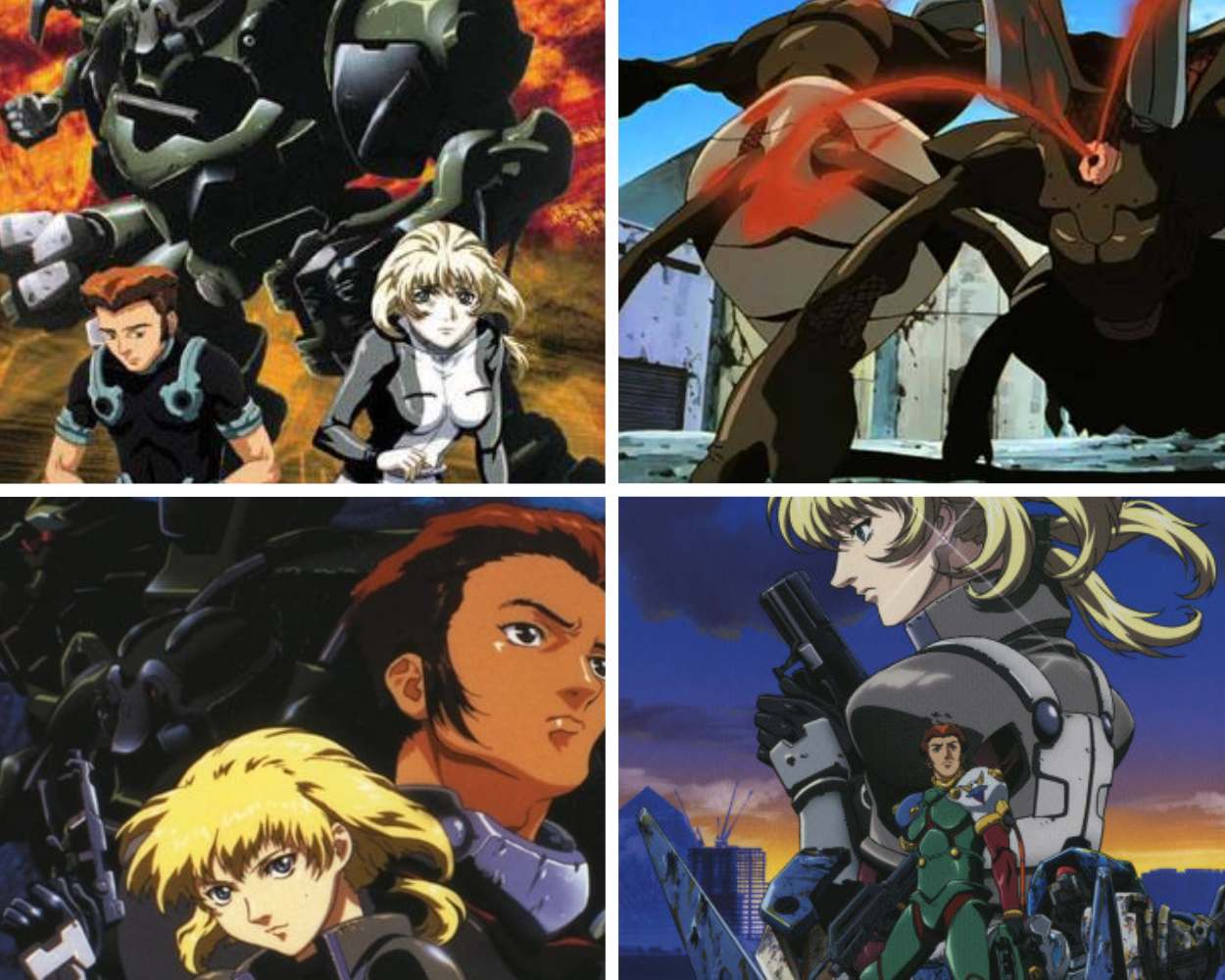
A 1999 series where massive insect-like creatures called the Blue have wiped out most of humanity. Yuji Kaido wakes from cryogenic sleep into a ruined Earth and joins the surviving humans trying to reclaim the planet. The environmental catastrophe framing — Earth retaliating against humanity for its abuses — was prescient for the time.
3Typhoon Noruda
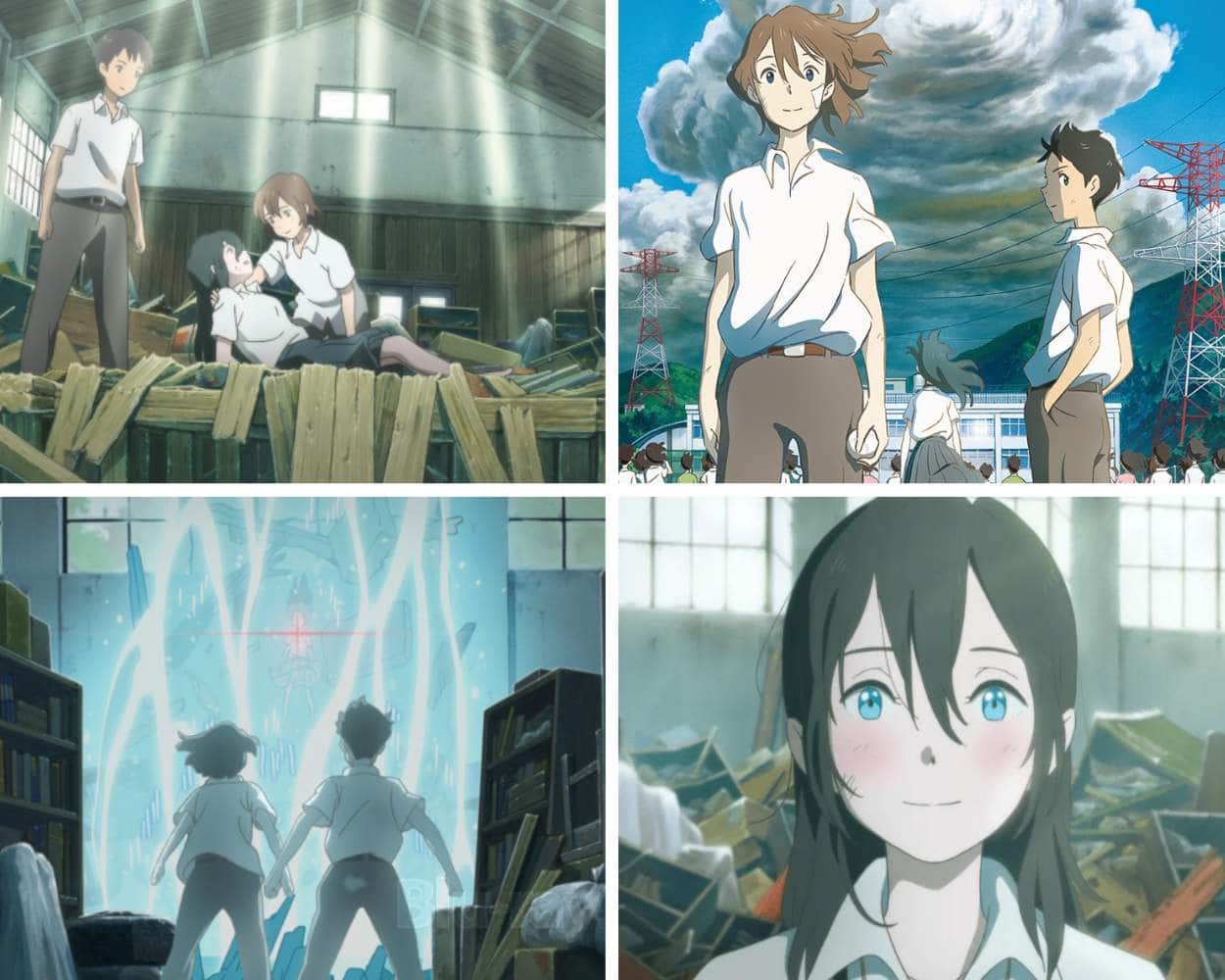
A short 2015 anime film from Studio Colorido. A typhoon descends on a small island school, and a supernatural entity named Noruda is at the center of it. Compact, atmospheric, and gorgeous. Good entry point if you want a disaster film under 30 minutes.
2A Spirit of the Sun
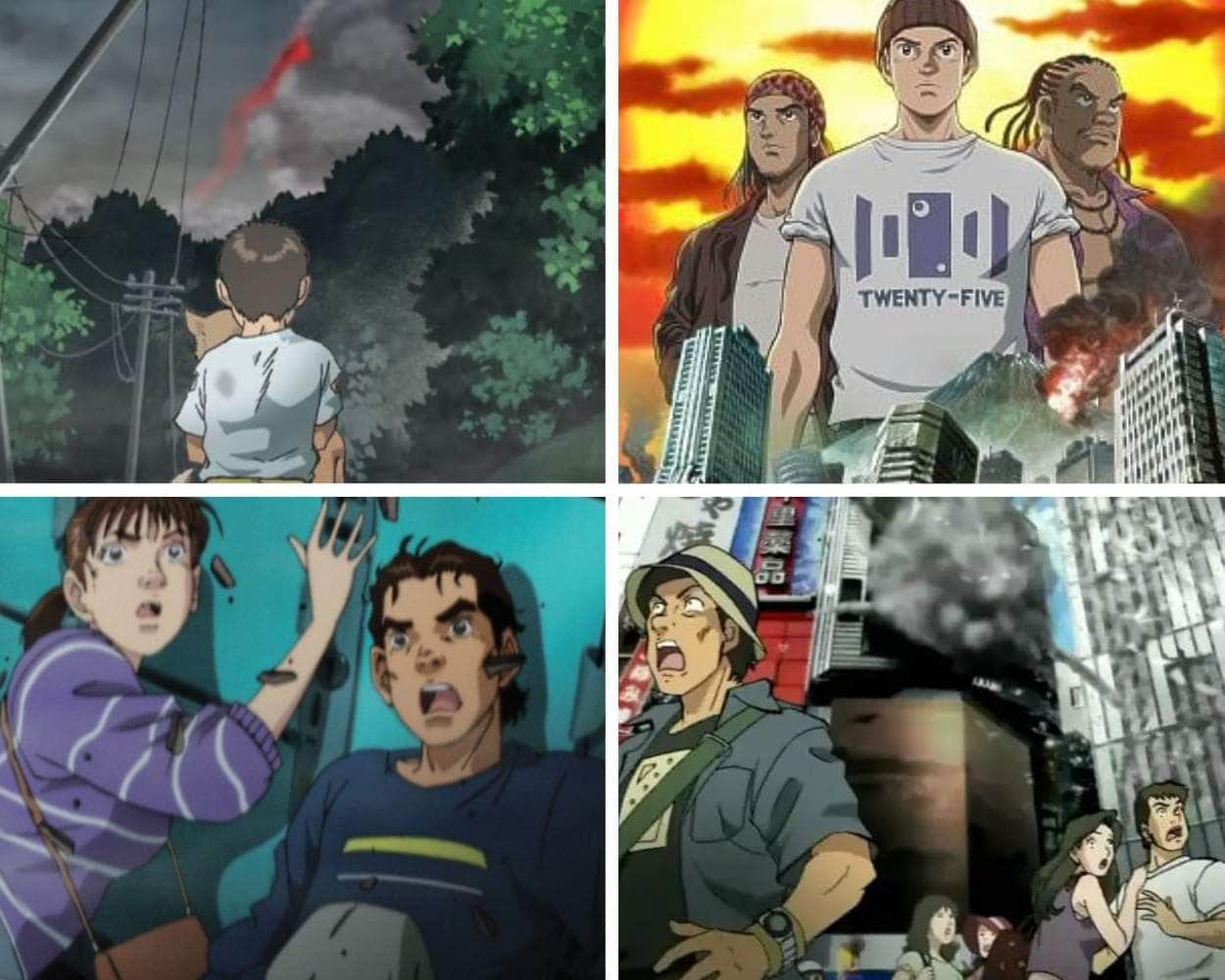
Future Japan rebuilding after a worldwide solar flare disaster, with the twist that the flare also unleashed strange magical powers across the population. Kenji and Tatsuo join the rebuilding effort and stumble into a deeper conspiracy. A unique premise that the show doesn’t always live up to, but worth watching for the disaster-recovery worldbuilding.
17 Seeds

Post-meteor strike Earth: 7 Seeds (Netflix, 2019-2020) follows several teams of young people cryogenically preserved before a meteor extinction event, then thawed centuries later to repopulate the new Earth. The series adapts Yumi Tamura’s long-running manga and goes hard on survival horror, ecological collapse, and the brutal realities of starting human civilization over from scratch.
Why Disaster Anime Hits Different in Japan
The cultural context: Japan sits on the Pacific Ring of Fire, which means earthquakes, tsunamis, typhoons, and volcanic eruptions are part of national life. The 2011 Tōhoku earthquake and tsunami killed over 18,000 people. The Hiroshima and Nagasaki atomic bombings shape national memory. The Fukushima nuclear disaster ongoing fallout shapes current anxieties. When Japanese animators make disaster anime, they’re drawing from generations of lived experience, not just thinking about hypotheticals.
That’s why these anime feel different from American disaster films. They’re not spectacle. They’re processing.
Categories of Disaster Anime
You can roughly group these into a few categories:
- Earthquake/tsunami: Suzume, Tokyo Magnitude 8.0, Japan Sinks: 2020
- Climate/weather: Weathering With You, Typhoon Noruda
- Nuclear/post-disaster: Coppelion, Akira
- Ecological collapse: Nausicaä, Blue Gender
- Pandemic/biological: Black Bullet, Zetsuen no Tempest
- Post-apocalyptic society: From the New World, 7 Seeds, Neon Genesis Evangelion
- War as disaster: Grave of the Fireflies
Honorable Mentions
A few more anime that touch on disaster themes:
- Knights of Sidonia — humanity escaping in spaceships after Earth’s destruction
- Attack on Titan — civilizational collapse as backstory
- Made in Abyss — bleak survival in a ruined world
- Dr. Stone — post-petrification disaster recovery (lighter tone)
- Vinland Saga — Viking-era systemic disaster
- Pluto — disaster-era post-AI Earth
- Sound of the Sky (Sora no Woto) — post-war ruined world
Where to Watch These Disaster Anime
As of 2026, streaming availability:
- Netflix — Japan Sinks: 2020, 7 Seeds, From the New World
- Crunchyroll — Tokyo Magnitude 8.0, Zetsuen no Tempest, Black Bullet, Weathering With You
- Max/HBO — Studio Ghibli catalog including Nausicaä and Grave of the Fireflies
- Crunchyroll/Funimation merger — Neon Genesis Evangelion, Coppelion
- Theatrical release / digital purchase — Suzume (the main streaming home varies by region)
My top three: Suzume for emotional weight and modern earthquake resonance, Grave of the Fireflies for sheer devastating impact, and Tokyo Magnitude 8.0 for documentary-grade realism. All three will leave a mark on you.
So, what’s your favorite disaster anime, and did I miss one you’d put on the list? I bet someone is going to bring up Now and Then, Here and There or another deep cut. Tell me what’s missing.