Phineas Flynn is one of those rare cartoon characters who is genuinely beloved by both kids and adults, and there’s a specific reason: he’s just relentlessly, unapologetically GOOD. He’s smart. He’s kind. He’s curious. He builds rollercoasters in his backyard. He has a secret-agent platypus. He doesn’t have a single villainous bone in his triangular body.
That kind of character should be boring. Phineas isn’t boring. The show works because Phineas is the rare “morally uncomplicated optimist” cartoon protagonist who’s also genuinely funny. Dan Povenmire and Jeff “Swampy” Marsh figured out how to write a hero with no real flaws who’s still compelling to watch. That’s harder than it sounds.
Quick facts: Phineas Flynn is the protagonist of Phineas and Ferb on Disney Channel. Original series ran 2007-2015 (4 seasons, 222 episodes). Movie sequel Candace Against the Universe released on Disney+ in 2020. A revival series launched in 2025. Phineas is voiced by Vincent Martella. The show was created by Dan Povenmire and Jeff “Swampy” Marsh.
Who Is Phineas Flynn?

Phineas Flynn is a 10-year-old kid living in Danville with his mom Linda, his stepdad Lawrence, his stepbrother Ferb, his teenage sister Candace, and his pet platypus Perry (who is also secretly a covert agent fighting an evil scientist, but Phineas doesn’t know that part).
Every summer day, Phineas comes up with an enormous project — building a rollercoaster, creating a beach in the backyard, traveling to the moon, that kind of scale — and his brother Ferb helps him pull it off. By the end of the day, every project mysteriously disappears due to off-screen platypus-related shenanigans, and his mom never finds out, and his sister Candace spends the whole episode trying to expose them and failing.
That’s the show. That’s the formula. That’s the loop that ran for 222 episodes and somehow never got boring.
The Triangle Head

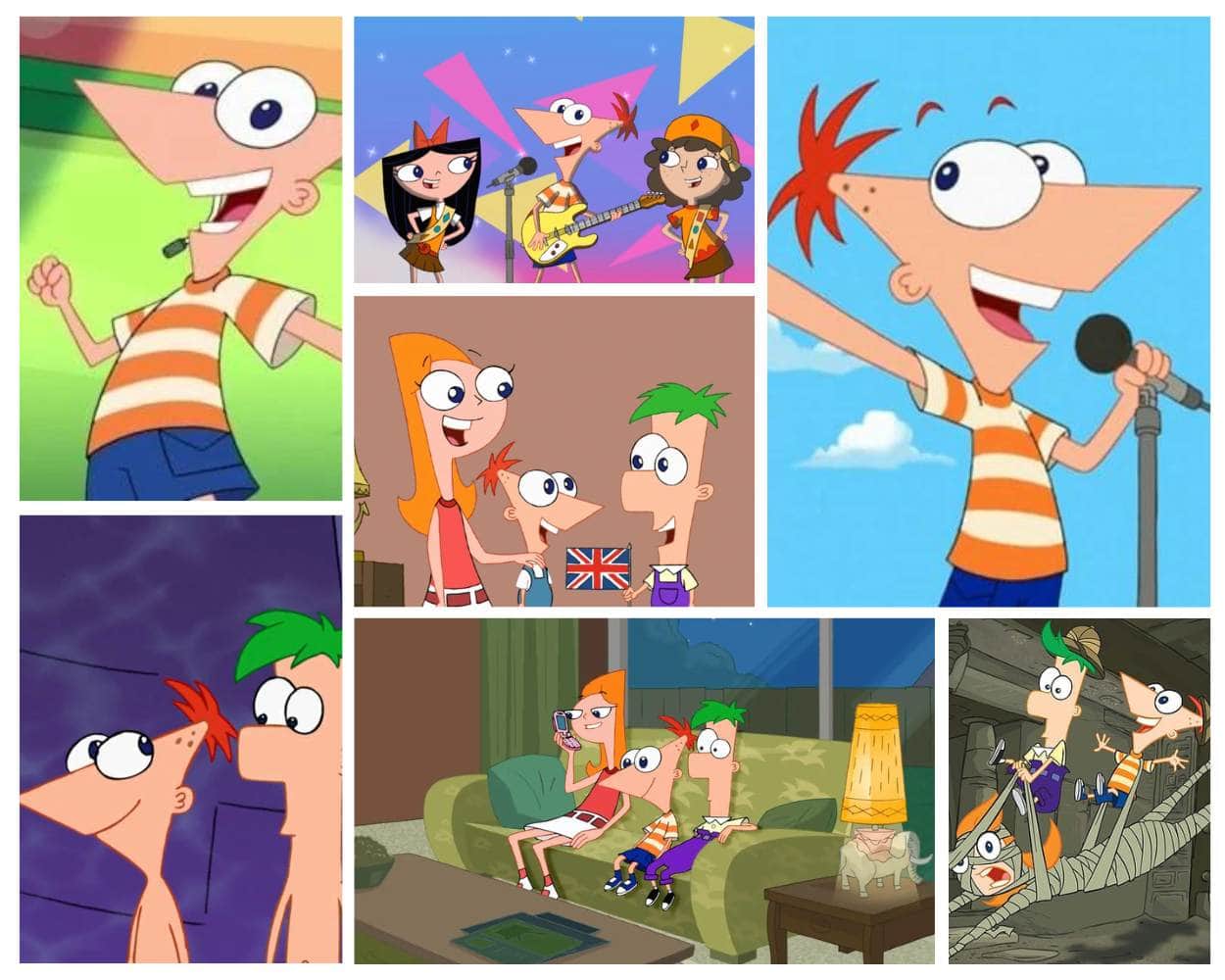
We need to talk about the head. Phineas’s head is literally a triangle. Not “triangular-shaped” or “vaguely angular.” A geometric triangle, in profile, with the nose making up the whole face on the front and an eye sitting on top.
This was an intentional design choice from Dan Povenmire. The whole Phineas and Ferb cast is built from basic geometric shapes (Ferb is a rectangle, Isabella is a circle and triangle combo, Candace is mostly cylinders). Povenmire wanted kids to be able to draw the characters easily, and he wanted each character to be identifiable from silhouette alone.
The “P” connection: When Phineas turns sideways, his head essentially forms a “P.” That’s not a coincidence. Povenmire and Marsh worked the visual pun into the design intentionally. The character’s name and his shape are part of the same gag.
The design borrows from Tex Avery’s style (the same animator who created Droopy and Screwball Squirrel — there’s a direct lineage). Povenmire has cited Avery as a major influence multiple times. The “thin spindly arms” and geometric face are both Avery hallmarks reworked for modern Disney TV.
“Ferb, I Know What We’re Gonna Do Today”
The defining catchphrase. Phineas says this in pretty much every episode, usually right after deciding what their next impossible project will be. It’s the cartoon equivalent of “It’s time” or “Let’s get this party started” — pure intention-setting, fully committed energy, ready to do something improbable.
Vincent Martella’s voice delivery sells it every time. He never sounds bored of the line. The character never sounds bored of his own life. That’s part of why Phineas works — his enthusiasm is real, take after take, episode after episode.
Vincent Martella, Voice of Phineas
Phineas is voiced by Vincent Martella, who you probably also know from Everybody Hates Chris (where he played Greg Wuliger, Chris Rock’s white best friend across the series’s run). Martella was a working actor who got the role as a teenager and grew up with the character.
His Phineas performance is consistently excellent. The voice has stayed remarkably consistent across the original series, the 2011 movie, the 2020 Disney+ movie, and the 2025 revival. Some voice actors lose the character as they age. Martella never has.
The Phineas-Ferb Dynamic

The show is called Phineas and Ferb, but you’ll notice it’s Phineas who does most of the talking. Ferb averages about one line per episode, and when he speaks, it’s usually devastatingly funny.
The dynamic works because:
- Phineas is the visionary. He decides what they’re going to build.
- Ferb is the engineer. He actually knows how to build it.
- Phineas talks. Ferb works.
- Phineas is American. Ferb is British (his accent is the joke).
- They’re stepbrothers, not biological brothers, and they’re closer than most blood siblings ever get.
The blended-family normalization: Phineas and Ferb is one of the rare American kids’ shows where a blended family is just… the family. There’s no drama about it. Linda married Lawrence, the boys got each other, everyone moved on. The show treats stepfamily as default, not as a “Very Special Episode” topic, and that quietly made it one of the more progressive family sitcoms of its era.
Phineas’s Inventions
The whole show is built around Phineas’s daily projects. Some of the standouts across 222 episodes:
- A full-scale rollercoaster spanning Danville
- An entire beach in their backyard, complete with waves
- A time machine from the local museum
- A rocket ship to the moon
- A teleporter
- A floating island
- An anti-gravity treehouse
- Their own band (Phineas and the Ferb-Tones)
- A working zoo full of fictional creatures
- A monster truck
- A circular saw and bowling alley
- A 1-day world tour
The scale escalates every episode. By Season 4, Phineas has been to space multiple times, traveled to other dimensions, and met his future self. The show never blinks at the impossibility of any of this — Phineas just does it, and the universe shrugs.
Phineas’s Personality
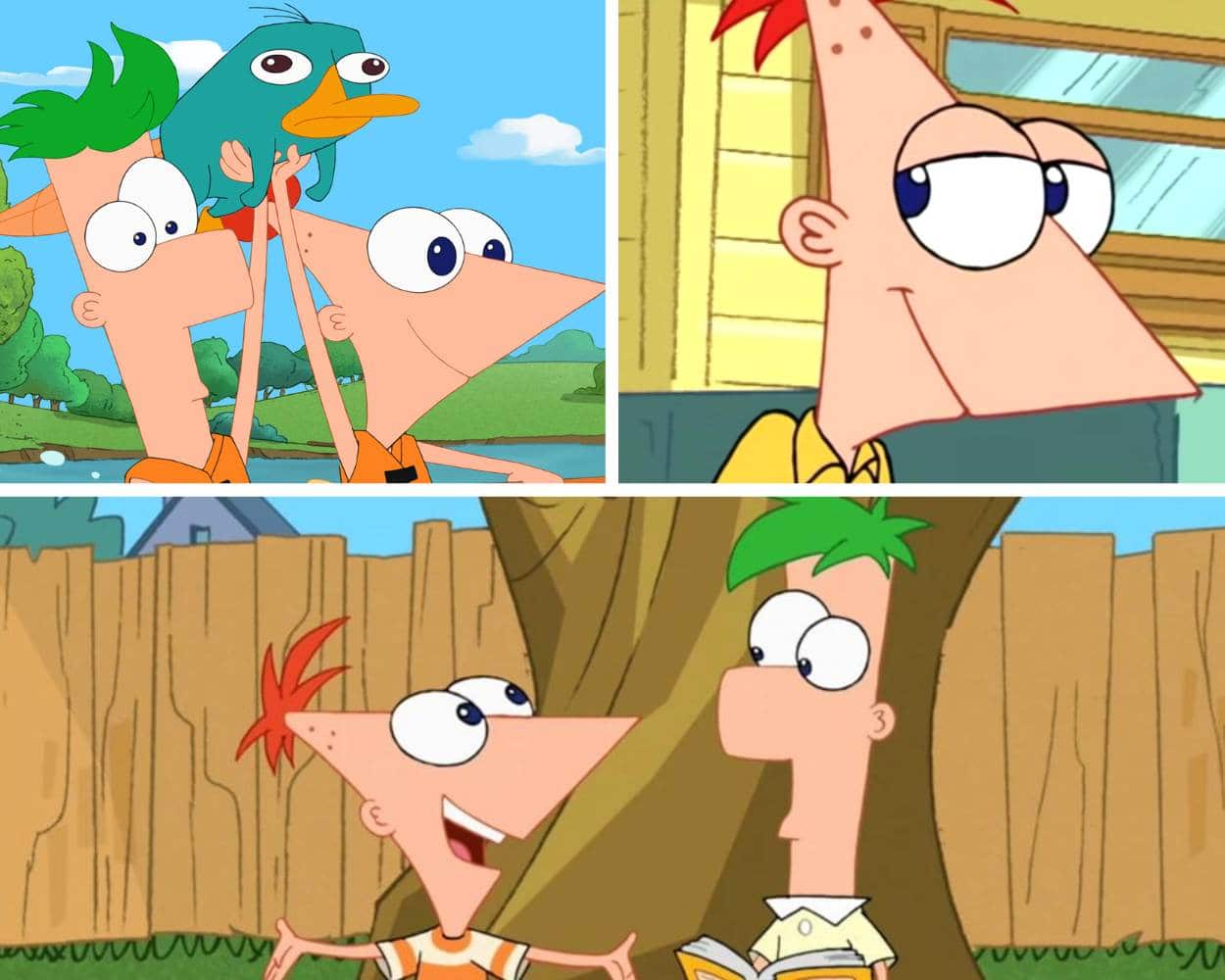
Key Phineas traits:
- Relentlessly optimistic — he doesn’t have bad days. Even when things go wrong, his solution is “let’s build a bigger version.”
- Genuinely kind — he treats his friends, his family, his sister (who is constantly trying to get him in trouble), and his dog with equal warmth.
- Intelligent without being arrogant — he’s clearly a genius but he doesn’t lord it over anyone.
- Confident but never aggressive — Phineas believes he can do anything but doesn’t need to prove it by putting others down.
- Oblivious to romance — Isabella has had a massive crush on him for the entire series and he’s never noticed (until the future-timeline episode).
- Loyal to a fault — he’d do anything for Ferb, Perry, his friends, and even Candace.
Phineas is, essentially, what a perfectly well-adjusted 10-year-old would look like. The show is a fantasy in two ways: the impossible inventions AND the impossibly emotionally healthy protagonist.
Perry the Platypus
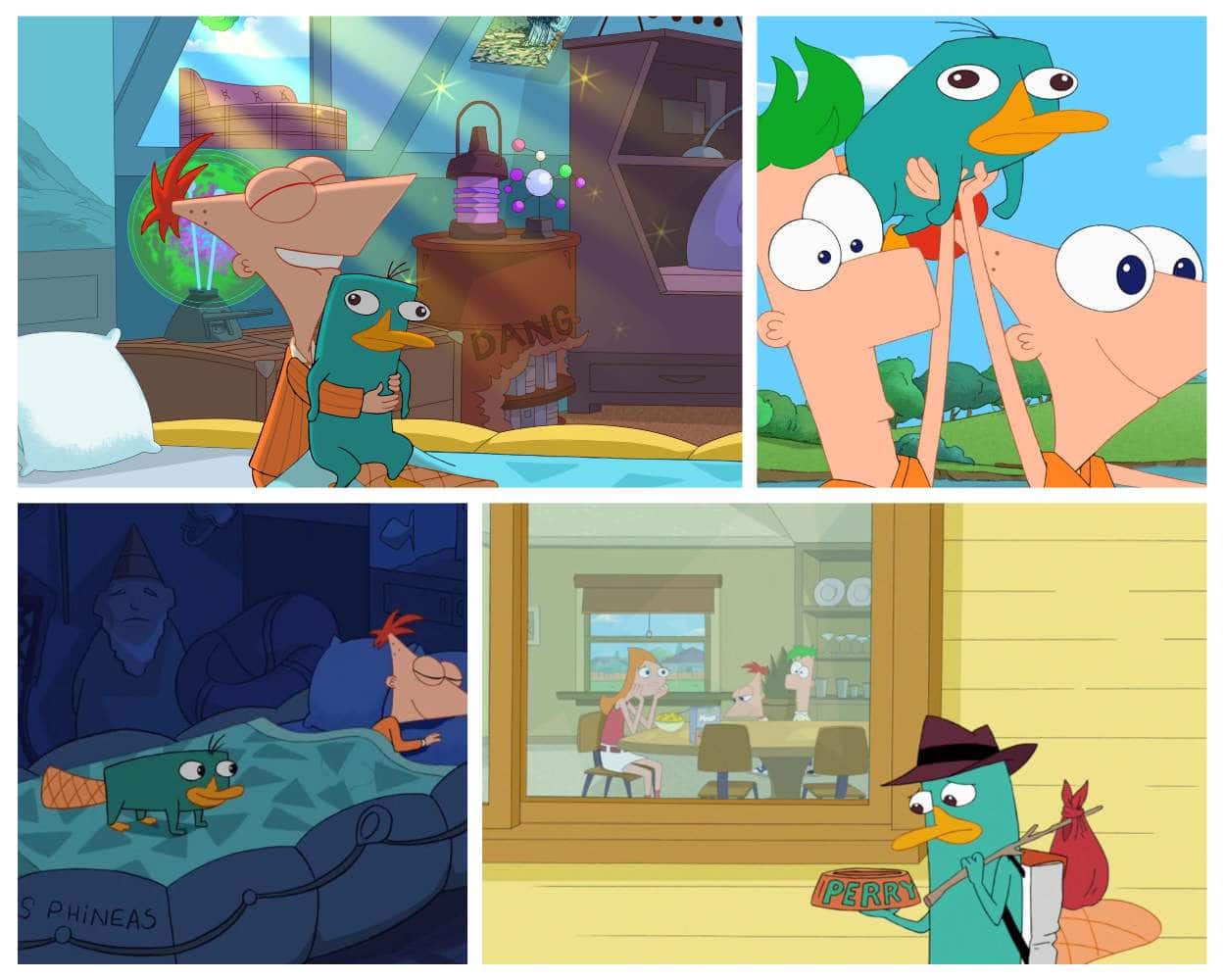
Phineas has a pet platypus named Perry. Perry is also secretly Agent P, working for the O.W.C.A. (Organization Without a Cool Acronym), fighting against the evil-but-incompetent Dr. Heinz Doofenshmirtz. Phineas has no idea about any of this. As far as Phineas knows, Perry is just a regular platypus who occasionally disappears mysteriously.
The dual-storyline structure of the show is one of its best mechanics. Each episode has TWO plots running simultaneously:
- Phineas and Ferb building something amazing
- Perry trying to stop Doofenshmirtz’s latest scheme
The two plots converge at the end of every episode, with Doofenshmirtz’s scheme accidentally erasing Phineas’s invention, which is why Mom never sees what the boys built. It’s structural genius. The show built itself out of this loop for 222 episodes without it getting old.
Candace Flynn: The Sister Who Can Never Bust Them
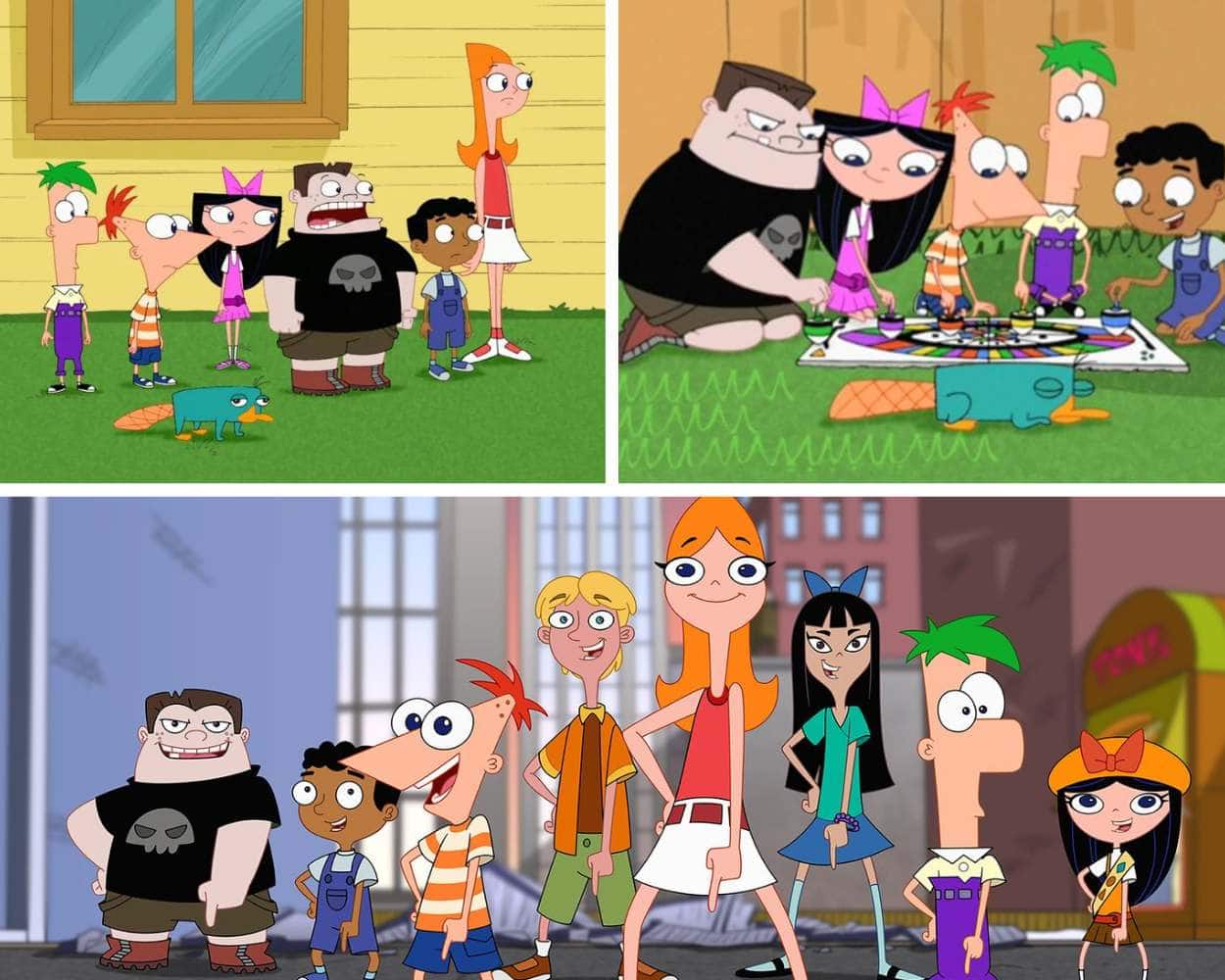
Candace is Phineas and Ferb’s teenage sister, and her entire arc across the series is trying to “bust” them — meaning, getting their mother to see what they’ve built. She fails every single time. The inventions always disappear before Mom arrives.
Candace is one of the show’s best characters. Voiced by Ashley Tisdale at peak Tisdale, she’s manic, dramatic, and increasingly unhinged across the seasons. Her boyfriend Jeremy is the calm to her chaos. Her best friend Stacy provides the audience-surrogate “let’s reality-check this” energy.
The 2020 Disney+ movie Candace Against the Universe finally gave her a starring role and addressed the “Candace constantly fails” pattern head-on. It’s a great character payoff.
Dr. Doofenshmirtz
The villain of the Perry storyline is Dr. Heinz Doofenshmirtz, a Drusselsteinian “evil scientist” voiced by co-creator Dan Povenmire. He’s the best part of the show.
Doofenshmirtz’s schemes are always:
- Ambitious and over-the-top (he wants to take over the Tri-State Area)
- Powered by inators (a “Disco-Inator,” a “Lawn Gnome-Inator,” etc.)
- Defeated by Perry in increasingly absurd ways
- Driven by tragic backstory monologues about his miserable childhood in Drusselstein
The Doofenshmirtz backstory bits are some of the funniest writing in the show. He had to be his family’s lawn gnome for 30 years. He was raised by ocelots. He was forced into a dress for his sister’s birthday. The flashbacks build a slowly more deranged picture of his upbringing across the seasons, and every reveal is funnier than the last.
Phineas and Isabella
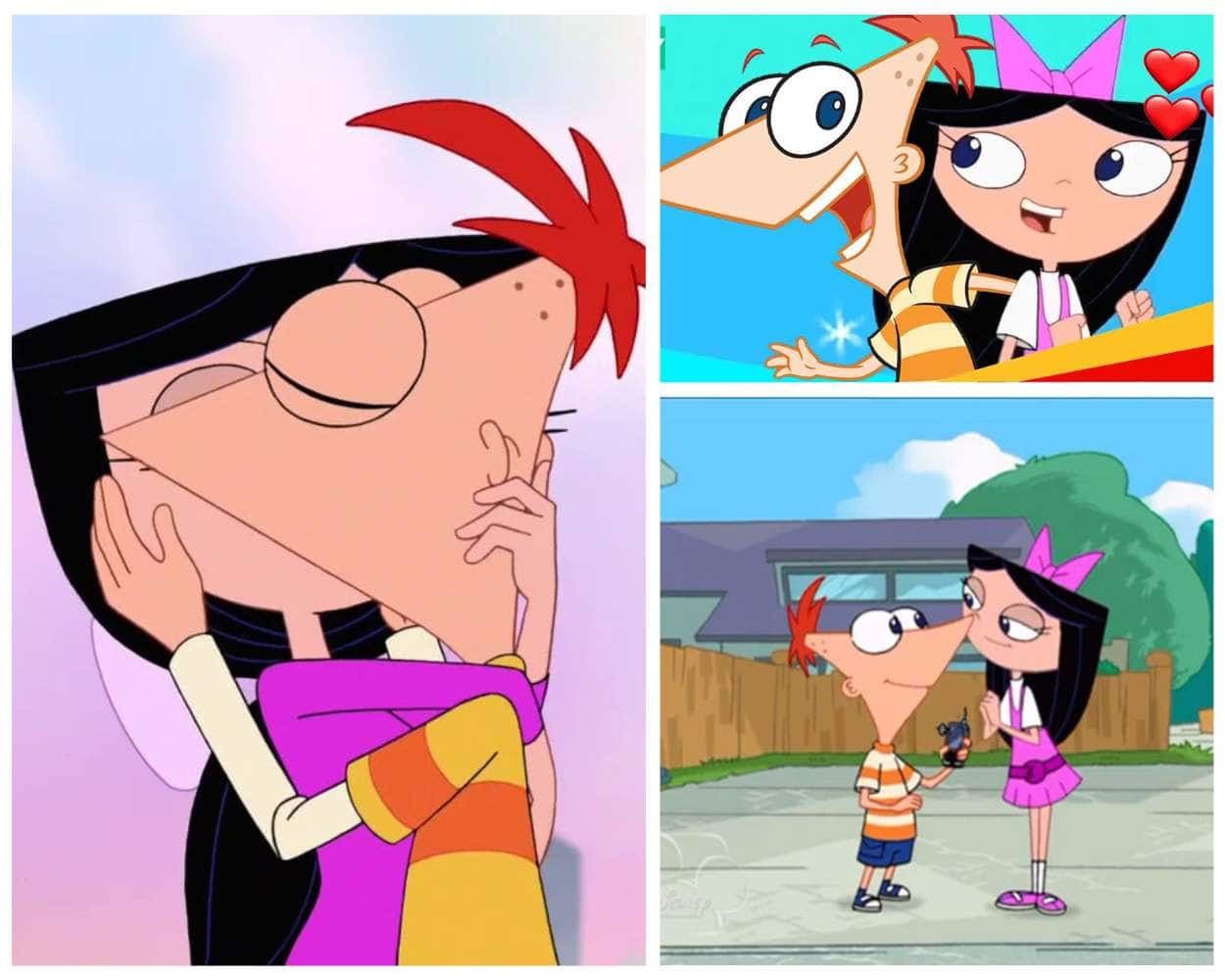
Phineas’s most dedicated friend is Isabella Garcia-Shapiro, who has had an obvious, episode-long, season-long, series-long crush on Phineas from Episode 1. Phineas is oblivious. The show plays this for years.
In the Season 4 episode “Act Your Age,” the future timeline finally addresses it. Phineas, now in college, realizes Isabella has feelings for him. They become a couple. The episode pays off ten seasons of dramatic irony with genuine emotional weight.
The “Act Your Age” episode is one of the most beloved Phineas and Ferb episodes for older fans. It treats the characters as having grown up alongside the audience and gives Isabella the resolution she’d been waiting for. The show could’ve ended there and felt complete.
The 2025 Phineas and Ferb Revival
The big 2026 context: Phineas and Ferb came BACK in 2025 with a full revival series on Disney Channel and Disney+. Dan Povenmire and Jeff “Swampy” Marsh returned. Vincent Martella returned as Phineas. Most of the original voice cast returned. The revival was a major nostalgia event for the millennial and Gen-Z fans who grew up with the original. New episodes have continued the same daily-invention formula with updated jokes and references. The revival was successful enough that more seasons have been ordered.
This is huge. Most cartoon revivals fail — they get a token order, fans complain, and the show quietly disappears. Phineas and Ferb’s revival landed because the creators came back, the voice cast came back, and the writing kept the original spirit intact.
Why Phineas and Ferb Endured
Many Disney Channel shows from the 2007-2015 era have faded from cultural memory. Phineas and Ferb hasn’t. Reasons:
- The writing was sharper than 90% of contemporaneous kids’ TV
- The musical numbers were genuinely good (the show wrote an original song almost every episode for 4 seasons)
- The dual-storyline structure scaled infinitely
- The voice cast was excellent
- The character writing treated kids as smart enough to handle complexity
- The villains (Doofenshmirtz especially) became as beloved as the heroes
- The show was constantly funny without being mean
That last point is crucial. So many cartoons rely on characters being mean to each other for laughs. Phineas and Ferb almost never does this. The humor comes from situations, wordplay, and absurdity. Even Candace, who’s the closest thing to a comedic antagonist, is loved by the show and gets her own emotional arcs.
Phineas’s Influence
You can see Phineas’s DNA in a lot of later kid-protagonist cartoons:
- Gravity Falls (2012) — kid protagonists, adventure formula, blended-family dynamics
- Steven Universe (2013) — emotionally healthy boy protagonist, found family
- Star vs. the Forces of Evil (2015) — chaotic invention energy
- Big City Greens (2018) — Disney sibling dynamics
- The Owl House (2020) — Disney’s emotionally serious kid protagonist
Phineas helped prove that “well-adjusted optimist kid” could carry a long-running animated show. That was unexpectedly important.
Where to Watch Phineas and Ferb
As of 2026, the streaming situation is straightforward:
- Disney+ — all 4 original seasons, both movies, and the 2025 revival series
- Disney Channel — current new episodes airing on linear TV
- Hulu — selected episodes depending on region
If you want to revisit the show or introduce it to someone, Disney+ has everything in one place. Start with the original Season 1 if you’re new. Start with Season 4 (“Act Your Age” especially) if you want the emotional payoffs.
The Phineas Flynn Legacy
The honest take: Phineas Flynn is one of the best-written kid protagonists in animation history, and it’s because the writers refused to make him interesting through trauma or character flaws. He’s just a smart, kind, curious 10-year-old who builds rollercoasters. That’s the whole pitch. It shouldn’t work for 222 episodes plus two movies plus a revival series. It absolutely works. It’s still working in 2026.
Phineas proves you can build a long-running cartoon around a happy kid having a good summer. That’s not a small accomplishment. Most attempts at this fail. Phineas and Ferb succeeded because Povenmire, Marsh, Martella, and the entire creative team committed to the bit completely.
So, where does Phineas rank for you among Disney Channel protagonists, and have you watched the 2025 revival yet? For me, Phineas is tied with Kim Possible for the best Disney Channel lead character ever made. The revival being good is a small miracle, and I’m here for as many more seasons as they want to make. Tell me yours.